Trending

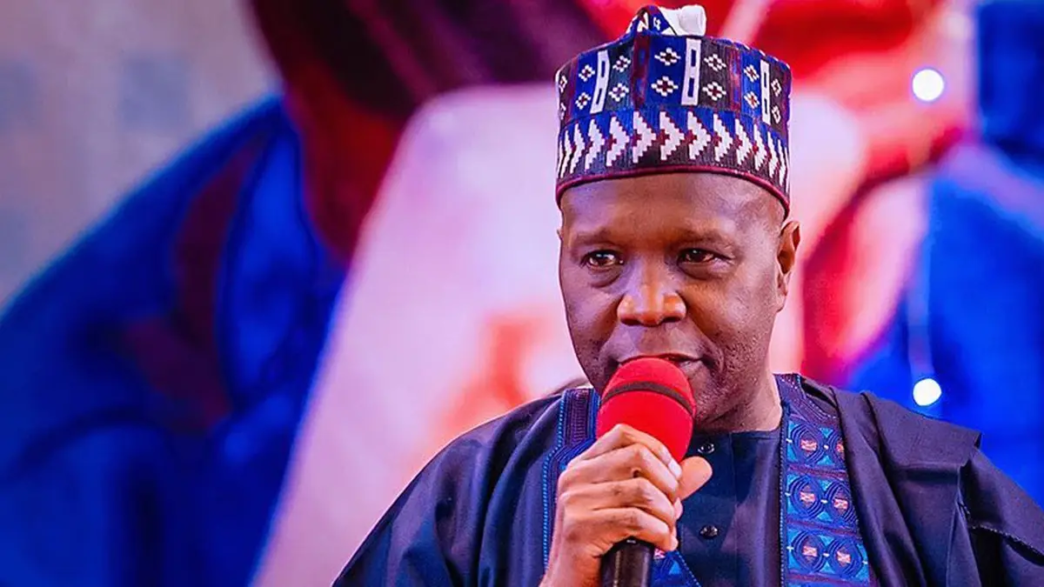
Gombe State Governor Muhammadu Yahaya has called on political leaders, traditional rulers, religious figures and residents to protect peace and unity ahead of the 2027 general elections, warning that personal and party ambitions must not come at the expense of the state’s development.
Yahaya made the appeal on Wednesday at an event marking Gombe’s 30th anniversary at the International Conference Centre in the state capital.
With his administration approaching the end of its eight-year tenure, the governor said the state’s next political transition must preserve the progress made over the years and ensure that development continues beyond his time in office.
He stressed that Gombe’s future should take precedence over the interests of any individual or political party.
“As my administration approaches the end of its eight-year mandate, my paramount concern is that the foundations we have strengthened should endure, and that the progress we have recorded should be consolidated and advanced by those who come after us.
“The future of Gombe State must always be greater than the ambitions of any individual or political party”, the governor said.
Gombe was created on October 1, 1996, by the military administration of the late General Sani Abacha following years of agitation for greater political representation and faster development.
Reflecting on the state’s three decades, Yahaya said the anniversary offered an opportunity to review its progress, recognise the contributions of successive administrations and plan for future generations.
He described Gombe’s history as the product of a collective effort by residents who campaigned for its creation and worked to fulfil the aspirations behind it.
The governor, who assumed office in May 2019, cautioned against crediting the state’s achievements to any single administration, noting that successive military and civilian governments had contributed to its development.
He acknowledged the roles played by former military administrators Joseph Orji and Mohammed Inuwa Bawa, as well as former civilian governors Abubakar Habu Hashidu, Mohammed Danjuma Goje and Ibrahim Hassan Dankwambo.
Yahaya said each administration had operated under different conditions and pursued varying priorities, but their combined efforts had shaped the Gombe of today.
“Each administration governed under different circumstances, faced different challenges and pursued different priorities.
“Yet, each made contributions to the Gombe we know today. We must therefore resist the temptation to view development as the achievement of one individual, one government or one political party”, he said.
His administration, he added, had pursued reforms and projects under the state’s 10-year development blueprint, known as DEVAGOM, covering education, healthcare, infrastructure, agriculture, electricity, environmental protection and public institutions.
On education, Yahaya reported that more than 2,000 classrooms had been built or renovated across over 400 schools, while four mega colleges had been established and 1,000 teachers recruited.
He said the government had also reached 350,000 children through the Better Education Service Delivery for All programme, which supports efforts to tackle the number of children out of school.
At the tertiary level, the administration established two additional faculties at Gombe State University, increased funding for higher institutions and enacted the Gombe State Education Trust Fund Law to provide a sustainable source of funding for education.
“Education is not simply another sector of government expenditure. It is the foundation upon which the future prosperity, competitiveness and social progress of Gombe must be built,” he said.
In healthcare, Yahaya said 228 primary healthcare centres had been constructed or renovated to provide two functional facilities in each of the state’s 114 political wards.
He also listed improvements to general hospitals in Bajoga and Kaltungo, the upgrading of Gombe State Specialist Hospital and the conversion of the General Hospital in Kumo into a Federal Medical Centre.
According to the governor, the state’s contributory health insurance scheme, GoHealth, now covers more than 400,000 people, including about 100,000 vulnerable residents. His administration has also employed 440 healthcare workers and introduced the CONMESS and CONHESS salary structures to improve staff welfare.
On infrastructure, Yahaya said the government had constructed or rehabilitated more than 1,000 kilometres of roads through its Network 11-100 initiative. Other projects include the City Centre Underpass and Gombe Northern Bypass.
He also highlighted the development of a Three-Arms Zone for the State House of Assembly, High Court and Secretariat, alongside 550 housing units built through Family Homes Funds and another 500 units developed in partnership with the North-East Development Commission.
The governor said the 1,000-hectare Muhammadu Buhari Industrial Park was expected to support manufacturing, business development and job creation.
He also pointed to the Renewed Hope Agro-Industrial Hub, which includes plans for an international livestock market, a modern grains market, an abattoir, an animal feeds market and an inland dry port. The facilities are intended to strengthen Gombe’s role in agricultural trading, processing and logistics across the North-East.
In the power sector, Yahaya said the state had established the Gombe State Electricity Regulatory Commission and Gombe Electricity Company following opportunities created by the Electricity Act 2023.
He reported that a one-megawatt mini-grid had been completed in Talasse, while similar projects in Filiya and Gelengu were 90 per cent complete. Additional projects had also been launched in Akko, Dukku, Funakaye and Kaltungo as part of a plan to connect 80 communities to an interconnected mini-grid network.
On workers’ welfare, the governor said his administration had implemented the ₦70,000 minimum wage for state and local government employees, carried out promotions and appointments, and paid more than ₦44billion in pension and gratuity obligations. The payments included ₦21billion inherited from the previous administration, he added.
Yahaya also disclosed that his government had created 13 Local Council Development Areas to bring public administration closer to rural communities.
On security, he said the state had improved cooperation among security agencies, traditional institutions and local communities. He also backed calls for the establishment of state police as part of broader efforts to reform Nigeria’s security system.
Despite the projects outlined, Yahaya acknowledged that the state still faced development challenges, saying his administration had not resolved every problem but had strengthened the foundation for future progress.
He said his long-term vision was to leave Gombe more economically competitive, socially inclusive and environmentally resilient, with stronger institutions capable of sustaining development.
Achieving this, he added, would depend on policy continuity, long-term planning, investment in people, technological advancement and greater private-sector participation.
The governor also launched a commemorative publication titled Gombe State: Thirty Years of Promise and Progress, 1996-2026, which documents the state’s history and the contributions of successive administrations. He said the book would support future research, policymaking and public understanding of Gombe’s political and socioeconomic development.
Read More : Tinubu to Travel to Saudi Arabia for Umrah
Yahaya urged residents to preserve the unity that underpinned the campaign for Gombe’s creation, calling on them to make the state’s next 30 years a period of greater prosperity.
He said the best way to honour those who fought for statehood was to sustain their vision and ensure that future generations benefited from the opportunities they sought to create.
The governor congratulated Gombe residents at home and abroad on the anniversary and called for continued cooperation to advance the state’s development.