Trending
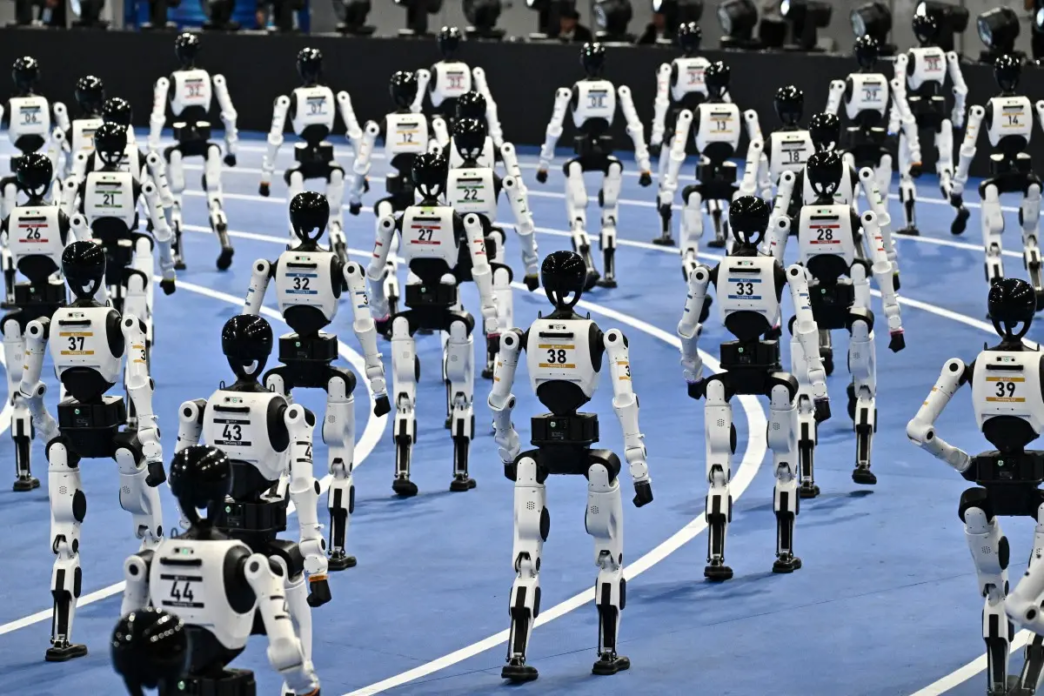
Humanoid robots have broken human athletic records and entertained hundreds of spectators at the World Robot Games in Beijing, as China has showcased its growing capabilities in humanoid robotics.
Dozens of humanoid robots and their human operators gathered at Beijing’s Olympic speed skating arena over the weekend to compete in events ranging from athletics and boxing to football and martial arts.
The biggest headline came during Saturday’s opening ceremony, when China’s Tiangong Ultra humanoid reportedly broke the 100-metre record held by Jamaican sprint legend Usain Bolt. According to China’s state broadcaster CCTV, the white, headless robot completed the race in 9.39 seconds, beating Bolt’s 9.58-second world record set in 2009.
Read More : Trump to Present Award to Musk, Tech Leaders
The same humanoid model delivered another record-breaking performance on Sunday, winning the 400-metre event in 38.16 seconds. Organisers later revised its time to 38.15 seconds.
The performances highlighted the rapid development of humanoid robotics in China, but the competition also reminded everyone of the technology’s current limitations.
During one 400-metre heat, a white-shelled robot swung its arms from side to side as it raced around the track, leaning dangerously forward and wobbling as it approached the finish line. Despite nearly falling, it stayed upright.
Other robotic competitors were less fortunate. Several failed to start, while others moved around the track at little more than walking speed. Some collapsed almost immediately after the starting gun.
The failures appeared to be part of the entertainment for spectators, who laughed and applauded throughout the events. Children and parents also cheered as a toddler-sized humanoid kicked a football over a knee-high barrier.
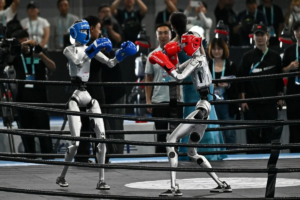
In the boxing competition, one humanoid stumbled towards the side of the ring before folding over the ropes. It remained motionless until human handlers stepped in to remove it.
For 72-year-old spectator Hou Yali, the robot records were impressive, but she believes the real test will come when machines are required to perform tasks beyond sport.
“We’ll be able to see more clearly whether machines can surpass humans,” Hou said.
She noted that the current competitions mainly measure physical performance. “Right now, this is just running, just a competition of speed. It’s not a test of intelligence, or hiring someone to do household tasks or act as live-in help,” she said.
Read More : Spotify Expands Audiobooks to 180 Markets
Hou, who pays aides to clean her home and prepare meals, said she would welcome robots that could handle those responsibilities.
“With the development of our country’s economy, people have more money in their pockets, and they may decide to use robots,” she said.
The World Robot Games have therefore offered a mix of technological achievement and comic spectacle, with record-breaking performances sharing the spotlight with robots that struggled simply to stay on their feet. For China’s robotics industry, however, the event has provided another platform to demonstrate its ambitions in humanoid technology.