Trending
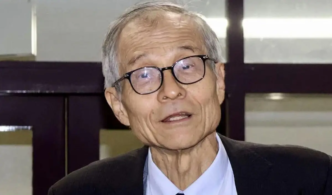
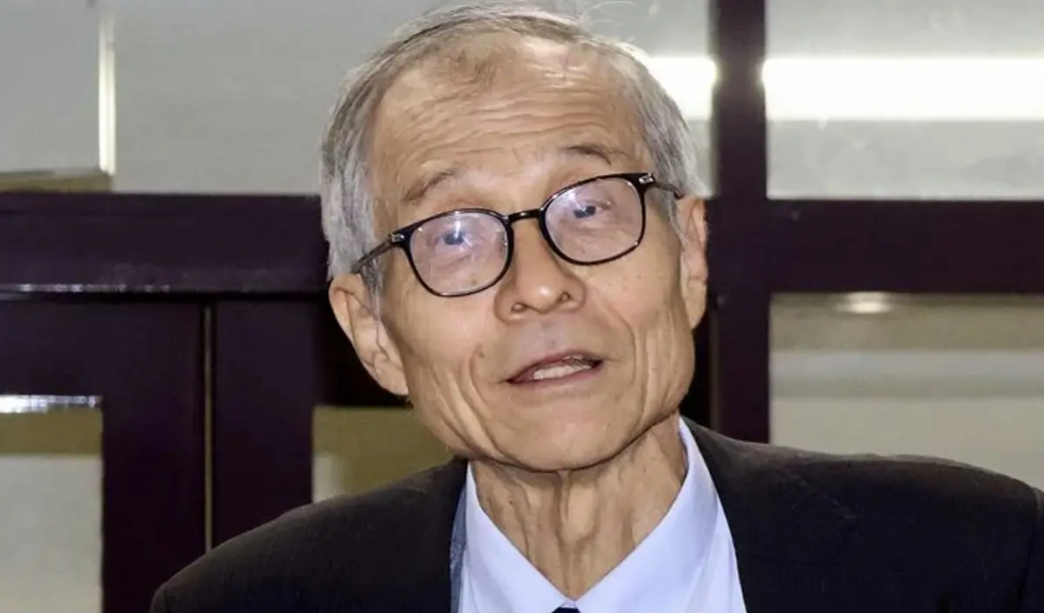
French chemist Henri B. Kagan and Japanese scientist Kenso Soai have won the Nobel Prize in Chemistry for discoveries that helped scientists control which mirror-image form of a molecule is produced, a breakthrough that has played a major role in modern drug development.
The Royal Swedish Academy of Sciences announced the award in Stockholm on Wednesday, recognising the scientists’ work on molecular chirality, a property in which molecules can exist in two mirror-image forms that are similar but not identical.
The two forms are comparable to a person’s right and left hands. Although they look alike, they cannot be perfectly superimposed.
Read More : Seven Wounded in Poland School Stabbing
The difference can have significant consequences in chemistry and medicine. For example, one mirror-image form of the molecule carvone has a mint-like smell, while the other smells like caraway, a spice commonly used in rye bread.
Because mirror-image versions of a molecule can behave differently when interacting with other substances, scientists need to control which form is produced when developing medicines.
Kagan’s research in the 1980s demonstrated that chemical reactions could be designed to favour one molecular form over another. Soai later built on that work and developed the first chemical reaction capable of efficiently producing one mirror image almost exclusively, a process now known as the Soai reaction.
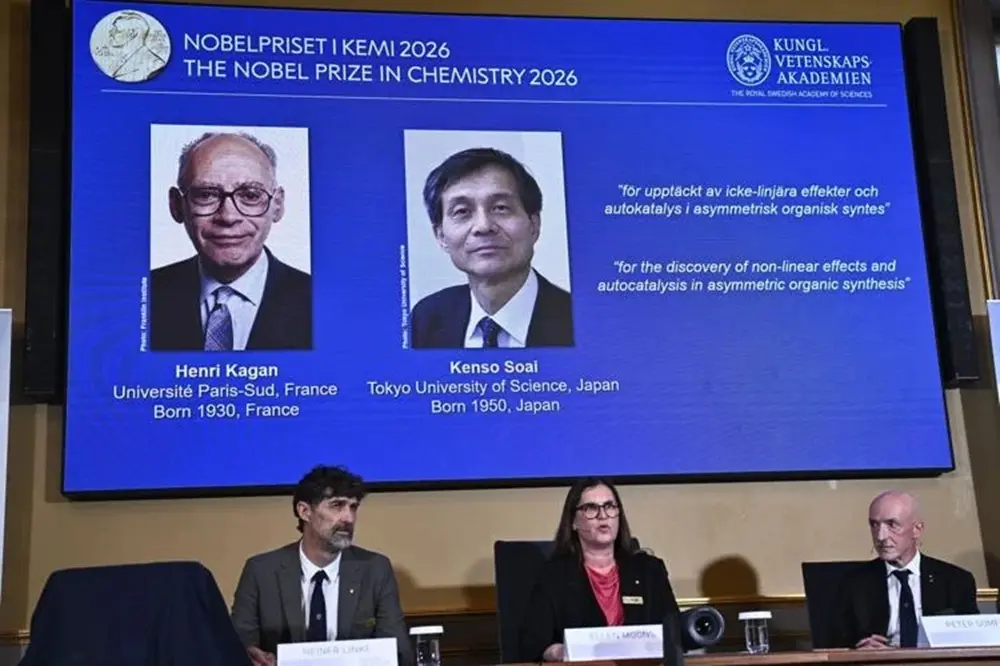
Peter Somfai, a member of the Nobel Committee for Chemistry, described the work as one of the most remarkable experiments in organic chemistry. He said the combined discoveries had fundamentally advanced scientists’ understanding of molecular chirality and provided important tools for developing catalysts and medicines.
“This is probably the coolest experiment in organic chemistry,” Peter Somfai
“Taken together, the groundbreaking discoveries by Henri Kagan and Kenso Soai have reshaped our understanding of molecular chirality, a term that comes from the Greek word for “hand.”
“It might be difficult to say that this drug, or that drug, was developed using this,” Somfai said. “I would say all of them, because we use this as a tool, we use this as an understanding, how to develop catalysts, how they function.”
Scientists credited the pair’s work with helping establish methods now widely used in pharmaceutical research.
Rigoberto Hernandez, president of the American Chemical Society, said modern medicines would not have been possible without this area of chemistry.
“The medicines we have today would not be possible without this chemistry,” said Rigoberto Hernandez, president of the American Chemical Society.
Kagan, 95, is affiliated with Université Paris-Sud in Orsay, France, while Soai, 76, is affiliated with the Tokyo University of Science.
The French Academy of Sciences, of which Kagan is a member, congratulated the scientists and expressed pride in Kagan’s achievement.
Soai said he was excited to receive the news, telling the Nobel committee and journalists by telephone that it was one of the most significant days of his life.
He was reached while shopping near his home.
“I’m very excited to receive the very nice news,” Soai said.
“Of course this is one of the most exciting days in my life.”
The chemistry prize is part of a week of Nobel announcements. The medicine prize was awarded on Monday to three scientists whose work contributed to the development of a light-based tool for studying the brain, while Tuesday’s physics prize recognised research into neutrinos.
The Nobel Prize in Literature is scheduled to be announced on Thursday, followed by the Peace Prize on Friday and the Nobel Memorial Prize in Economic Sciences on Monday.
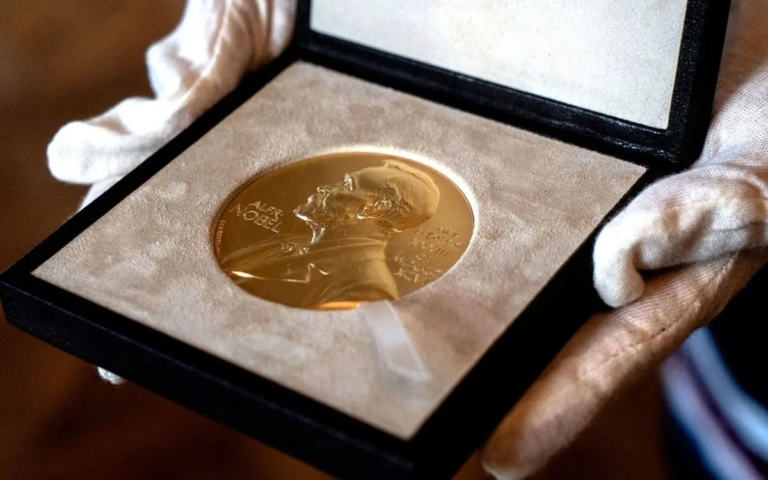
The prize carries 12 million Swedish kronor, worth about $1.2 million, which is shared when there are multiple laureates.