Trending
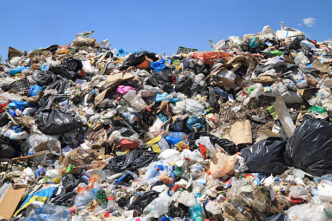
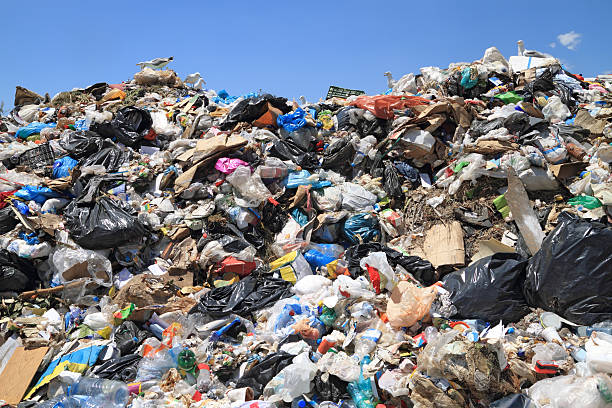
Lagos State generates approximately 13,000 tonnes of waste every day, the government said on Saturday, acknowledging service delays in some communities while outlining reforms to tackle the city’s mounting refuse crisis.
Tokunbo Wahab, the commissioner for the Ministry of the Environment and Water Resources, made the disclosure in a statement addressing concerns raised by residents and public figures about the waste situation in parts of Lagos.
“Lagos generates about 13,000 tonnes of waste every day. Not weekly. Every day. In May alone, LAWMA and PSP operators evacuated about 418,500 tonnes of waste across the state, which comes to an average of about 13,200 tonnes daily,” Wahab said.
Read More : Malami Denies Corrupt Deal in Mambilla Case
“No one is pretending that everything is fine everywhere. Some communities have had delays. Some PSP operators have not performed well,” he added.
Wahab noted several challenges affecting waste collection, including poor road access, rain disruptions, truck breakdowns, expensive diesel and spare parts, and weak payment compliance by residents.
“These are not excuses but the harsh realities that have to be fixed,” he said.
According to Wahab, 442 PSP operators are currently active across Lagos, while 27 routes are under review for service improvement. In May, LAWMA received 474 complaints and service requests.
The commissioner said LAWMA clears 3,000 black spots daily across 57 routes, including road medians, market edges, illegal dumping points and bus stops.
“Some are cleared in the morning and abused again by night. That is one of the hardest parts of the job,” he said.
Dear Gbadebo @GRVlagos
A lot of people are genuinely concerned about the waste situation in parts of Lagos, and that concern is understandable. Waste is not something you can talk around. If refuse is sitting on your street, beside your market, close to your bus stop, or inside… https://t.co/XM78pvrXXW
— Tokunbo Wahab (@tokunbo_wahab) June 20, 2026
In 2025, LAWMA recorded 1,023 incidents of illegal dumping and other waste violations. Of these, 447 cases were referred for prosecution. Surveillance teams identified 431 scavengers and reconciled 145 properties with their assigned PSP operators.
Wahab announced that construction is ongoing for Transfer Loading Stations to replace the old landfill operations at Olusosun in Ojota and Solous III in Igando.
“These will be supported by Material Recovery Facilities in Ikorodu and Badagry, so waste can be moved out of the centre of the city to modern facilities where it can be sorted, recovered, recycled and repurposed,” he said.
The Olusosun system is expected to move about 2,500 tonnes of waste daily to the Ikorodu MRF, while the Solous III side is expected to move about 1,500 tonnes daily to the Badagry recovery facility. The target for the transition is six months.
Wahab also announced the launch of the Ikosi Fruit Market Biodigester to treat organic waste closer to the source and convert it into biogas, electricity and fertiliser. The plan is to replicate that model in other markets generating high volumes of organic waste.
“Lagos is not where it should be yet. But it is not standing still either,” Wahab said. “The work now is to clear what has built up, fix the routes that are failing, hold operators accountable, and complete the infrastructure that will move Lagos from dumping to sorting, recovery, recycling, energy and circular economy.”
Wahab called on residents to play their part in keeping the city clean.
“Government has a duty to keep improving the system. Residents, markets, estates and businesses also have a duty to use the system properly and stop illegal dumping,” he said.
Read More : Sowore Demands Shettima Be Made Acting President
Street sweeping is another big part of the work. Lagos has thousands of sweepers working across hundreds of routes, including highways, medians and major public corridors. This work starts very early, and it is not easy work. Some areas are swept daily, but once people keep…
— Tokunbo Wahab (@tokunbo_wahab) June 20, 2026