Trending
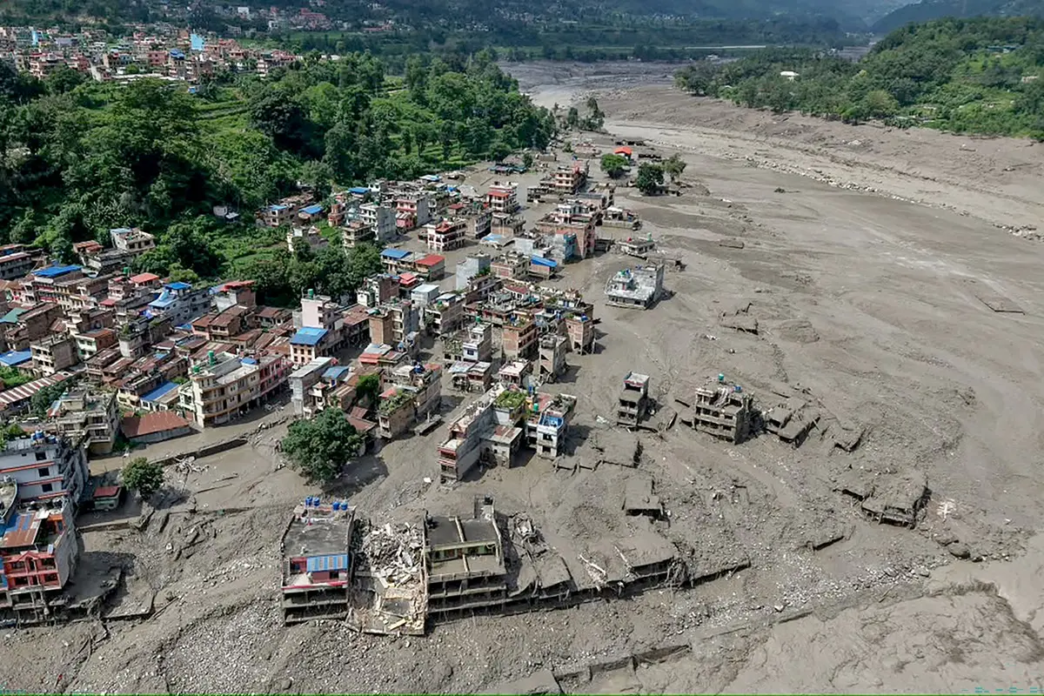
Scientists have said a glacier collapse likely triggered the devastating flash flood that swept through parts of Nepal and Tibet, killing more than 100 people.
The disaster occurred after a large section of ice and rock is believed to have broken away from a glacier near Langtang Lirung in Nepal’s Himalayas on Wednesday.
Scientists analysing satellite imagery say the mass of ice and debris fell from a high altitude into a valley, triggering a powerful surge into the Lhende Khola river.
Read More : North Korea Tests AI-Guided Torpedo System
The sudden rush of water carried huge quantities of mud, rocks and debris downstream, causing widespread destruction and damaging communities, roads, bridges and hydropower infrastructure along Nepal’s border with China.
Initial reports suggested that an earthquake may have triggered the landslide.
However, the US Geological Survey later clarified that the seismic signal recorded during the disaster came from the collapse of glacial ice and rock and the resulting debris flow, rather than a conventional earthquake.
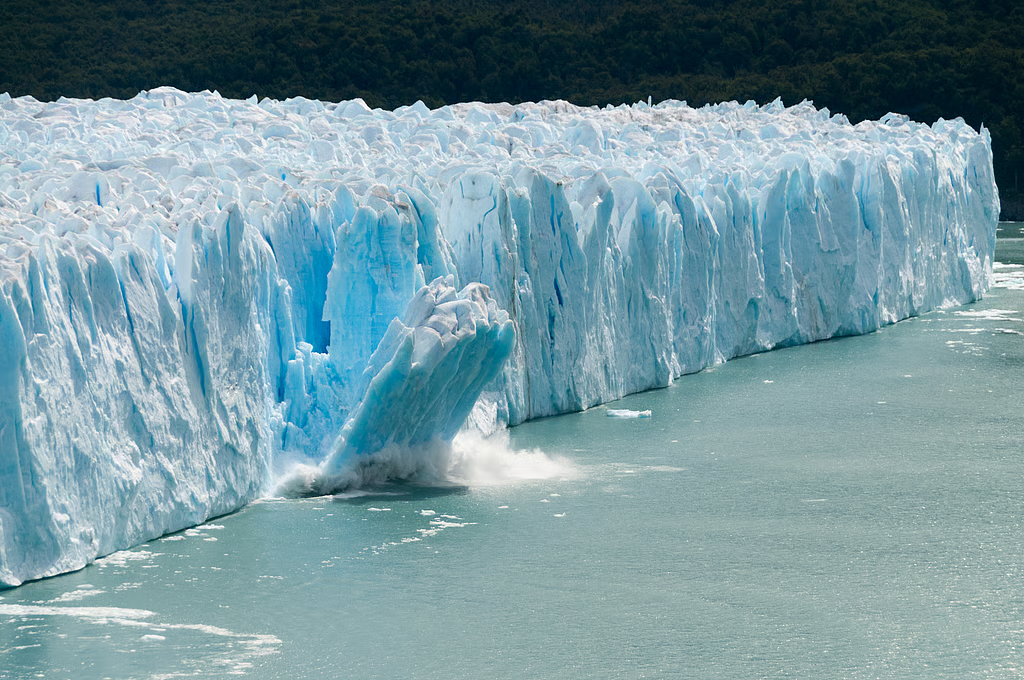
The BBC reported that scientists studying the event believe the collapse may have started on the slopes of Langtang Lirung, about 15 kilometres from the area where the flooding caused widespread destruction.
The force of the falling ice and rock generated seismic energy equivalent to a magnitude 5.2 event.
The precise cause of the glacier collapse remains unknown. However, scientists have warned that rising temperatures are destabilising Himalayan glaciers and surrounding mountain slopes.
Climate change is contributing to glacier loss and thawing permafrost, which plays an important role in stabilising steep terrain.
Read More : Iran Denies Nuclear Ambitions
Experts say these changes can increase the risk of glacier collapses, landslides and other related disasters.
Scientists caution that it is too early to conclude that climate change directly caused Wednesday’s disaster.
However, they say warmer conditions may have weakened the glacier and surrounding terrain, potentially increasing the likelihood of a catastrophic collapse.