Trending


The Nigerian Government has described the recent airstrike in the Jilli axis of Gubio Local Government Area of Borno State as a targeted counter-terrorism operation conducted under Operation HADIN KAI by the Nigerian Air Force.
It maintained that the operation was not indiscriminate, noting that the area had long been classified as a high-risk zone with security advisories restricting civilian movement.
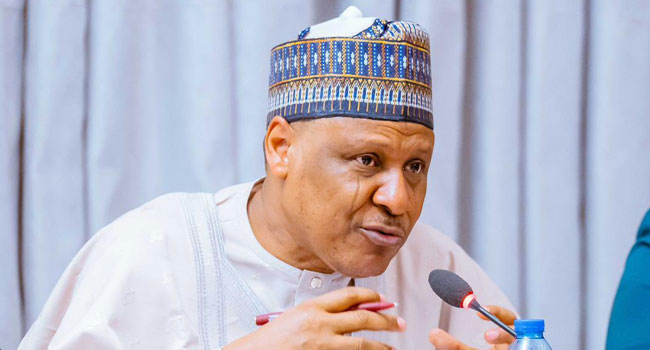
This was contained in a statement issued on Tuesday by the Minister of Information and National Orientation, Mohammed Idris, providing an official account of the airstrike which reportedly led to some civilian casualties.
Read More : Shettima Reiterates Calls For UN Reform
According to the statement, the operation followed sustained intelligence, surveillance, and reconnaissance which identified the Jilli axis, locally known as “Kasu Daulaye” (the terrorists’ market), as an insurgent-controlled enclave used for logistics, levy collection, and coordination of attacks by Boko Haram and Islamic State West Africa Province elements.
The government added that the assessment was reinforced on 12 April 2026 after the arrest of a 15-year-old ISWAP courier, Tijjani, in Ngamdu, who allegedly admitted to transporting funds and logistics between Jilli and other locations, highlighting the exploitation of civilians, including minors.
It also cited confirmation from Babagana Zulum, who reportedly stated that Jilli and Gazabure markets had been officially shut for five years due to insurgent control, describing the area as a known terrorist stronghold.
Authorities further noted that the Bindul–Jilli corridor has long been identified as a key terrorist route, referencing earlier incidents including an IED attack in January 2026 and coordinated assaults in Ngamdu and Benisheikh on 9 April linked to the same network.
Following weeks of surveillance, the Nigerian Air Force, working alongside the Nigerian Army, confirmed the presence of insurgent elements before carrying out the strike aimed at disrupting supply chains and weakening their operational capacity.
The Federal Government said it has ordered a full and independent investigation into the incident to review intelligence gathering, targeting, and execution processes, and to ensure accountability where necessary.
It added that operational safeguards would be strengthened, while reaffirming that the protection of civilian lives remains a core responsibility of the Armed Forces.
The government also disclosed ongoing collaboration with the Borno and Yobe State governments, as well as National Emergency Management Agency and state emergency agencies, to provide humanitarian assistance to affected communities.
Civilians were urged to adhere strictly to security advisories, avoid restricted zones, and cooperate with security agencies. The government also called on the media to report responsibly on security matters, warning that unverified reports could undermine national efforts.
Reaffirming its position, the Federal Government stressed that press freedom must be balanced with responsibility, emphasising the importance of accurate and verified reporting on national security issues.
It further highlighted progress in counter-terrorism efforts, noting that the Attorney General of the Federation, Lateef Fagbemi, recently disclosed that 386 convictions were secured from 508 terrorism-related cases at the Federal High Court in Abuja.
Read More : Abia Arrests 86 Over Sanitation Violations
The convictions, involving Boko Haram and ISWAP suspects, reportedly included life sentences for individuals found guilty of providing material support to insurgents. The trials were monitored by observers from Amnesty International, the Nigerian Bar Association, and the National Human Rights Commission.
The government also referenced the publication of a list of 48 individuals and entities linked to terrorism financing, insisting there is no safe haven for sponsors of terrorism.
It reaffirmed its commitment to combating terrorism and banditry, stating that it would not allow tragic incidents to weaken national resolve or undermine military operations.