Trending
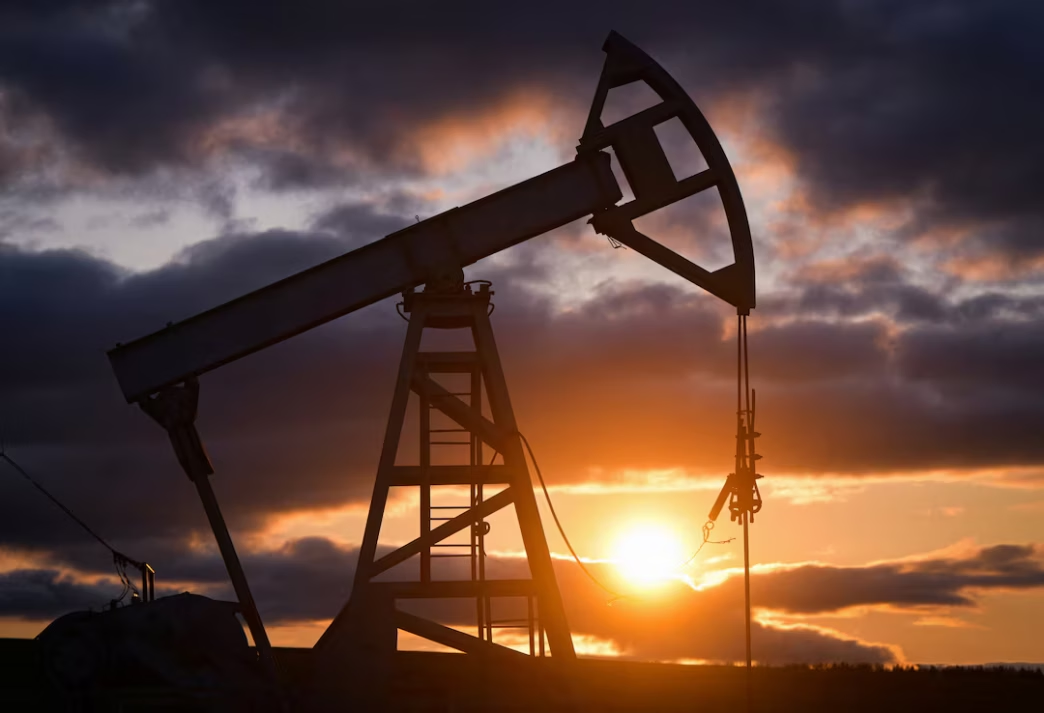
Oil prices climbed more than 1 per cent in early trade on Wednesday as hostilities erupted anew in the Middle East and diplomatic talks between Iran and the United States stalled.
Brent futures rose $1.05, or 1.09 per cent, to hit $97.05 a barrel, while U.S. West Texas Intermediate (WTI) crude increased by $1.01, or 1.08 per cent, to settle at $94.77.
The price surge follows the previous session, where both benchmarks settled at a one-week high.
Read More : Petrol Price Hike Looms as Crude Hits $115
The market reacted sharply after Iran launched ballistic missiles toward Kuwait and Bahrain.
Although the missiles failed to hit their targets, the U.S. military responded by conducting strikes on Iran’s Qeshm Island.
Traders continue to watch the conflict closely as Tehran reviews a U.S. proposal to halt the war.
While Iranian media reported on Tuesday that Tehran had not communicated with Washington for several days, President Donald Trump stated that negotiations have continued without interruption.

Compounding the supply worries, ANZ Bank senior commodity strategist Daniel Hynes warned that Iranian sea mines block vital portions of the Strait of Hormuz, complicating any efforts to reopen the waterway.
He noted that while a few more vessels are attempting the journey, total transits remain significantly below pre-conflict levels.
Read More : CBN Gives Preliminary Nod to JPMorgan
The broader conflict has reached a stalemate under a shaky ceasefire, more than three months after the U.S. and Israel first launched strikes against Iran.
Favourable domestic supply data also supported the price hike. Market sources, citing American Petroleum Institute data released on Tuesday, revealed that U.S. crude oil inventories fell by 6.8 million barrels for the week ended May 29, marking the seventh straight weekly decline.
The U.S. government will release its official stockpile data later on Wednesday morning.