Trending
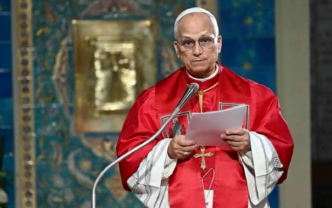
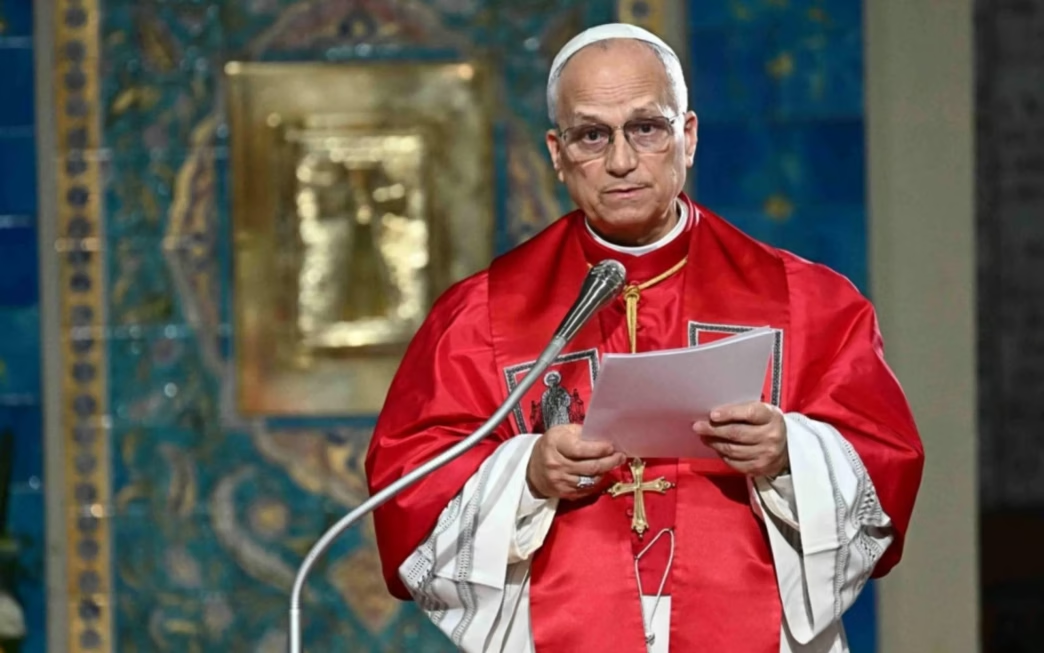
Pope Leo XIV’s visit to Equatorial Guinea on Tuesday marked the first day of the final stage of his 11-day African tour.
The Pope urged the nation to “place itself in the service of law and justice” during his speech at the presidential palace in Malabo, addressing the country’s authoritarian leadership. Equatorial Guinea, led by President Teodoro Obiang Nguema Mbasogo, is one of the most closed-off states in Africa, regularly accused of human rights abuses.
Obiang, Africa’s longest-serving head of state at 83, welcomed the Pope to the country. In his speech, Pope Leo adopted a less sharp tone than during previous stops, calling on the government to evaluate its development paths and position itself positively on the international stage.
He highlighted the role of oil and mineral exploitation in fueling global conflicts, underscoring how the country’s vast oil revenues have failed to uplift its population, leaving the vast majority in poverty.
Hydrocarbon production accounts for nearly half of the country’s GDP and more than 90% of its exports. Yet, according to Human Rights Watch, oil wealth has funded the lavish lifestyles of a small elite, including President Obiang’s son, Teodorin Nguema Obiang Mangue, who was convicted in France for money laundering and embezzlement.
While the Pope expressed regret over the widening gap between the wealthy elite and the poor, he was careful not to directly challenge the regime. His visit, which followed in the footsteps of Pope John Paul II’s 1979 trip, was met with mixed reactions from the public. Some feared that his visit would not result in any meaningful change, as the regime continues to face accusations of human rights abuses and authoritarianism. Others, however, viewed it as a “divine blessing” for the country’s people.
As the Pope prepares for further travels within the country, his visit remains a delicate balance between offering spiritual support to the faithful and refraining from directly confronting the regime’s actions. Despite this, the visit has drawn international attention to the country’s internal struggles.