Trending
Lagos State Governor, Babajide Sanwo-Olu, has ordered the demolition of illegal shanties and makeshift structures along the median of the Lagos-Badagry Expressway, giving occupants 72 hours to vacate the area.
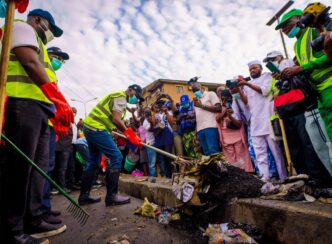
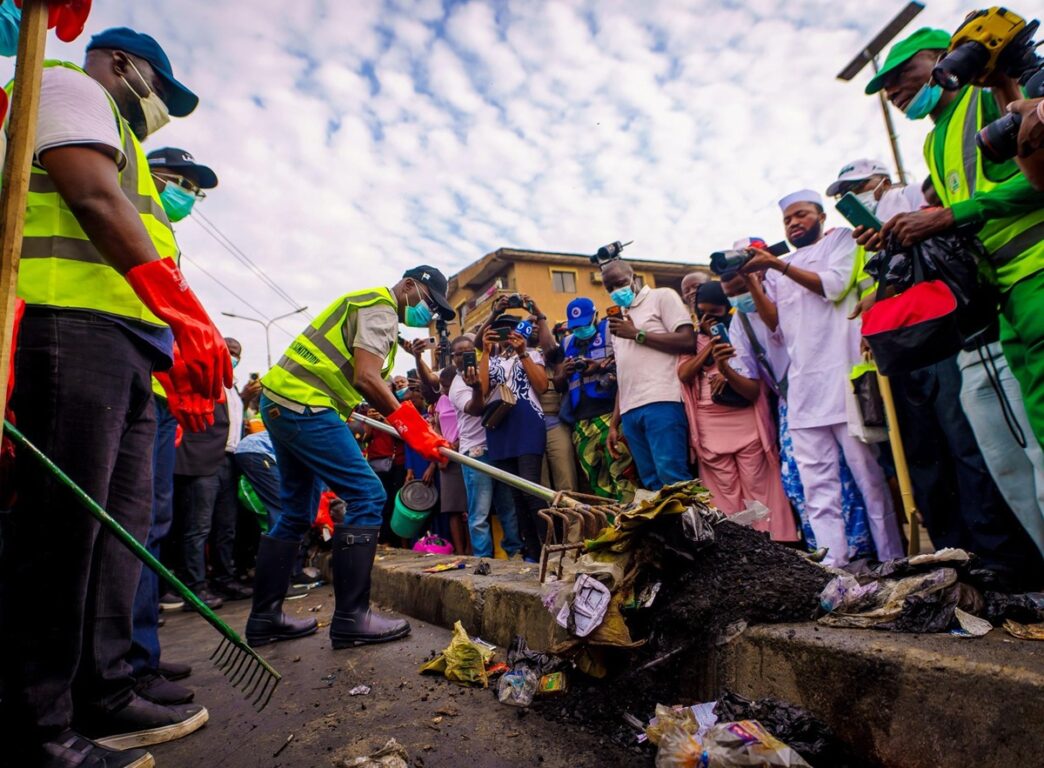
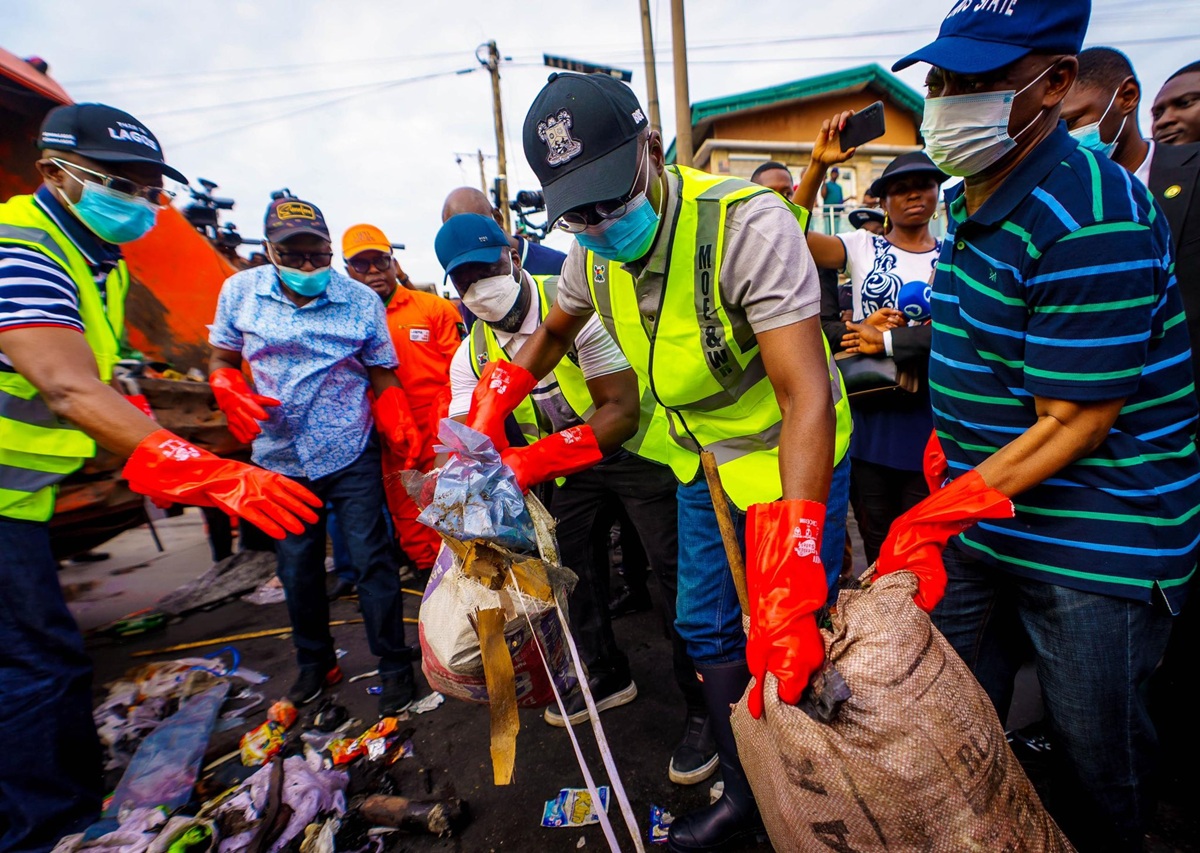
The governor announced the directive on Saturday after participating in the monthly environmental sanitation exercise in Surulere Local Government Area alongside his wife, Ibijoke Sanwo-Olu.
Sanwo-Olu said enforcement teams would begin clearing illegal structures along the corridor next week, covering the stretch from Orile-Iganmu to Okokomaiko.
Read More : Abia Arrests 86 Over Sanitation Violations
He said the median was never intended for markets or residential structures, stressing that all illegal developments along the route would be removed. He explained that the 10-lane highway was built with public funds and would not be allowed to deteriorate into a slum, adding that thousands of personnel would be deployed for the operation.
“This is the final notice to everyone occupying the median of the Lagos-Badagry Expressway. Starting next week, we will clear the entire median. Everything there will go. Every illegal structure will be removed.
“It is not meant to be a market. It is not meant to be a place where people erect structures. It is a highway median, and we must preserve it, especially considering the huge public investment on that corridor.
“It’s a 10-lane highway that was built with the resources of our taxpayers. I will not fold my arms and allow them to turn that international gateway into a slum. This is a notice that I am giving officially to everybody on that corridor. We are starting next week, and we are going to deploy thousands of men there,” Sanwo-Olu said.
The governor also outlined measures to improve waste management across the state, revealing that the government would soon add 150 waste compactors to its collection fleet while deploying waste tricycles to improve services in inner communities.
Earlier today, I was out in Surulere to personally inspect our monthly environmental sanitation cleanup.
Seeing residents working side by side with the Ministry of Environment teams to clear the drains and sweep the streets was very encouraging. We must always remember that… pic.twitter.com/DPtqEhPH3y
— Babajide Sanwo-Olu (@jidesanwoolu) June 27, 2026
He said the state was investing in long-term waste-processing infrastructure, including a modern materials recovery and recycling facility expected to process about 4,250 metric tonnes of waste daily.
Sanwo-Olu urged residents to complement the government’s efforts by disposing of waste responsibly and paying their waste collection bills promptly, noting that regular payments enable Private Sector Participation operators to sustain efficient waste collection services.
“Waste management is not the responsibility of the government alone. It is a collective responsibility.
“Residents must also play their part by paying for waste collection services. That is what enables the PSP operators to continue providing efficient services,” he said.
He also encouraged parents to involve their children in sanitation activities, saying environmental responsibility should be cultivated from an early age to build a cleaner and healthier Lagos.
Speaking separately during an inspection of the Olusosun Landfill, the Commissioner for the Environment and Water Resources, Tokunbo Wahab, said Lagos was moving away from its long-standing “collect and dump” waste management model.
According to him, the government is developing a material recovery facility to convert waste into useful products and resources.
Wahab explained that the Olusosun site would function as a transfer loading station, moving about 2,500 metric tonnes of waste daily to a new material recovery facility under construction in Ikorodu, which is expected to commence operations before the end of the year.
He said the state could no longer sustain the linear waste-disposal system because of limited land availability, adding that the new approach would transform waste into wealth, energy, and other valuable resources.
“This place will be one of the transfer loading stations that will transfer about 2,500 metric tonnes of waste a day to the material recovery facility that will be located in Ikorodu. The target is for it to commence operations before the end of the year, so we just have to come and see what they are doing.
Read More : Gbajabiamila Denies PFIPC Allegations
“We can’t sustain the linear waste management system that we have practised for over four decades, which simply means we have been used to collecting and dumping. Collect and dump cannot be sustainable. Even if we leave climate issues aside, we simply do not have the land for it.
“So let us make waste a resource,for wealth, for energy, and for many other purposes. That is the transition we are going through now,” he said.
The commissioner appealed to residents to support the government’s ongoing waste management reforms as the transition progresses.