Trending
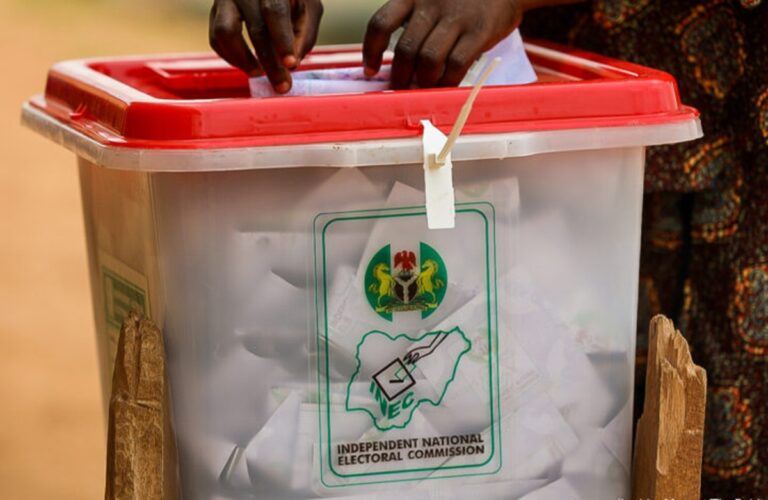
The Socio-Economic Rights and Accountability Project (SERAP) has given the Independent National Electoral Commission (INEC) a seven-day ultimatum to account for more than ₦126.46 billion in electoral funds flagged in the Auditor-General of the Federation’s 2023 audited report.
SERAP also demanded that INEC refer the alleged financial irregularities to the Economic and Financial Crimes Commission (EFCC) and the Independent Corrupt Practices and Other Related Offences Commission (ICPC) for investigation, prosecution and recovery.
In a letter dated September 12, 2026 and signed by SERAP Deputy Director Kolawole Oluwadare, the organisation said the funds were appropriated for the procurement of ballot boxes, electoral devices and materials, sensitive materials and result sheets, vehicles, accreditation devices, audit and consultancy services, digital archiving and other goods and services for elections.
According to SERAP, the Auditor-General’s report, published on August 7, 2026, contains several findings on expenditures incurred between January and December 2022, with some extending to December 31, 2023.
SERAP said the Auditor-General found that INEC “irregularly paid” more than ₦112.15 billion for ballot boxes, electoral devices, items and materials without competitive bidding or a Bureau of Public Procurement (BPP) Certificate of No Objection.
“The Auditor-General found ‘no evidence that the items were procured,’” SERAP said, adding that the contracts were awarded to companies whose “competences, experience, capacities, addresses and factory locations were unknown.”
The organisation said the Auditor-General was concerned that the money “may have been diverted” and had called for its recovery.
SERAP further cited an alleged payment of more than ₦1.05 billion for a Toyota Prado TXL 2021 Model without advertisement, competitive bidding, bid evaluation or a BPP Certificate of No Objection.
According to the organisation, the Auditor-General feared that the money “may have been lost” and that the contracts “may have been inflated.”
SERAP also said INEC paid more than ₦3.13 billion to four contractors for ballot guides, sensitive materials and result sheets before the contracts were awarded, with no evidence of payment.
It said the Auditor-General was concerned that the money “may have been diverted” and recommended that it be recovered and remitted to the treasury.
The organisation also cited more than ₦9.24 billion allegedly paid for 22 contracts for similar goods and services, which it said were “split to circumvent procurement procedures and awarded on the same day.”
SERAP said the Auditor-General raised concerns that the money “may have been lost” and that “the payment may have been made for items not supplied.”
Other findings cited by SERAP included more than ₦129 million paid to 19 accounting firms for financial audit services, without evidence of utilisation, requests, or expenditure by the consultants.
The Auditor-General also reportedly questioned more than ₦504 million paid for accreditation devices without due procurement procedures, citing concerns that an APG expired before the security licence key was delivered and that the software was valid for only four months.
SERAP said the Auditor-General also flagged more than ₦235 million paid to unqualified contractors for sleeping mats and digital archiving, raising “serious concerns regarding the eligibility and capacity of the contractors.”
The organisation urged INEC and its Chairman, Professor Joash Amupitan, to provide details of the payments, beneficiaries, contracts, procurement processes, and the contractors and suppliers involved, as well as evidence that the goods and services were delivered, used, and remain accounted for.
“Electoral resources are public resources. INEC must be able to account for every naira, demonstrate that it was lawfully spent and show that it served the purposes for which it was appropriated,” SERAP said.
It also urged INEC to identify the officials, contractors, companies, suppliers and consultants responsible for the transactions and take steps to recover funds found to have been unlawfully or irregularly paid, lost or diverted.
SERAP called for the Auditor-General’s findings to be referred to the EFCC and ICPC, saying any investigation should cover contractors, companies, suppliers and consultants who received the funds, as well as public officials who authorised, processed, facilitated or benefited from the transactions.
“The recommended investigations should determine, among other things: whether the contracted goods and services were actually supplied; whether payments corresponded with goods and services actually delivered; and whether contracts were deliberately split to circumvent procurement requirements,” the organisation said.
SERAP also asked INEC to ensure that electoral equipment and other public assets covered by the findings are not disposed of, transferred, destroyed or otherwise dealt with in a way that could frustrate accountability or recovery while reconciliation and investigations are ongoing.
The organisation said Nigerians have a right to know how public funds entrusted to the electoral commission were spent.
“Nigerians have a right to know every public act, everything that is done in the public interest, by their public institutions including INEC,” SERAP said.
It added that democracy requires an informed citizenry and that citizens are entitled to know how resources provided for conducting elections have been used.
SERAP said the recommended measures should be taken within seven days of receiving or publishing the letter, warning that it would take legal action if INEC failed to respond.