Trending
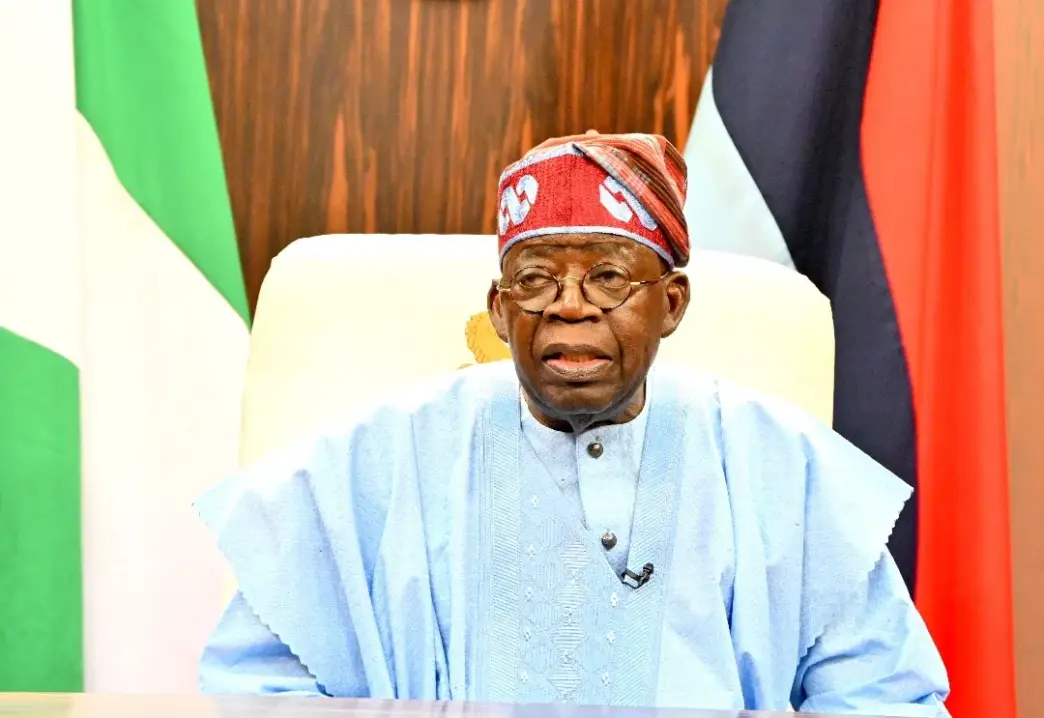
President Bola Ahmed Tinubu has inaugurated a Presidential Working Group on the National Policing Bill, beginning preparations for the legal framework needed to implement state police nationwide.
The committee was inaugurated on Tuesday at the Presidential Villa in Abuja by the President’s Chief of Staff, Femi Gbajabiamila, on behalf of President Tinubu.
The move follows the passage of the Constitution Alteration (State Police) Bill, 2026, by the National Assembly, which provides a foundation for a dual policing structure comprising the Federal Police Service and 36 State Police Services.
Read More : Owerri Airport Runway Set for Temporary Closure
President Tinubu said the constitutional amendment only creates the framework for state police, while the proposed National Policing Bill would provide the legal structure needed for its implementation.
“The Constitution Amendment Bill establishes the framework for dual policing, but it does not operationalise it. That work is left to the National Policing Bill,” Tinubu said.
The President said the proposed legislation would establish key guidelines, including minimum policing standards, state readiness certification, federal-state coordination mechanisms, accountability measures, human rights protections, and funding requirements. He added that the working group was created to ensure implementation plans are ready once the constitutional amendment process concludes.
“The Working Group has been constituted to produce a technically robust, implementation-ready draft National Policing Bill for transmission to the National Assembly,” he said.
Tinubu said the process could not wait until the amendment was fully completed, adding that early preparation would prevent delays in establishing the new policing structure.

The committee is chaired by Gbajabiamila and includes the Attorney-General of the Federation, the President of the Nigerian Bar Association, the Chairman of the Nigeria Governors’ Forum, the National Security Adviser, the Inspector-General of Police and other key stakeholders.
Speaking on behalf of governors, Dapo Abiodun pledged support for the speedy implementation of the reform, describing state police as a response to Nigerians’ long-standing demand for community-based security.
“This bill has answered the cries of Nigerians about cascading policing and removing it from the Exclusive Legislative List,” Abiodun said.
He said the initiative could significantly expand Nigeria’s security workforce, estimating that if each state deploys about 6,000 personnel, nearly 200,000 officers could be added to complement the existing federal police structure.
The Attorney-General of the Federation and Minister of Justice, Lateef Fagbemi, described the reform as necessary given the country’s security challenges.
“There is no denying the fact that we are in a critical moment security-wise, and all hands must be on deck,” Fagbemi said.
Meanwhile, the President of the Nigerian Bar Association, Afam Osigwe, backed the state police initiative but called for safeguards to prevent abuse. He added that strong legal protections were needed to ensure accountability and prevent misuse of state police powers.
“We must ensure we do not create a monster. The right legal framework must guarantee accountability and prevent oppression,” he said.
The working group is expected to produce a draft National Policing Bill to guide the establishment, regulation, and oversight of state police services nationwide.