Trending
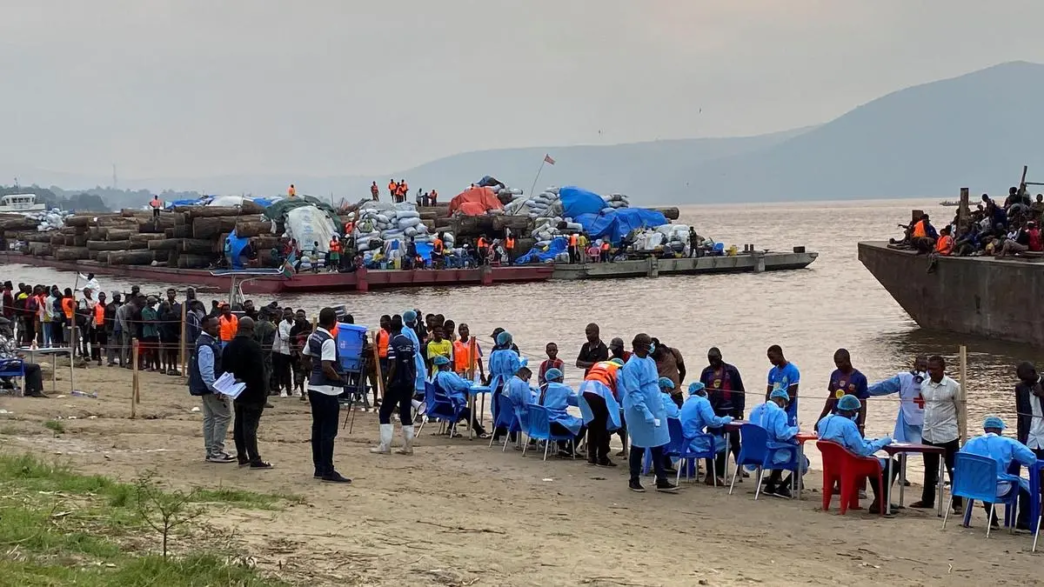
Health authorities have confirmed that no cases of Ebola were detected among passengers on a river boat quarantined near Kinshasa, easing fears that the virus could spread to the Democratic Republic of Congo’s capital.
More than 200 passengers were placed in quarantine on Thursday at the port of Maluku, about 65 kilometres (40 miles) from Kinshasa, after a former passenger died with symptoms consistent with Ebola.
Following the quarantine, specialist teams from the Ministry of Health were sent to Maluku to examine everyone on board. Passengers showing suspicious symptoms were tested, with samples sent to a laboratory for analysis. The vessel was also decontaminated, the ministry said on Saturday.
The National Institute of Biomedical Research, which oversees testing, said all suspected cases tested negative for the Bundibugyo strain of Ebola. It also urged residents of Kinshasa to remain calm.
The Democratic Republic of Congo is currently battling what has been described as the fastest-spreading Ebola outbreak in history. Since the outbreak began in May, more than 4,200 cases have been confirmed, including over 1,900 deaths.
Africa CDC Director-General Jean Kaseya said on Thursday that the passenger who later died had fallen ill and disembarked nearly three weeks earlier in Pimu, in Mongala province. Pimu is more than 1,000 kilometres from Kinshasa along the Congo River.

Kaseya said the capital had no confirmed Ebola cases.
The death of the passenger triggered concern in Kinshasa, particularly because the city is far from the eastern region where the outbreak is concentrated. The outbreak is currently the second-largest on record, behind the 2014–2016 West Africa outbreak, which recorded more than 28,000 cases and over 11,000 deaths.
Ebola is highly contagious and can spread through contact with bodily fluids, including vomit, blood and semen. It can also be transmitted through contact with contaminated surfaces and materials such as bedding and clothing.
Health authorities say between 60% and 70% of new infections in the current outbreak are occurring among people who are not part of monitored contacts. They have warned that the virus is spreading at an “alarming” rate, faster than health teams can track and contain it.
Doctors Without Borders, also known as Médecins Sans Frontières, said this week that the outbreak is still “spreading at an alarming and unprecedented rate” and that the response, despite expanding, “is still not reaching communities quickly enough to break transmission chains.”