Trending
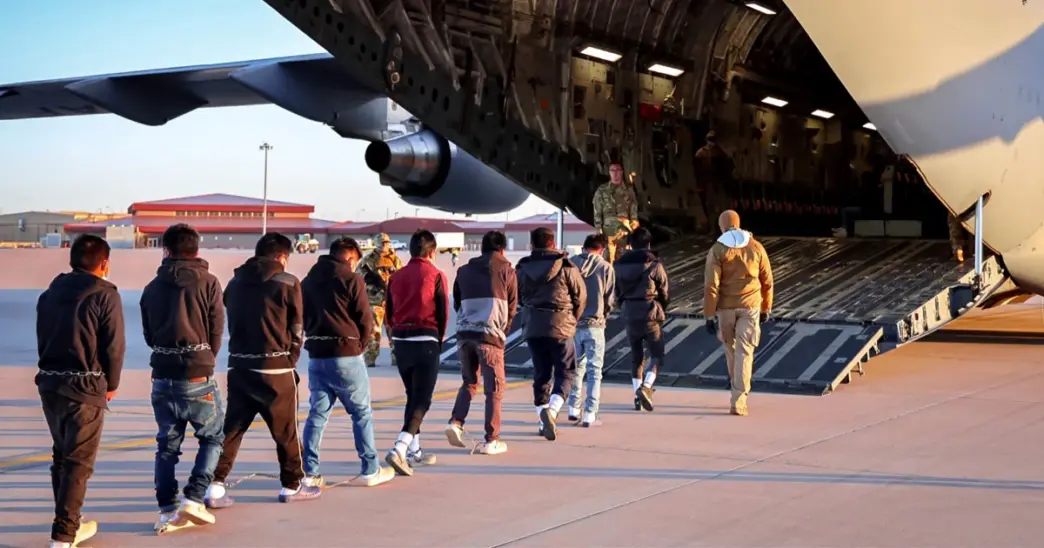
The U.S. government triggered a sweeping migrant relocation campaign across Africa by first threatening a swath of African nations with aggressive visa bans.
Leveraging multi-million-dollar cash incentives, the U.S. government effectively forces African nations to act as proxy holding centres for third-country deportees.
Lawyers and human rights advocates describe the programme as a form of state-sanctioned human trafficking that strips individuals of their fundamental legal rights.
Read More : Dangote IPO Tests Africa’s Capital Markets
The strategy bypasses traditional immigration protocols by targeting individuals who hold technical protections under the global Convention Against Torture.
While U.S. courts historically barred immigration authorities from returning these migrants to their dangerous homelands, current policy exploits a loophole by expelling them to entirely unrelated third countries.
U.S. Immigration and Customs Enforcement (ICE) considers this group accessible targets because their active deportation orders make it logistically simple to load them onto planes in the middle of the night.
Asylum Seekers
The human cost of this policy spans continents and ensnares long-term U.S. residents alongside recent asylum seekers.
In one striking case, Roberto Mosquera, a Cuban-born plumber who spent his entire adult life in Florida, disappeared into custody during a routine immigration check-in.
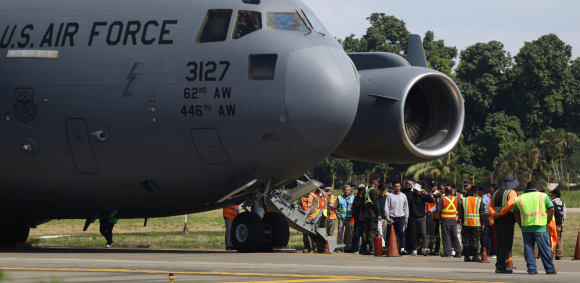
Federal agencies falsely labelled him a violent criminal to the media before flying him to Eswatini, Africa’s last absolute monarchy.
A year later, Mosquera remains trapped inside a notorious high-security prison used by the local regime to silence dissidents.
Similarly, Cambodian national Pheap Rom endured months in the same facility without formal charges after finishing a U.S. prison sentence.
Immigration authorities initially claimed they had sent Rom to Thailand before finally acknowledging his transfer to the small southern African kingdom.
Activists note that the prison operates as a complete legal vacuum, effectively cutting off detainees from any form of legal counsel.
To secure compliance for these arrangements, Washington employs an aggressive carrot-and-stick approach across the continent.
Democratic senators revealed that the U.S. granted Eswatini 5.1 million dollars to accept 160 deportees, while Rwanda received 7.5 million dollars in aid for a similar agreement.
Conversely, nations that refuse to participate face swift diplomatic and financial retaliation.
Suspended Visa Services
When Nigeria and Burkina Faso rejected American overtures to take in foreign nationals, Washington abruptly suspended visa services and imposed strict travel restrictions on their citizens.
For accommodating nations like Ghana, the benefits are transactional.
Shortly after Accra accepted West African deportees, Washington lifted a 15 per cent tariff on Ghanaian agricultural exports.
However, the subsequent treatment of those deportees reveals a systematic disregard for international law.
Security forces in Ghana routinely strip deportees of their documentation before dumping them across the border in neighbouring Togo or forcing them onto aircraft heading back to the very homelands where they face severe persecution.
The United Nations International Organisation for Migration (IOM) frequently pressures stranded migrants in countries like the Democratic Republic of Congo and Cameroon to sign “voluntary” repatriation agreements.
Migrants report being cornered into returning home under the threat of indefinite detention in foreign transit hotels.
Read More : AI Transforms Nigeria’s Classrooms
Former State Department officials admit that once deportees leave U.S. custody, American authorities completely wash their hands of any responsibility for their welfare.
Despite mounting legal challenges from human rights organisations, federal agencies defend the practice as a vital measure for homeland security.
As the network of third-country agreements expands to include nations like Sierra Leone and the Central African Republic, hundreds of displaced individuals remain scattered across the globe, trapped in a permanent cycle of state-sponsored displacement.