Trending
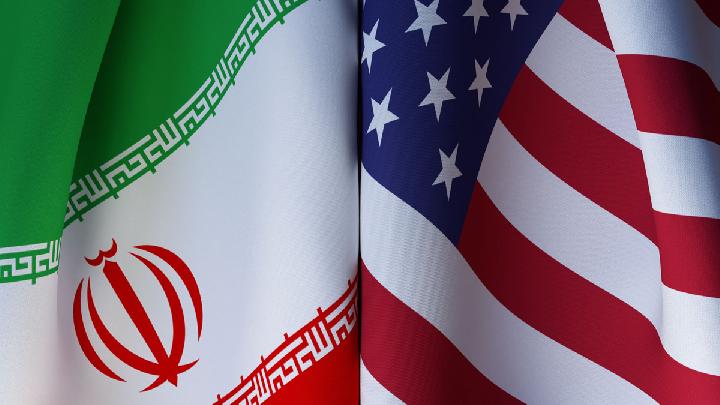
US officials have released the full text of the US-Iran Memorandum of Understanding (MoU) to extend the ceasefire, reopen the Strait of Hormuz, and help bring an end to the nearly four-month conflict between the two countries.
The Trump administration has described the 14-point agreement as “performance-based”, with Iran benefiting only if it complies with its commitments.
President Donald Trump, while speaking at the G7 summit in Evian-les-Bains in France, said that the deal will be formally signed “shortly”, potentially as soon as Thursday.
Read More : UNGA: Lavrov Offers Help in Gulf, Slams Europe
Here are the key points of the agreement.
1) An End to Conflict on All Fronts
The first section of the agreement states that the United States, Iran and their allies will declare an “immediate and permanent” end to military operations on all fronts, including Lebanon.
For Washington, the provision reflects concerns within the Trump administration that continued Israeli military actions against Hezbollah could undermine the agreement with Iran.
Iran has also repeatedly insisted that Lebanon be included in any ceasefire arrangement.
An Iranian Foreign Ministry spokesperson said on Wednesday that any continued Israeli military operations in Lebanon would constitute a “violation of the understanding” and that “necessary measures will be taken.”
The agreement further states that neither side will initiate military action or threaten the other and will respect Lebanon’s territorial integrity and sovereignty.
According to the document, the final agreement is expected to lead to the permanent termination of the conflict.
2) Respect for ‘Internal Affairs’
According to the BBC, in a statement read verbatim to reporters during a call with US officials, the United States and Iran have agreed to “respect each other’s sovereignty and territorial integrity” and refrain from interfering in each other’s internal affairs.
The provision is expected to draw criticism from Iranian dissident groups.
Earlier this year, former US President Donald Trump told Iranian protesters during nationwide demonstrations that “help is on the way.”
3) An Extendable 60-day Timeline
According to the agreement, the United States and Iran will commit to negotiating and reaching a final deal within 60 days, although the timeline can be extended by mutual consent.
The 60-day countdown is expected to begin once both countries formally sign the Memorandum of Understanding (MoU) at a ceremony scheduled for Geneva later this week.
Iranian Foreign Ministry spokesperson Esmaeil Baqaei said: “So far, our plans for the Geneva meeting have not changed. Regarding the signing of the memorandum of understanding, one idea is that it be done by the presidents of the two countries, which is currently under review.”
The ministry also confirmed that both sides have agreed to reach a “final understanding” within 60 days.
4) US to End Blockade
Once the Memorandum of Understanding (MoU) is signed, the United States will begin lifting its naval blockade and removing any “disturbances or impediments” affecting Iranian ports, according to the agreement’s fourth point.
The blockade is expected to be fully lifted within 30 days, according to the document and Iran’s Ministry of Foreign Affairs. During this period, the number of vessels allowed to pass through Iranian ports will be linked to the level of traffic Iran restores in the Strait of Hormuz.
Within 30 days of a final deal being signed, the US has also committed to withdrawing American forces from the “proximity of Iran.” In practical terms, this means US military assets would return to their pre-conflict posture before hostilities began on 28 February.
5) Strait of Hormuz
The agreement states that, upon signing the Memorandum of Understanding (MoU), Iran will “make arrangements using its best efforts” to ensure the safe passage of commercial vessels through the Strait of Hormuz at no charge.
This has been a key objective for the United States since the conflict began and the Strait was closed, leading to a spike in global oil prices.
The document notes that maritime traffic will begin flowing “immediately,” although this will take into account the need to remove technical and military “obstacles” and carry out de-mining operations.
Officials repeatedly emphasised that vessels will not be charged for transit through the Strait of Hormuz.
In the longer term, Iran is expected to work with Oman and other Gulf states to develop a “broader” agreement on managing the waterway.
US officials believe Iran will assert its rights “aggressively,” but maintain that Gulf states would “never” accept any future tolling system in the Strait.
6) Money for Iran reconstruction
The sixth point of the MoU states that the US and regional partners will develop a “definitive, mutually agreed plan” worth at least $300 billion (£224 billion) for reconstruction and economic development in Iran.
The final mechanism will be agreed within 60 days of the final deal, and all licences, waivers and permissions will be granted by the US.
However, this does not mean the US will be financially involved.
One official noted that the US is not required to pay “a cent of money” to Iran, or contribute to the fund.
As a hypothetical example, the official said that if Iran “behaves”, Emirati authorities could build a power plant in Iran, with US blessing.
Trump and other officials have gone to great lengths to make clear to the US public that it will not be paying Iran directly, which the administration says stands in stark contrast to the 2015 nuclear agreement between Iran and the Obama administration.
7) Sanctions to end
The US will terminate all economic sanctions against Iran, including those imposed under UN Security Council resolutions and those imposed unilaterally by the US. However, the timeline is unclear.
The document states that the schedule will be agreed upon as part of the final deal, but that both sides acknowledge their intentions to “immediately” address the issue in subsequent negotiations.
Iran has been hard-hit by sanctions, and a US campaign – Operation Economic Fury – has sought to cut Tehran off from the global financial system.
8) No nuclear weapons
Iran has agreed to not procure or buy a nuclear weapon, and both sides have agreed to deal with the enriched uranium Tehran already has.
The method to manage the material is unclear. The document notes that the mechanism “will be mutually agreed upon” in subsequent talks, but that, at a minimum, it will be “downblended” in place under the supervision of the International Atomic Energy Agency, or IAEA.
A senior US official described this as a “minimum standard” and a “major win” for the US.
Trump said preventing Iran from acquiring a nuclear weapon was “99%” of the goal behind Operation Epic Fury. Sanctions relief under Point 7 will depend on Iran meeting the conditions outlined in Point 8, as the deal is performance-based.
9 & 10) A ‘status quo’
The following two parts of the agreement specify that the US and Iran agree to a “status quo” of its nuclear programme in the meantime, until the enriched uranium can be dealt with.
In practice, this means that the US will not impose new sanctions. In the meantime, it will issue waivers for the export of oil, petroleum products and other associated services, such as banking transactions and transportation.
11) Frozen funds
This issue has been a major obstacle to negotiations between the two sides.
Iran has long demanded the release of its frozen assets, describing them as an important economic lifeline.
The eleventh point of the document states that the United States “undertakes to make fully available frozen or restricted funds” once the Memorandum of Understanding (MoU) is signed, with procedures to be agreed during further negotiations.
A US official told reporters on Wednesday that some assets will be released while post-MoU talks continue, as part of efforts to reward Iran for complying with key aspects of the agreement, including beginning to address its highly enriched uranium stockpile.
12-14) Monitoring and final negotiations
The final sections of the document outline how the agreement will be implemented.
Read More : Trump Rejects Iran Proposal To Reopen Hormuz
They state that the United States and Iran will establish a mechanism to monitor compliance with the Memorandum of Understanding (MoU) and any future agreement, although details of how it will operate have not yet been disclosed.
Once the MoU is signed and implementation begins, both countries will move into negotiations for a final agreement.
The document also states that the final deal will be backed by a binding resolution of the United Nations Security Council.