Trending
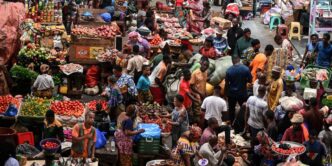
A woman ran out of cooking fuel in the past year in cities and villages in 38 countries from Senegal to South Africa. A father had no income from cash. A child missed a doctor’s visit the family couldn’t pay for. These were not extraordinary moments, according to the most comprehensive survey of African public opinion ever conducted. To most of the continent, they were the stuff of everyday life.
The findings, published this week by Afrobarometer – a pan-African research network that interviewed 50,961 people across the continent between 2024 and 2025 – hit like a verdict. After years of official optimism, GDP projections and IMF benchmarks, most Africans say they just don’t feel it.
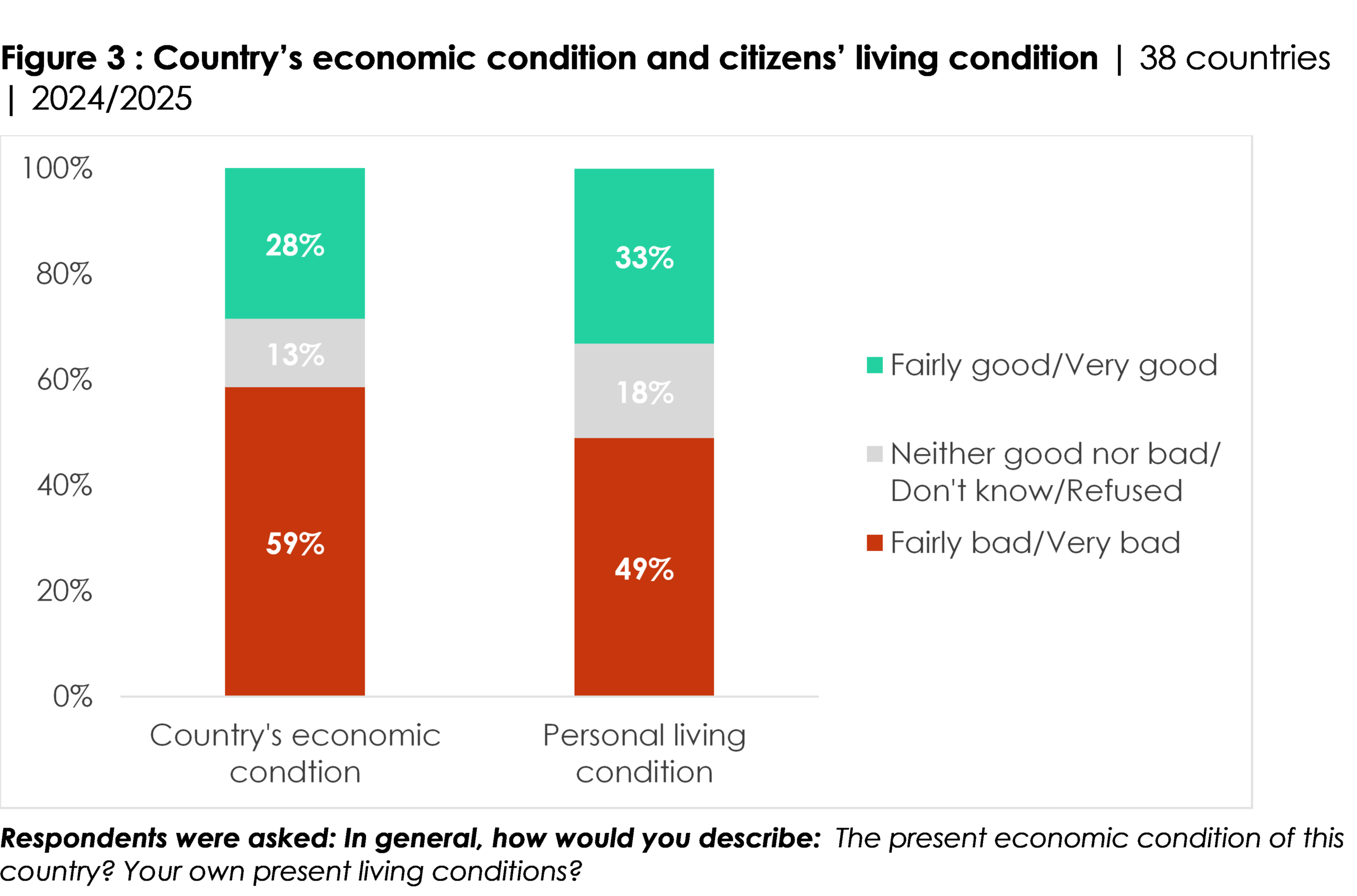
Six in ten say their country’s economy is bad. About half say the same of their own lives. And what about the governments that are to change that? They are getting almost universal failing grades.

The stark numbers are even starker when put in a historical context. Afrobarometer, which has consistently surveyed the same 28 countries since 2014, found perceptions of economic conditions, though slightly improved since the worst of the post-Covid years, are still six percentage points worse than they were a decade ago. As it stands, the recovery has failed to recoup lost ground.
The math of deprivation
The survey notes something harder to dismiss than sentiment: material deprivation, with details. Almost eight in 10 Africans (79%) said they or a family member experienced a time in the past year when they had no cash income. Majorities also lacked medical care (65 percent), food (58 percent), clean water (57 percent) and cooking fuel (52 percent).
These are not statistics of poverty in the abstract. They are a record of specific moments of need, reported by individuals across the full economic spectrum of 38 countries. These numbers over-represent the continent’s poorest nations, but the scale of the response makes this something else: a portrait of systemic insufficiency at the heart of the African economic story.
Unemployment was the second-highest priority citizens want their governments to address after healthcare (cited by a third of respondents). Rising cost of living came in equal third. In sum, the list resembles less a policy wish-list than a description of crisis.
The legitimacy gap
In recent years, governments across the continent have used stable currencies, falling deficits and rising GDP as evidence of competent stewardship. The data shows citizens are, in large part, unconvinced — and the divide between official narrative and lived experience may be one of the most consequential political fault lines in Africa today.
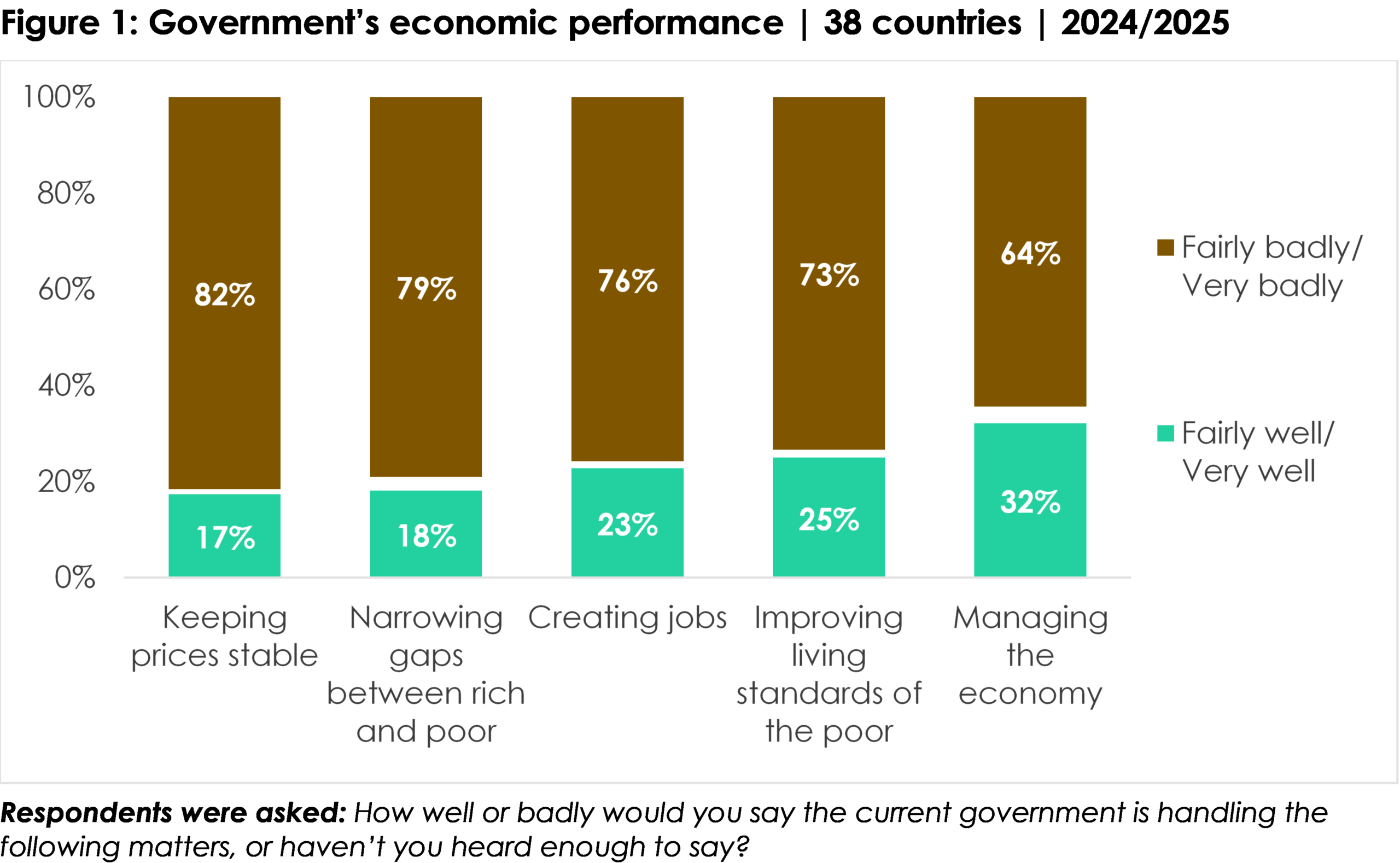
On each of five key economic indicators, large majorities rated government performance as “fairly badly” or “very badly” on price stability, inequality, job creation, poverty reduction and overall economic management. Disapproval of maintaining prices reached 82%. Only overall management of the economy saw disapproval dip below three-quarters, at 64%. Yet it remains a commanding majority of a continent that thinks its leaders have failed at the most basic task.
Read More : Dangote IPO Tests Africa’s Capital Markets
The data contains a small counterpoint: Afrobarometer, which tracks trends across 28 countries, found a seven-percentage-point improvement in negative economic perceptions since the 2021-2023 surveys, the years in which the continent was absorbing simultaneous shocks from the pandemic, global inflation and the commodity disruption that followed Russia’s invasion of Ukraine. In other words, the path has altered.
But a turn is not an arrival. The direction has changed; the goal is beyond reach. And if you are a mother in Nairobi or a young man in Dakar who was hungry last month, the direction of a trend line offers little reassurance.
The survey was conducted in 38 countries, using face-to-face interviews with nationally representative samples in the language of choice of the respondent, a methodology that has, since 1999, over ten rounds, made Afrobarometer one of the most reliable barometers of how ordinary Africans experience governance and economic life. Most of all, this round captures a continent whose people are not yet convinced they are living in the economy their leaders describe.