Trending
The Nigerian government has condemned the killings of two Nigerians in South Africa and accused the country’s security operatives of complicity in attacks against its citizens.
In a statement issued on Sunday by the spokesperson of the Ministry of Foreign Affairs, Kimiebi Imomotimi Ebienfa, the ministry described the killings as part of a disturbing pattern of violence against Nigerians and other foreign nationals following renewed xenophobic tensions in South Africa.
According to the ministry, one of the victims, Emeka Charles Iroegbu, was allegedly killed by officers of the Tshwane Metro Police in Sunnyside, Pretoria, on June 28 after being subjected to what it described as “gruesome interrogation techniques.”
Read More : Tinubu To Inaugurate APC Campaign Council
The ministry said the same officers were also allegedly responsible for the extrajudicial killing of another Nigerian, Nnaemeka Mathew Andrew Ekpenyong, on April 20. It noted that although the identities of the four officers involved were known to the South African Police Service (SAPS), “no arrests have been made” and the case remained unresolved.
The second victim, Musa Yunana Joe, popularly known as “Big Joe,” was reportedly shot dead in front of his shop in Witbank, Mpumalanga, also on June 28, by yet-to-be-identified attackers.
“The government of Nigeria strongly condemns the recent killing of two Nigerian nationals in South Africa,” the ministry said.
It added that the incidents occurred “at a time when foreigners are being unduly targeted in South Africa,” raising concerns about what it described as “a deliberate attempt by some elements to wrongfully generalise and tag well-meaning, hard-working, and respectable Nigerians as criminals.”
The ministry argued that the recurring attacks raise further questions over the general safety of Nigerians and other foreigners in South Africa.
Nigeria further alleged that the pattern of killings pointed to complicity on the part of security operatives, especially officers of the Tshwane Metro Police, adding that the incidents raise the question of state responsibility under International Law. It also claimed that records compiled by Nigerian diplomatic missions in South Africa “lay the grounds for criminal liability.”
While acknowledging South Africa’s security challenges, the government said it was unfair to blame foreigners for the country’s socio-economic problems.
Ebienfa also criticised recent comments attributed to a spokesperson of the South African government, who reportedly challenged Nigerians leaving the country because of xenophobic protests to disclose where illegal drugs were hidden.
“Such derogatory, unprofessional and uncensored generalised public statements by highly placed government officials constitute hate speech that influences and incites negative and criminal actions against members of the Nigerian community,” the ministry said.
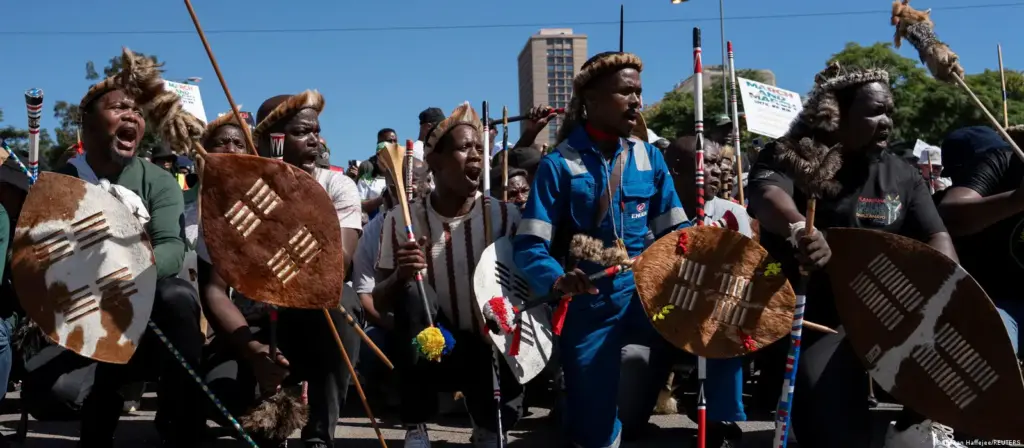
It also warned that leaders of anti-immigrant groups, including March on March and Operation Dudula, would “be held to account as a matter of regional and international criminal liability” for allegedly inciting violence and hatred against fellow Africans.
The government called on South African authorities to launch urgent investigations into the latest killings and several other unresolved cases involving Nigerians, insisting that those responsible must be prosecuted.
“Our position remains that no matter what the allegations or suspicions may be, there are lawful processes and steps to justice. All must be presumed innocent and granted fair hearing in a court of law,” it said.
The ministry expressed sympathy to the families of the victims and pledged to continue engaging South Africa’s highest authorities until justice is served.
It also advised Nigerians living in South Africa to remain calm, obey the law, stay security conscious, relocate to safer neighbourhoods where necessary, and avoid areas experiencing violent protests.
Ebienfa stressed that South African nationals and businesses continue to operate safely in Nigeria, arguing that Pretoria has a corresponding obligation to protect Nigerians and other foreign nationals within its borders.
“The systematic targeting of Nigerian nationals who are legally residing in South Africa is not acceptable, and their safety should be guaranteed,” he said.
It warned that if attacks against Nigerians persist, “all options remain on the table, some of which will be activated if the uncultured and provocative trend of intolerance and apartheid-style behaviour of South Africa against foreigners is not addressed.”
The government, however, appealed to Nigerians at home to refrain from reprisals against South African interests.
Ebienfa added that the evacuation of registered Nigerians wishing to leave South Africa was ongoing.
Read More : INEC Clears Chinda for Rivers 2027 Governorship
— Ministry of Foreign Affairs, Nigeria 🇳🇬 (@NigeriaMFA) July 5, 2026