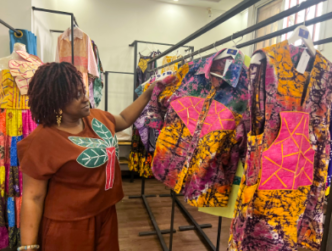
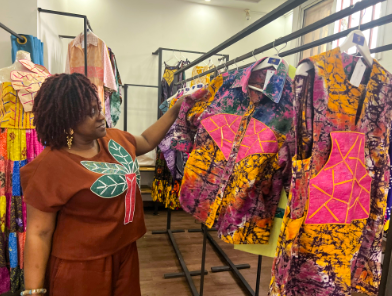
Frederica Williams, Founder of Just Fabulous Heritage and President of the Fashion Design and Textiles Association (FDTA) looking through fabrics at Just Fabulous Heritage Studio, Freetown. Credit: Bird story agency.
Sierra Leone has transformed its traditional textiles into a growing fashion industry, with designers using cultural fabrics to create modern designs, generate jobs and promote the country’s heritage globally.
The founder of Just Fabulous Heritage and president of the Fashion Design and Textiles Association (FDTA), Frederica Williams, inside her Freetown studio, works with more than 20 tailors and design assistants to turn traditional fabrics into modern clothing.
Williams believes fashion can help preserve Sierra Leone’s culture while building a strong local garment industry.
“We’ve been working on rejuvenating traditional designs and reinventing them for contemporary styling. That way we preserve our heritage while promoting Sierra Leone internationally,” Williams said.
Williams is the creator of Krio Print, a modern textile inspired by Sierra Leone’s Creole heritage.
She also incorporates traditional fabrics such as Gara cloth and country cloth into contemporary outfits designed for local and international markets.
As Sierra Leone looks for new ways to grow its economy beyond mining, fashion and textiles are emerging as potential drivers of job creation and industrial development.
Building a Fashion Industry
Sierra Leone’s textile heritage includes Krio Print, Fullah hand-woven indigo Léppi, Mende Country Cloth, Temne Gara tie-dyes, and Limba and Kuranko Ronko shirts.
These fabrics, once used mainly for ceremonies and traditional events, are now being repurposed into everyday clothing and export-ready fashion pieces.
To strengthen the sector, designers, weavers, tailors and entrepreneurs formed the Fashion Design and Textiles Association in 2024.
The group aims to improve skills, support local production, protect indigenous designs and promote Sierra Leonean fashion.
“We’ve been advocating for people to wear Sierra Leone, look Sierra Leone and like Sierra Leone fashion. That’s the only way to create demand that increases production and sustains the industry,” Williams added.
The association is also pushing for stronger intellectual property laws to prevent designers’ work from being copied without permission.
From Tradition To Global Markets
For designers like Abdulai Mansaray, traditional fabrics can compete globally when combined with creativity and modern styling.
Mansaray, founder of His Masterpiece Collection and Stylings, has transformed Country Cloth and Ronko fabrics into contemporary streetwear.
His designs attracted attention at Accra Fashion Week in Ghana.
“I want the world to know Sierra Leone has unique textiles,” Mansaray said. “If entrepreneurs create new ideas with them, the world market will accept them.”
Fashion entrepreneur Mohamed Barrie, CEO of Fashion One Sierra Leone, said traditional fabrics have become a way for people to connect with their identity while creating business opportunities.
“People are proud of their origin. The fabric has become a transformational tool. It connects people to their culture while creating opportunities for businesses,” Barrie said.
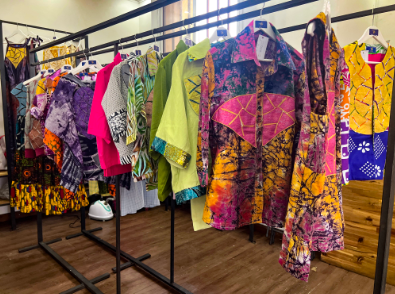
Clothes displayed on a rack at Just Fabulous Heritage Studio, Freetown. Credit: Bird Story Agency.
Reviving Cotton Production
Despite the growing interest in Sierra Leone’s fashion industry, designers say the sector faces a major challenge: the decline of local cotton production.
Many farmers have moved into mining and other industries, leading to increased dependence on imported fabrics and a reduction in the supply of locally produced materials.
“We’re hoping there will be a revival of the cotton industry; if we increase cotton production, improve weaving techniques and modernise processing, we can increase the production of locally made fabrics,” Williams said.
The government has identified textiles and garments as priority sectors under initiatives such as the Made in Sierra Leone Strategy and the Local Content Policy.
Officials say rebuilding the textile value chain, from cotton farming to garment production, could create more jobs and increase exports.
“We are looking at the entire value chain so our people can benefit. We must promote what we wear and wear what we produce,” said Emmanuel Billy Konjo, Chief Director at the Ministry of Trade and Industry.
A New Economic Opportunity
Experts believe Sierra Leone’s textile industry could provide inclusive economic growth by creating jobs across farming, weaving, tailoring, manufacturing and retail.
Economist Dr Mohamed Ibrahim Justice Ganawah said Sierra Leone’s traditional craftsmanship gives the country an advantage as global consumers increasingly seek authentic African fashion.
“In a country rebuilding formal employment, this is exactly the type of sector that creates inclusive growth,” Ganawah said.
Women, who already play a major role in traditional weaving and dyeing, are expected to benefit significantly from the industry’s expansion, while young designers continue to introduce heritage fabrics to new markets.
With support from government programmes, designers have participated in fashion events across Africa, Europe and the United States, gaining exposure for Sierra Leonean fashion.
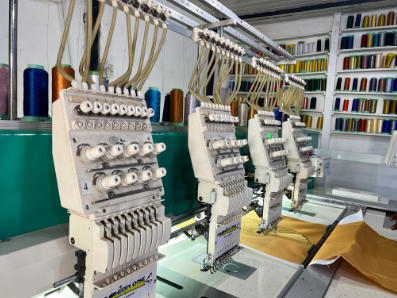
Threads on display at Fashion One Tailoring Company, Freetown. Credit: Birdstory.
Turning Culture Into Industry
Industry experts say Sierra Leone can follow the example of countries like Ghana, which has successfully turned kente cloth into a globally recognised cultural brand.
For Williams, the future of Sierra Leone’s fashion industry depends on creating demand, supporting artisans, reviving cotton production and protecting local designs.
“If we create demand, support our artisans, revive cotton production and protect our designs,” she said, “our heritage won’t just survive, it will become an industry.”
For a country seeking new economic opportunities, Sierra Leone’s traditional textiles are becoming more than cultural symbols; they are emerging as a pathway to jobs, investment and global recognition.
Deborah Akwa is a content writer with over four years of experience creating brand stories, editorial content, and audience-focused articles on topics like health, lifestyle, and entertainment.
When she isn't writing, she is behind the scenes managing editorial operations and helping the content team work better.
She loves using words to connect brands with their audiences. Outside of work, she enjoys watching movies and engaging in thought-provoking conversations.
Weekly roundups. Sharp analysis. Zero noise. The NewsCentral TV Newsletter delivers the headlines that matter—straight to your inbox, keeping you updated regularly.
 Trending