Trending
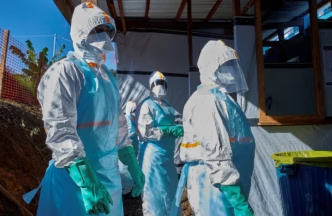
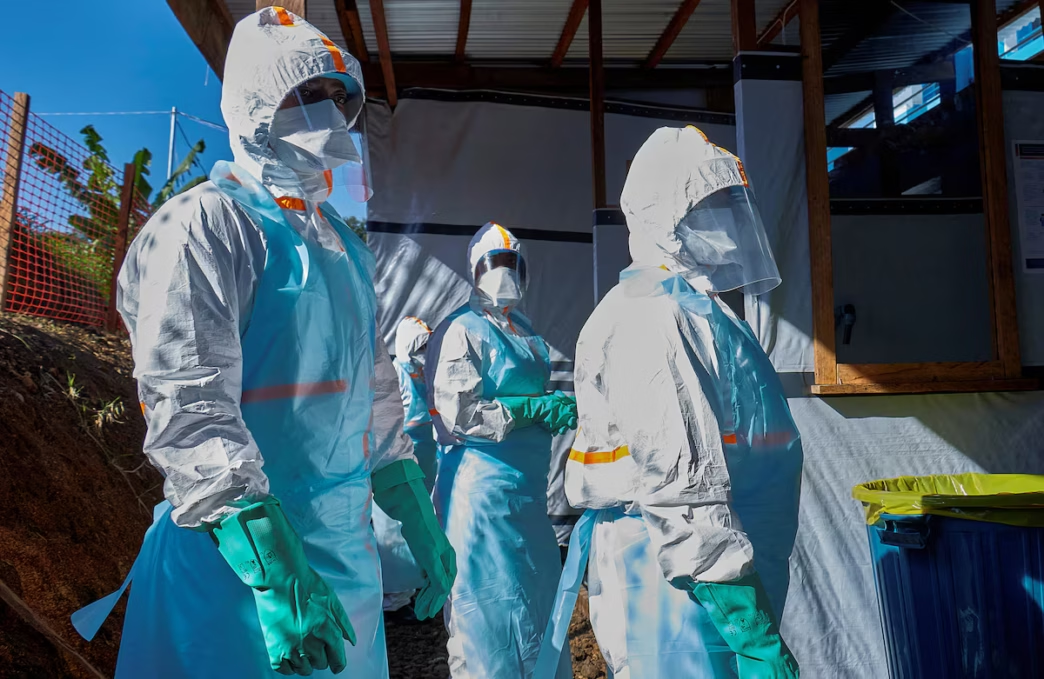
Health workers battling Ebola in the Democratic Republic of Congo (DRC) have threatened to go on strike over unpaid wages.
The deadly virus has killed more than 700 people out of nearly 2,000 confirmed cases since the outbreak was declared on May 15, according to the latest figures released on Tuesday.
However, the WHO said the actual number of cases could be two to four times higher than reported.
At the Ebola treatment centre in Rwampara, one of the hardest-hit areas in Ituri Province, health workers protested on Monday by burning tyres and blocking access to the facility.
The workers said they had not received their salaries since the outbreak began, despite continuing to treat patients.
“We’ve been treating Ebola patients without pay since May 15. We continue to do so because that is our oath but we are working in very difficult conditions,” One of the doctors, Pascal Bahoya, told AFP.
Doctors at the centre warned that they would begin a full strike if their salaries and bonuses were not paid within 48 hours.
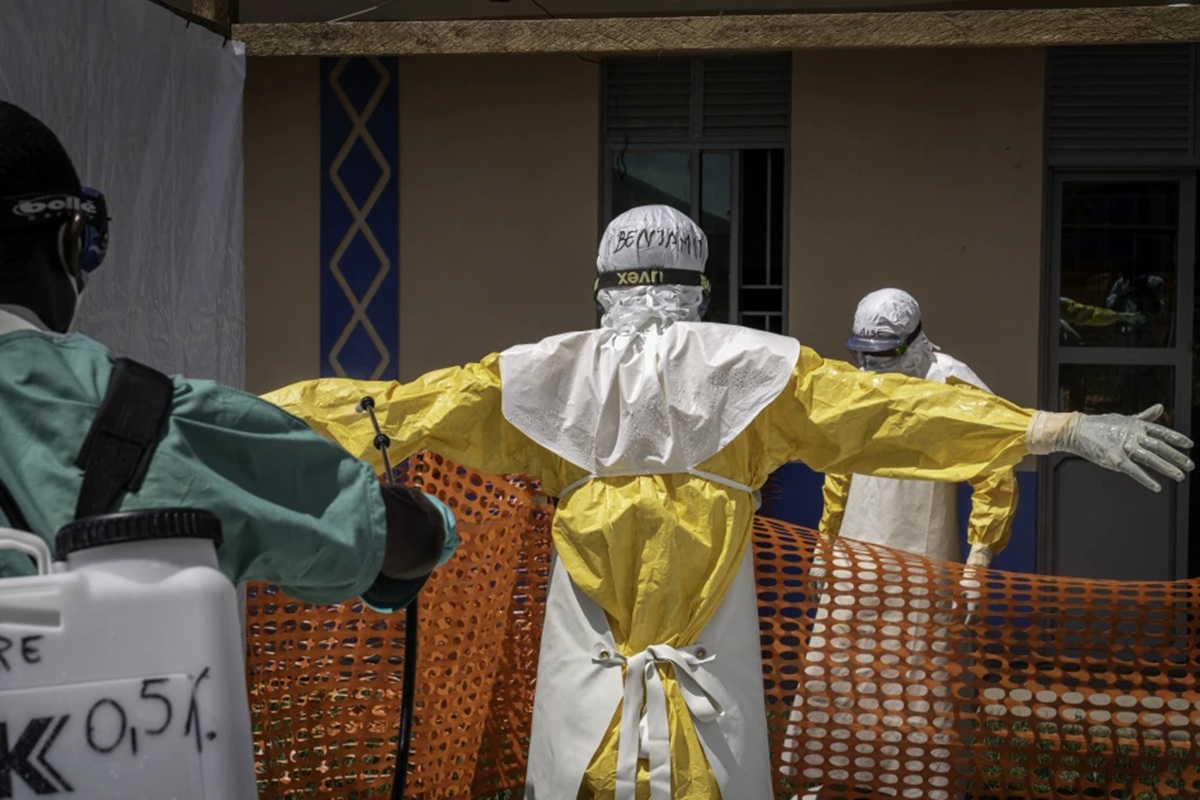
According to AFP, during a visit to Ituri on Thursday, Health Minister Samuel Roger Kamba admitted to payment delays and promised the issue would be addressed.
“We acknowledge the delays in payment, and the organisational issue behind it will be resolved,” Kamba said.
The strike threat comes as health workers face increasing pressure while responding to the outbreak in eastern DRC.
At least 112 healthcare workers have been infected with Ebola, while 35 have died, according to the country’s National Public Health Institute (INSP).
The current outbreak is caused by the rare Bundibugyo strain of Ebola, which has no approved vaccine or specific treatment.
The virus has spread to five provinces in eastern DRC, including Ituri, North Kivu, South Kivu, Tshopo and Haut-Uele.
WHO emergencies director Chikwe Ihekweazu said the outbreak could be much larger than current estimates suggest.
“The scale of the outbreak is at least two to four times the number of cases that we have found,” Ihekweazu said.
The WHO said the outbreak may have started months before it was officially detected, making it difficult to determine the true number of infections.
The international community has provided $1.5 billion to support the Ebola response, but health officials say limited resources and weak healthcare systems continue to make the fight against the virus more difficult.