Trending
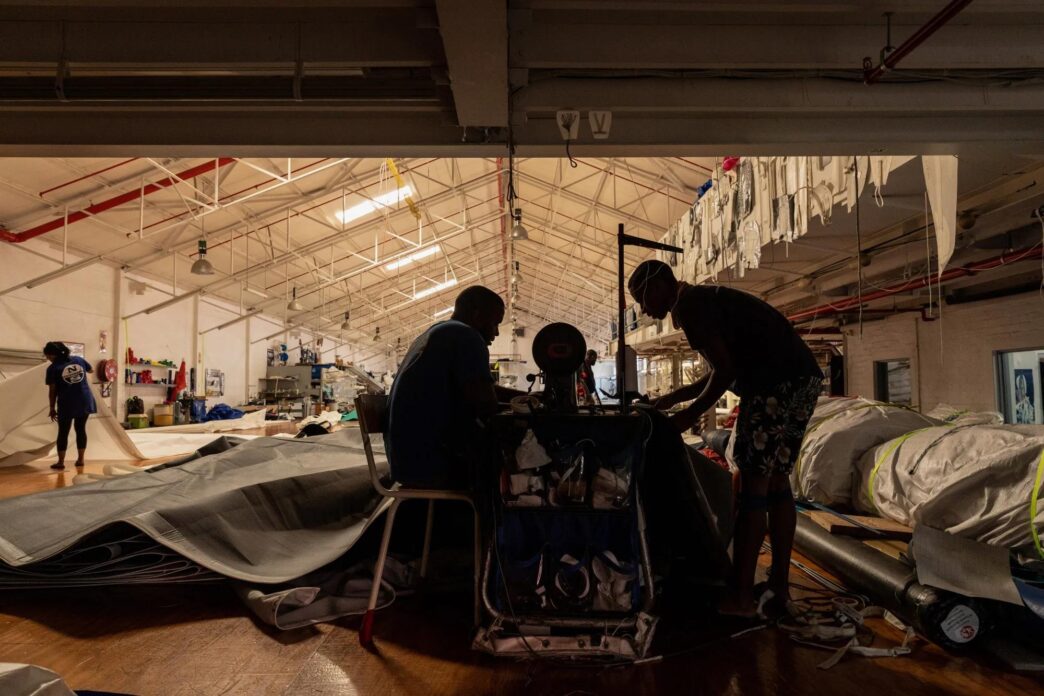
The continent needs more generating capacity, but weak utilities, inadequate grids and poorly structured projects mean new megawatts alone will not deliver reliable electricity or economic transformation.
Africa’s electricity crisis is commonly measured by the millions of people who remain without access to power. But the problem extends far beyond households that are not connected to national grids.
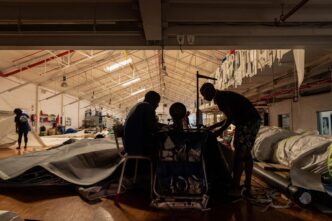
Many African businesses have electricity connections but still cannot depend on them. Factories lose production hours during outages. Small companies spend scarce capital on generators and fuel. Agricultural businesses struggle to refrigerate and process produce, while mines, industrial parks and data centres increasingly develop private energy systems to protect their operations.
Read More : ANC Faces Voter Backlash Over Municipal Failures
This imposes an additional cost across the continent’s economies, weakening local manufacturers and making African products less competitive against imports. The electricity deficit is therefore also an industrial crisis.
That connection should be at the centre of African Energy Week 2026, scheduled for October 12 to 16 in Cape Town. The event will convene governments, utilities, investors, financial institutions and project developers at a time when rising demand is placing increasing pressure on already fragile power systems.
The immediate requirement is more generation. But Africa’s experience shows that adding power plants without repairing the wider electricity market does not guarantee reliable or affordable supply.
More Megawatts, Same Weaknesses
A functioning power system requires more than generating capacity.
Electricity must be transmitted across stable networks, distributed to customers, accurately metered and paid for. Utilities must maintain infrastructure, regulators must enforce credible rules, and tariffs must balance affordability with financial sustainability.
Where one part of this chain is weak, investment elsewhere can fail to produce the expected benefit.
A country may construct new plants but lack the transmission capacity to move their output. A utility may buy electricity that it cannot fully distribute or collect payment for. Consumers may face higher tariffs without receiving a corresponding improvement in service.
The result is often a cycle of losses, government subsidies, unpaid obligations and additional public debt.
Africa’s power challenge must therefore be treated as a system-wide problem rather than a series of individual construction projects.
AEW 2026 should move the conversation beyond announcements of installed capacity and towards the commercial, regulatory and infrastructure conditions required to deliver usable electricity.
Powering Productive Economies
Power planning must also be connected more directly to industrial strategy. Manufacturers, mines, agricultural processors, transport systems and digital businesses need predictable electricity. They can also provide power projects with stable demand and revenue through credible long-term supply arrangements.
This creates a relationship between reliable energy and project bankability.
Instead of asking only how much electricity a country expects to consume, policymakers should identify the economic activities that new energy investments are intended to support.
Where should transmission lines be extended to supply industrial zones? Which manufacturing sectors could become competitive with dependable power? How can electricity investment strengthen mineral processing, food production and digital infrastructure?
These questions require coordination between energy, finance, trade, industry and infrastructure authorities.
An industrial park without electricity will not attract serious investors, but a power plant built without credible demand may also become financially unsustainable. Infrastructure planning should therefore begin with clear productive and commercial outcomes.
A Financial Crisis Inside the Power Sector
Africa’s electricity problem is as much financial as it is technical. Utilities frequently operate with tariffs that do not recover the full cost of supply. Electricity theft, weak metering and distribution losses reduce revenue, while governments and public institutions may accumulate unpaid bills.
Currency risk creates another difficulty. Many power projects are financed in foreign currency, while electricity revenues are collected in local currency. When exchange rates deteriorate, debt repayments and imported fuel costs rise, placing additional pressure on utilities and governments.
Investors respond by seeking guarantees and stronger contractual protections. Governments are then asked to absorb risks that private developers or lenders are unwilling to carry. This model is increasingly difficult to sustain.
Countries facing high debt and limited fiscal space cannot guarantee every power project, fuel contract and utility obligation.
The challenge is not only that Africa needs more capital, but many electricity markets are also unable to present projects that can withstand payment, currency, regulatory and political risks.
AEW’s financing discussions should therefore focus less on headline investment targets and more on how those risks will be allocated and managed.
Bankability Requires Reform
A technically viable project is not automatically investable. Financiers examine whether tariffs are credible, buyers can meet their obligations, procurement is transparent, and contracts will be enforced. They also assess regulatory consistency, currency exposure and the durability of government commitments. Better preparation is essential.
Demand projections must be realistic; feasibility studies should reflect actual market conditions; environmental and social requirements must be addressed early; and commercial agreements should allocate risk to the parties best able to manage it.
Development banks and blended-finance providers can help reduce specific risks and attract private capital, but concessional funding should not be used to conceal poor project economics or postpone necessary reforms.
Public support is most effective when it strengthens infrastructure, protects vulnerable consumers or makes well-prepared projects commercially viable. It should not become a permanent substitute for efficient utilities and credible regulation.
The Role of African Capital
International finance will remain important, particularly for large generation, transmission and storage projects, but heavy dependence on foreign-currency debt leaves power systems exposed to exchange-rate shocks.
African pension funds, insurers, banks and capital markets could finance a larger share of infrastructure that generates predictable local-currency revenue.
Domestic participation can reduce currency mismatch and deepen local ownership. The difficulty is that electricity projects are often complex and long-term, while many financial institutions prefer shorter investment periods and more liquid assets.
Governments and development institutions will need to create suitable investment vehicles, improve project pipelines and provide targeted credit enhancement.
AEW can help connect project developers with African institutional investors. But general appeals for local capital will achieve little unless they are supported by investable structures.
Regional Power Markets
Cross-border electricity trade could also improve reliability and reduce costs. Not every country needs to produce all the electricity it consumes. Regional power pools can allow states with surplus capacity or lower-cost resources to supply neighbouring markets.
The West African Power Pool illustrates the potential of stronger interconnection. Electricity could move more efficiently between countries, reducing shortages and limiting dependence on expensive emergency generation.
However, regional markets require reliable transmission lines, aligned regulations and financially credible buyers. A power-export agreement is only as strong as the purchasing utility’s ability to pay for electricity. Political disputes and inconsistent regulation can also disrupt otherwise sound commercial arrangements.
Regional power pools must become functioning markets rather than remain largely institutional commitments. This has direct implications for the African Continental Free Trade Area. Manufacturers cannot build regional value chains if they remain constrained by expensive and unreliable power. Trade integration and energy integration must advance together.
A Transition That Supports Production
Africa’s electricity expansion is occurring during the global shift towards lower-carbon energy. Solar, wind, hydropower, geothermal systems and battery storage can improve access and diversify supply.
Distributed renewable systems are particularly valuable in communities and commercial areas where national grids remain weak, but new renewable capacity still requires transmission, storage and system balancing, and the transition should not be judged solely by the amount of clean power installed.
The more important question is whether the emerging energy system supports productive activity. Reliable, lower-carbon electricity could help African countries process minerals domestically, expand manufacturing and build digital infrastructure. Climate finance should therefore support grids, storage and industrial uses of electricity—not only standalone generation projects.
Africa cannot remain a supplier of raw minerals for the global transition while importing the batteries, components and technologies manufactured from them. A development-led transition must increase the continent’s ability to produce.
What AEW Must Address
AEW 2026 cannot solve Africa’s electricity crisis. It can, however, help shift the discussion from capacity announcements to system performance.
The questions in Cape Town should be practical. Can utilities pay for the electricity they purchase? Can grids transmit new generation? Are tariff reforms commercially credible and socially sustainable? Can domestic investors participate? Are industrial customers included in demand planning?
The value of the conference should be assessed after the announcements have ended.
Do projects achieve financial close? Does construction proceed? Do new facilities operate as intended? Do industries receive more dependable power at sustainable prices?
For Nigeria, reliable electricity is essential to manufacturing, gas utilisation and digital growth. For Ghana, power-sector reform is inseparable from fiscal stability and industrial competitiveness.
Read More : Kenyan Artist Revives Lamu Woodcarving Tradition
Across Africa, electricity will help determine whether population growth produces jobs and stronger economies or deeper unemployment and dependence on imports.
The continent does not simply need more megawatts; it needs power systems that work and electricity that enables African economies to produce, compete and grow.