Trending
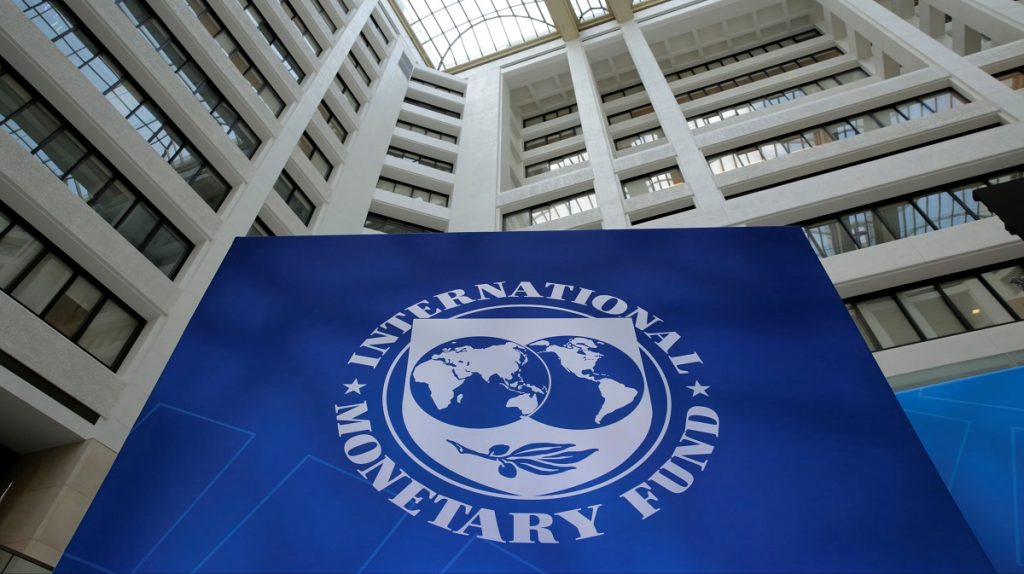
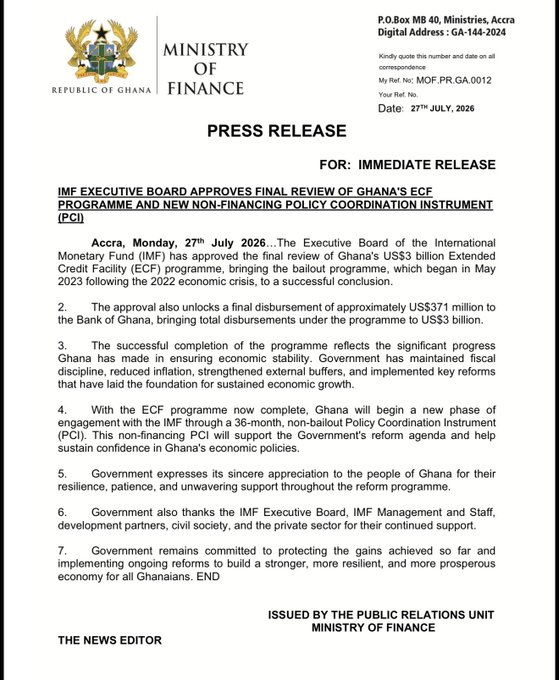
Ghana has successfully completed its $3 billion International Monetary Fund (IMF) bailout programme after the Fund’s Executive Board approved the final review of the country’s Extended Credit Facility (ECF), unlocking a final disbursement of about $371 million.
The approval marks the conclusion of the three-year rescue programme launched in May 2023 following Ghana’s 2022 economic crisis, during which the West African nation faced soaring inflation, a rapidly depreciating currency, unsustainable debt levels and dwindling foreign exchange reserves.
In a statement, Ghana’s Ministry of Finance described the decision as a major milestone in the country’s economic recovery.
“The Executive Board of the International Monetary Fund (IMF) has approved the final review of Ghana’s US$3 billion Extended Credit Facility (ECF) programme, bringing the bailout programme, which began in May 2023 following the 2022 economic crisis, to a successful conclusion,” the ministry said.
It added that the approval “unlocks a final disbursement of approximately US$371 million to the Bank of Ghana, bringing total disbursements under the programme to US$3 billion.”
The ministry said the successful completion of the programme reflected Ghana’s progress in restoring macroeconomic stability after one of the country’s worst economic downturns in decades.
“The successful completion of the programme reflects the significant progress Ghana has made in ensuring economic stability. Government has maintained fiscal discipline, reduced inflation, strengthened external buffers, and implemented key reforms that have laid the foundation for sustained economic growth.”
The IMF approved Ghana’s Extended Credit Facility in 2023 after the country sought financial assistance to stabilise its economy following a debt crisis triggered by high borrowing costs, the COVID-19 pandemic, global inflationary pressures and the economic fallout from the Russia-Ukraine war.
The programme was accompanied by debt restructuring negotiations with domestic and external creditors and a series of fiscal and structural reforms aimed at restoring economic stability.
With the bailout programme now concluded, Ghana said its relationship with the IMF would shift from financial assistance to policy support.
“With the ECF programme now complete, Ghana will begin a new phase of engagement with the IMF through a 36-month, non-bailout Policy Coordination Instrument (PCI),” the ministry said.
It explained that the “non-financing PCI will support the Government’s reform agenda and help sustain confidence in Ghana’s economic policies.”
The government also expressed gratitude to Ghanaians for enduring the difficult reforms implemented under the programme.
“Government expresses its sincere appreciation to the people of Ghana for their resilience, patience, and unwavering support throughout the reform programme.”
It also thanked “the IMF Executive Board, IMF Management and Staff, development partners, civil society, and the private sector for their continued support.”
Looking ahead, the ministry pledged to consolidate the gains achieved during the programme.
“Government remains committed to protecting the gains achieved so far and implementing ongoing reforms to build a stronger, more resilient, and more prosperous economy for all Ghanaians,” it said.
Ghana Successfully Completes IMF Bailout, Secures Final US$371 Million! pic.twitter.com/txozQSHUdk
— Cassiel Ato Forson (PhD) (@Cassielforson) July 28, 2026