Trending


African small businesses have been positioned to benefit from emerging artificial intelligence (AI) and agricultural technology solutions, as experts say United States (US)-powered innovations could help prepare SMEs for the full implementation of the African Continental Free Trade Area (AfCFTA).
News Central correspondent Sagir Ibrahim, who is currently attending 2026 World Business Chicago, the official economic development organisation for the City of Chicago, said on Tuesday that agricultural economists and technology strategists are exploring how private-sector innovation can help African businesses overcome challenges limiting their participation in global trade.
As African countries move closer to expanding cross-border trade under AfCFTA, experts warn that trade policies alone will not be enough to guarantee success.
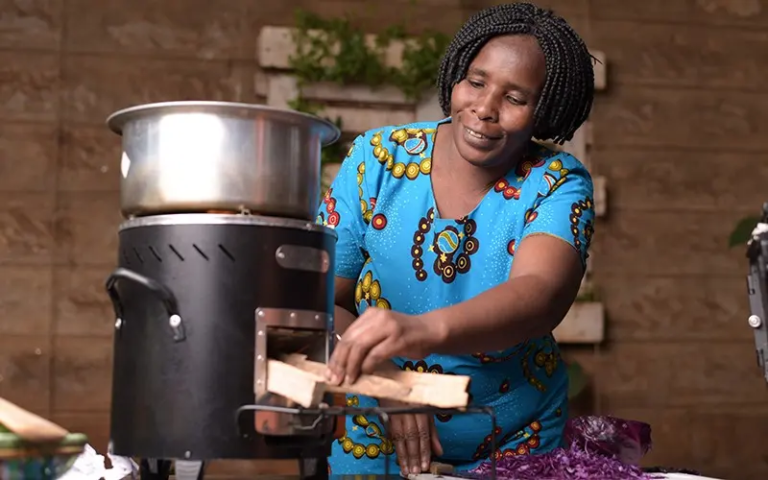
They say smallholder farmers and businesses across the continent continue to face major challenges, including production risks, limited market access and weak connections to buyers.
The Risk Challenge Facing Farmers
At the centre of Africa’s agricultural challenge is uncertainty.
Many smallholder farmers operate without enough protection against risks such as failed rainfall, pests and other factors that can destroy their investments.
Prof. Hope Michelson, Department of Agricultural Economics at the University of Illinois Urbana-Champaign (UIUC), said uninsured risks continue to affect farmers’ willingness to invest in improved farming methods and technologies.
“A big one for production is risk, uninsured risk. And there’s a lot of uninsured risk,” Michelson said.
She explained that when farmers lack protection such as crop insurance, they become less willing to invest in inputs and techniques that could improve productivity.
“If I don’t have crop insurance, whatever I put on my crop, I am setting myself up potentially to lose that investment,” she said.
According to Michelson, unpredictable weather conditions and pest outbreaks can discourage farmers from expanding production.
“Without that assurance, without that protection, investment is reduced,” she added.

AI Could Unlock Trade Opportunities
As AfCFTA prepares to create a larger market for African businesses, experts say technology will play a critical role in helping SMEs participate effectively.
Dr Meche Nkengla, Founder and CEO of Africa Trade Bridge, believes AI can help bridge gaps preventing many African businesses from accessing new markets.
He said a trade agreement can only deliver results when businesses have the tools and information needed to take advantage of available opportunities.
“A legal framework means nothing if the people that are actually supposed to benefit from it have no way to actually do the trading,” Nkengla said.
He explained that AI tools could help traders access information, understand regulations and complete trade-related documents more efficiently.
“Imagine operationalising AI in that context, where this trader can ask a question to the AI in their local language, and in seconds get exact responses and partially computed documents,” she said.
Creating An African-Owned Trade Bridge
Nkengla said the United States can contribute advanced technology and investment opportunities, but African businesses must remain at the centre of the solutions being developed.
“What America is bringing to the table is a world-class technology and investment opportunities,” she said.
However, he stressed that the systems created should serve African businesses and remain under African ownership.
“What is built is purely for Africans, by Africans, owned and governed by Africans,” Nkengla added.
Private Sector Must Prepare SMEs
Experts say African businesses can no longer depend only on government policies to access new trade opportunities.
They argue that adopting artificial intelligence and agricultural technology can help small businesses improve productivity, reduce risks and connect with markets beyond their borders.
By creating a bridge between American technology and African enterprise, SMEs could become better prepared to participate in the expanding opportunities under AfCFTA.
Read More : Guterres Backs Permanent African UN Seat
As the continental trade agreement moves closer to full implementation, stakeholders say the future of African trade will depend not only on agreements but also on the availability of practical tools that allow farmers, entrepreneurs and small businesses to compete.
Smallholder farmers across Africa have gained wider market access, but climate pressures and production risks continue to affect livelihoods. Digital tools and artificial intelligence are providing new support solutions. @sagirmohh reports. pic.twitter.com/prwB3tG88X
— News Central TV (@NewsCentralTV) July 28, 2026