Trending
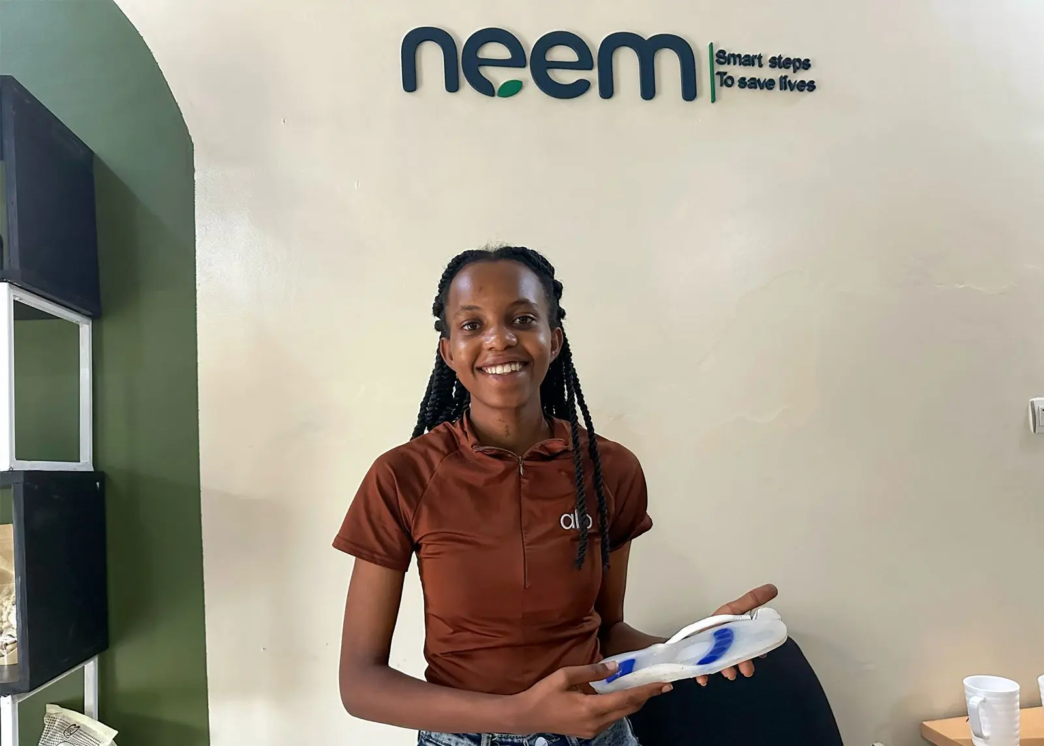
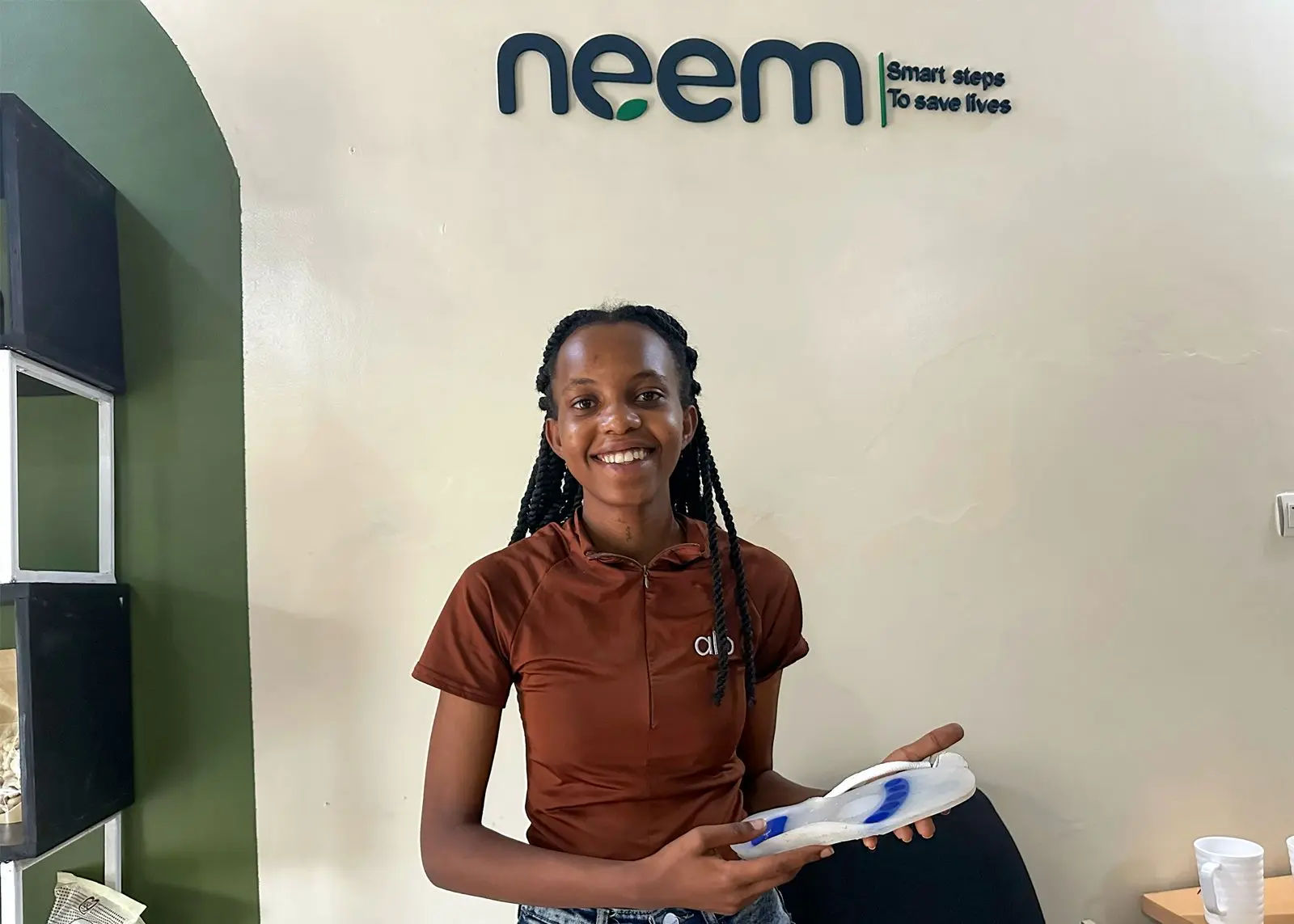
After witnessing patients lose limbs to diabetes, a Rwandan prosthetist, Prisca Nikuze, developed a smart insole that detects foot problems before they worsen.
On the website of her startup, Nikuze can see herself placing her right foot onto a smart insole. Her metrics are displayed via the site’s app, converting the pressure of her foot into readings on her phone that she can view as easily as a regular message.
For diabetics, particularly those who don’t have easy access to medical facilities, the readings offer early warnings of pressure changes that could impact their health.
Read More : Brazil Votes in Knife-Edge Runoff
Nikuze is a co-founder of NEEM Company Ltd, which she established in 2023 at the University of Rwanda’s ACEIoT incubator hub in Kigali.
Together with her co-founders, Alex Muhirwa, Grace Nyirarukundo, and David Rwakayiro, they are working on a linked smart insole that monitors diabetic foot health and informs users of abnormalities that may lead to foot ulcers that, if left untreated, could lead to amputation.
“The most dangerous thing is feeling healthy, feeling okay, when something dangerous is happening in your body,” Nikuze says.
Diabetic Foot Ulcers
In Africa, diabetic foot ulcers represent 15–25 per cent of hospitalisations and result in amputation 25–50% of the time, according to a 2026 study by Health Research in Africa.
Nikuze’s association with diabetes began before she entered university. While she was still in high school, a family member was diagnosed with the illness.
Her family had first been kept in the dark about what was happening, making the resulting diagnosis frightening. She began thinking of becoming a doctor as a result.
“But all of a sudden, instead of joining medical school, I joined prosthetics and orthotics. And I was like, Oh God, but what is it now? I wanted to help him (her relative), but then you directed me into prosthetics, so how am I going to help him?” she recalled.
While studying prosthetics and orthotics, she learnt how to make artificial limbs. Before creating a limb, students had to figure out why someone had lost one. Diabetes, students were informed, was one of the leading causes of amputation. That seemed far-fetched to her – at first.
This changed during her clinical internship, when she personally saw 10 diabetic patients, six of whom had lost limbs due to the disease.
Artificial Limbs
“It really made me afraid, because I have some relatives who have diabetes. So I was scared that one day I’ll be fabricating their artificial limbs for them,” she says. “So it’s something that personally touched me.”
Rwanda has about 131,000 people living with diabetes, according to Dr Fabrice Hakizayezu, a medical doctor at Kanombe Military Hospital in Kigali, and half of those living with the disease do not know they have it.
“Connected smart insoles and other technologies help very much in the early detection of diabetic foot ulcers,” says Hakizayezu, citing a Kinyarwanda proverb: prevention is better than cure.
“These technologies, which help in early detection and early diagnosis, help to prevent complications, which minimise the consequences such as amputation. It helps to reduce the burden on the hospital,” he said.
Reduced Blood Flow
Nikuze responded by establishing a wellness centre in Kigali dedicated to diabetes prevention, lifestyle, and foot health education.
Another issue arose as a result of the work: patients required a means of monitoring their feet between clinic sessions.
As Nikuze learned more about diabetes, she began to understand why certain foot injuries proved difficult to cure.
A patient’s loss of sensation may indicate that he or she is not aware of an injury, yet reduced blood flow may make healing more difficult. By the time an ulcer is diagnosed, infection may have set in, making amputation the only alternative.
“So I just learnt, why can’t we detect when the ulcer actually comes instead of waiting for it to accumulate injury and letting it become harder to treat? So why not use the insole that you put in to prevent your sole from getting injured?”
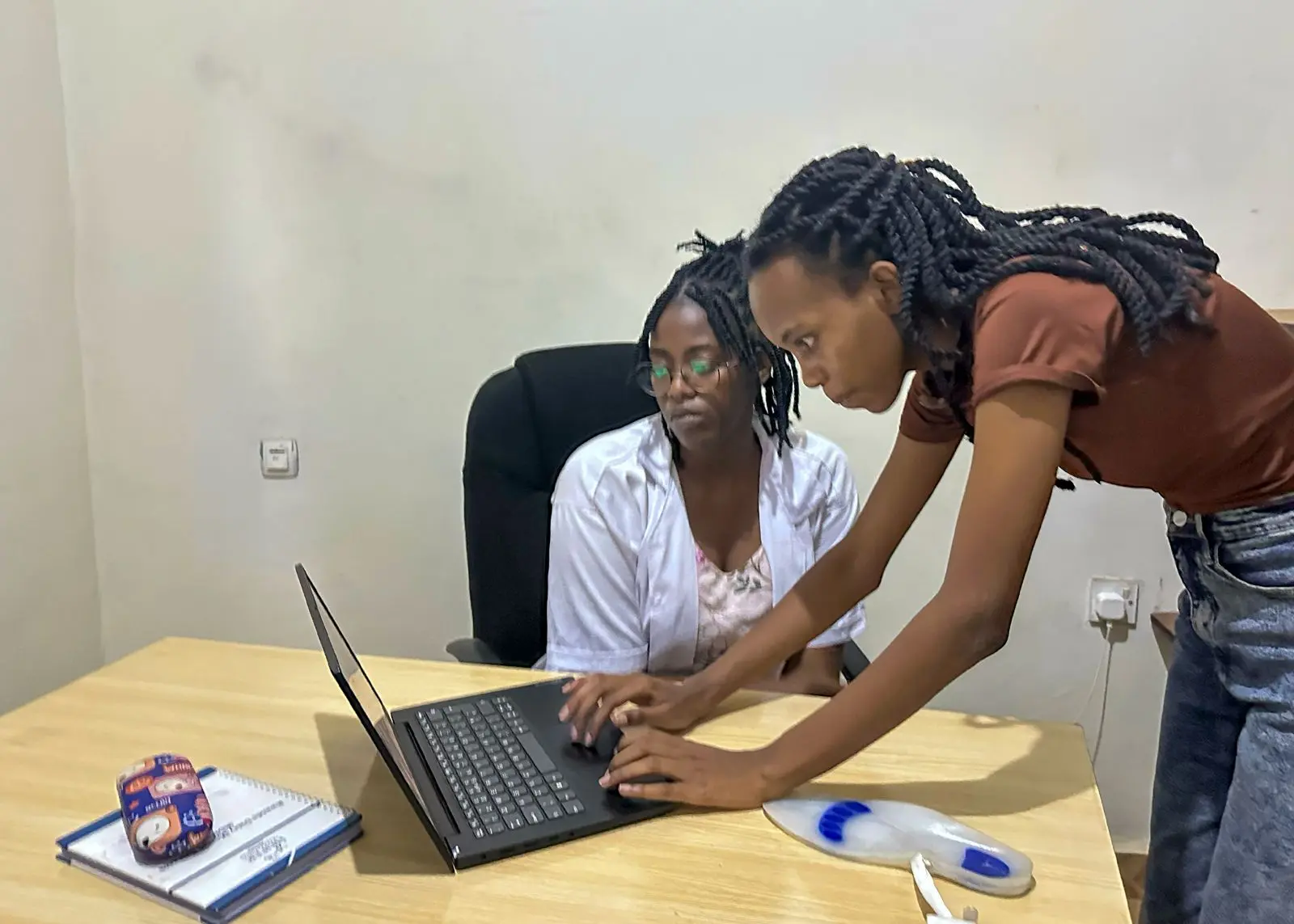
The team started combining sensors, silicone, and artificial intelligence to monitor what was going on within the shoe and provide patients and clinicians with information that could lead to earlier intervention.
A Low-Power Bluetooth Module
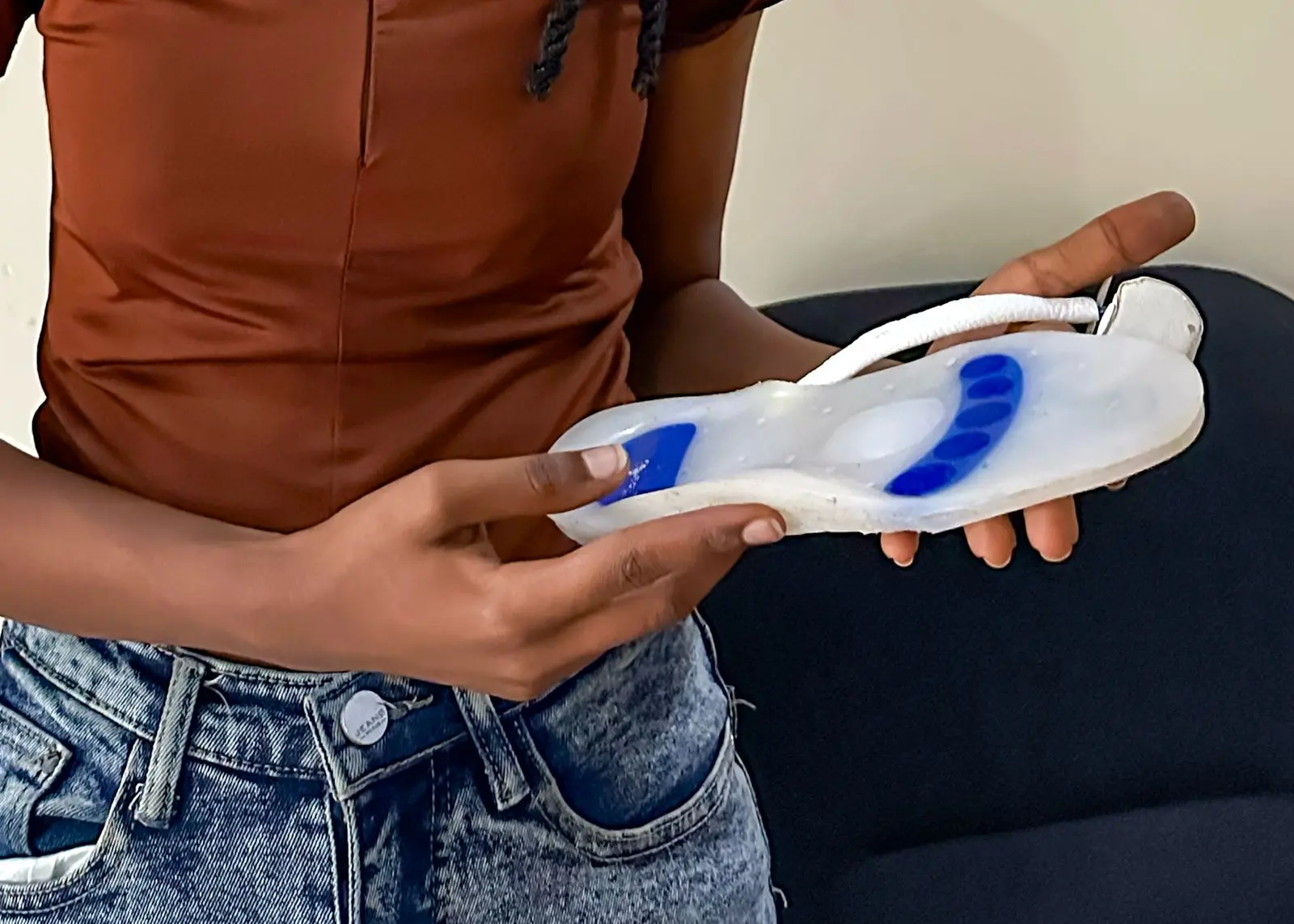
The device employs sensors to map plantar pressure, which measures how weight is distributed across the sole.
A low-power Bluetooth module transmits the data to a mobile application, while AI algorithms detect areas of prolonged pressure and notify the patient and clinician.
In Kigali, Munyampuhwe Jean d’Amour has just been fitted with his insoles. The self-employed man was diagnosed in September 2025. He says the hardest part of living with diabetes was losing weight and accepting his condition.
“It helps you and reminds you to check yourself and keep track of how things are going each day. I think it will really help with managing your own health because it also gives you reminders. Since you are always scrolling on your phone, you see the reminder, and it immediately prompts you to think about checking yourself or taking your medication,” D’Amour said.
Each insole is 3D-moulded to the shape of the wearer’s foot.
Integrating Sensors
However, integrating sensors, a battery, and other components into something that must be worn all day has provided an engineering difficulty.
“We are trying to find the tiniest components available on the market,” Nikuze says. “It is something that keeps us awake at night.”
For Nikuze, bringing the gadget to this point requires more than clinical knowledge.
NEEM’s first investment, she explains, was in talent: an electrical engineer, a software developer, and an AI engineer.
“Never underestimate the power of a team. I cannot say that alone I could have built an insole; never could that happen.” When the team first put the sensor data together and made a prediction on a patient’s foot, she recalls, “It felt like mission accomplished, like we launched something into space.”
The company took second place at Hanga PitchFest 2025, Rwanda’s national innovation competition, winning a 20,000,000 Rwf grant.
Insole for Rural Conditions
It also won the ALX Do the Hard Things AI Challenge.
Nikuze said the funding is being used to improve the insole for rural conditions and support clinical validation, which could eventually help with integration into national insurance schemes.
The technology is still undergoing refinement. Other smart insole systems have shown that continuous plantar pressure monitoring can help prevent periods of high pressure in persons at high risk of diabetic foot ulcers, but broader clinical evidence on smart insoles is limited.
Nikuze hopes that NEEM will ultimately reach patients beyond Rwanda.
Read More : ANC Faces Voter Backlash Over Municipal Failures
For Nikuze, the work ultimately aims to change how people live with diabetes, including her own family.
“Now, whenever I’m at home, whenever they find something, they always call me, ‘What can we do? So I feel like even though diabetes is a chronic disease, you have to live with it your whole life; it’s not something that should cause you to lose hope. You can still manage diabetes and live stronger, healthier and happier.
By Alice Kayibanda, Bird Story Agency