Trending

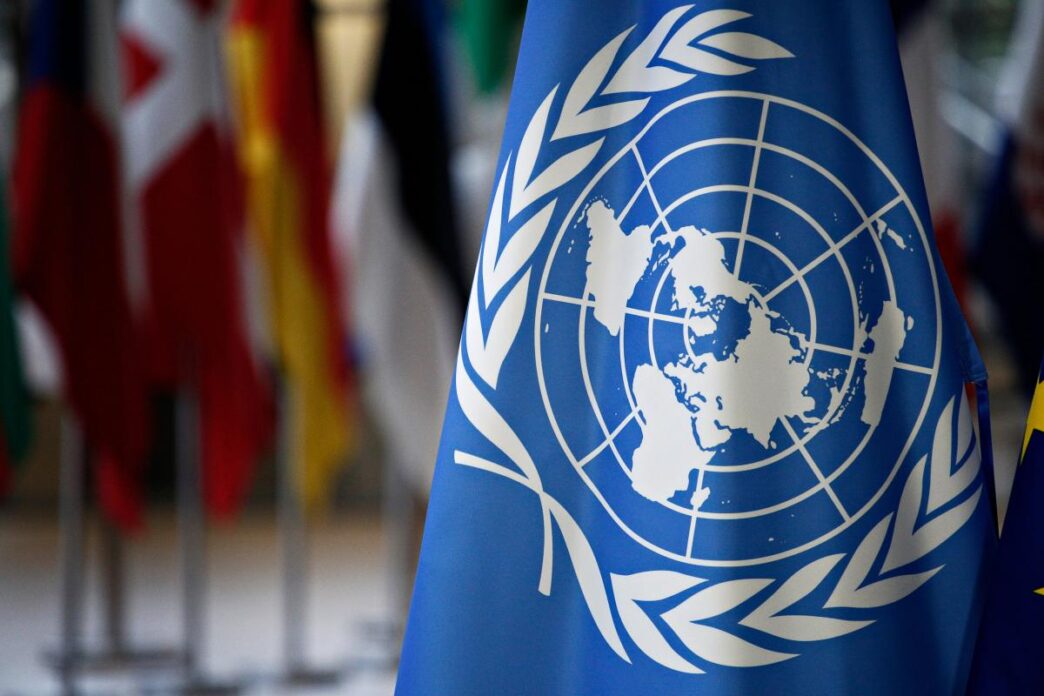
As the United Nations reorganises its global operations, Nairobi is strengthening its position as a centre for UN agencies, international meetings and services supporting work across the system. A major infrastructure expansion and the relocation of functions from other duty stations are raising questions about the city’s future role.
The United Nations (UN) is expanding its operations in Nairobi, investing more than US$340 million in office buildings and conference facilities as it reviews how its global workforce and services are organised.
The expansion is reinforcing Nairobi’s role as a centre for UN operations, with some agencies moving functions to the Kenyan capital.
Read More : Ruto Attends COMESA Summit
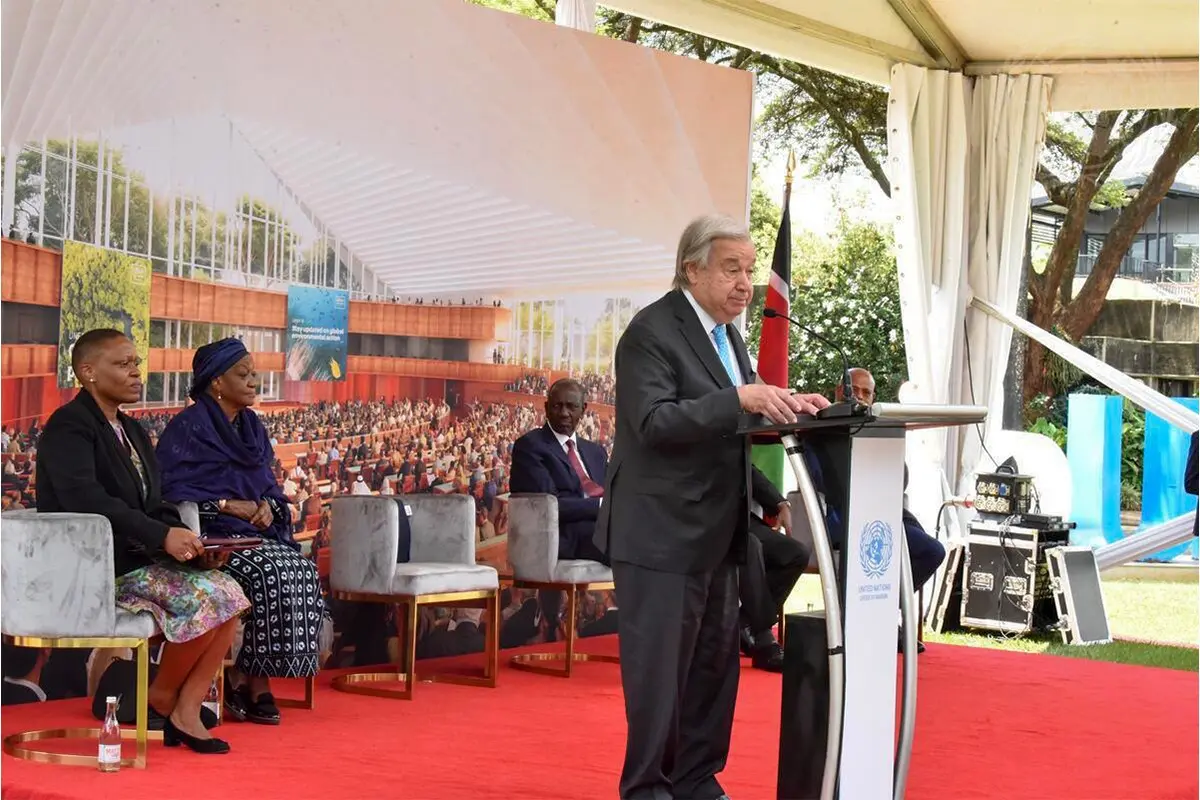
In May 2026, UN Secretary-General António Guterres and Kenyan President William Ruto marked the inauguration of new office buildings and the launch of a conference facilities project at the United Nations Office at Nairobi (UNON).
According to the UNON website, the combined investment includes US$66.2 million for office blocks and US$265.7 million for conference facilities, in what the office describes as one of the largest UN infrastructure investments in Africa outside peacekeeping operations.
“In addition, the UN Refugee Agency (UNHCR) has invested (US$ 11.2 million) in new office blocks at UNON,” the May 2026 statement by UNON reads in part.
Guterres described Nairobi as “neither a satellite nor an outpost”, but “a pillar” of the United Nations.
UNON Director-General Zainab Hawa Bangura has similarly described the city as a “golden gem” for the organisation.
Nairobi is the UN Secretariat’s only headquarters duty station in Africa and the Global South. It hosts the headquarters of the UN Environment Programme (UNEP) and the UN Human Settlements Programme (UN-Habitat), and provides administrative and operational support to UN entities in 166 countries, according to UNON.
The investment has two main components: completed office buildings replacing aging blocks and a new conference complex intended to increase the city’s capacity to host international meetings.
According to UNON’s project documentation, the existing conference facilities were built in 1985 and were designed for about 2,000 participants. The new project, approved by the UN General Assembly under resolution 78/253, covers approximately 44,000 square metres.
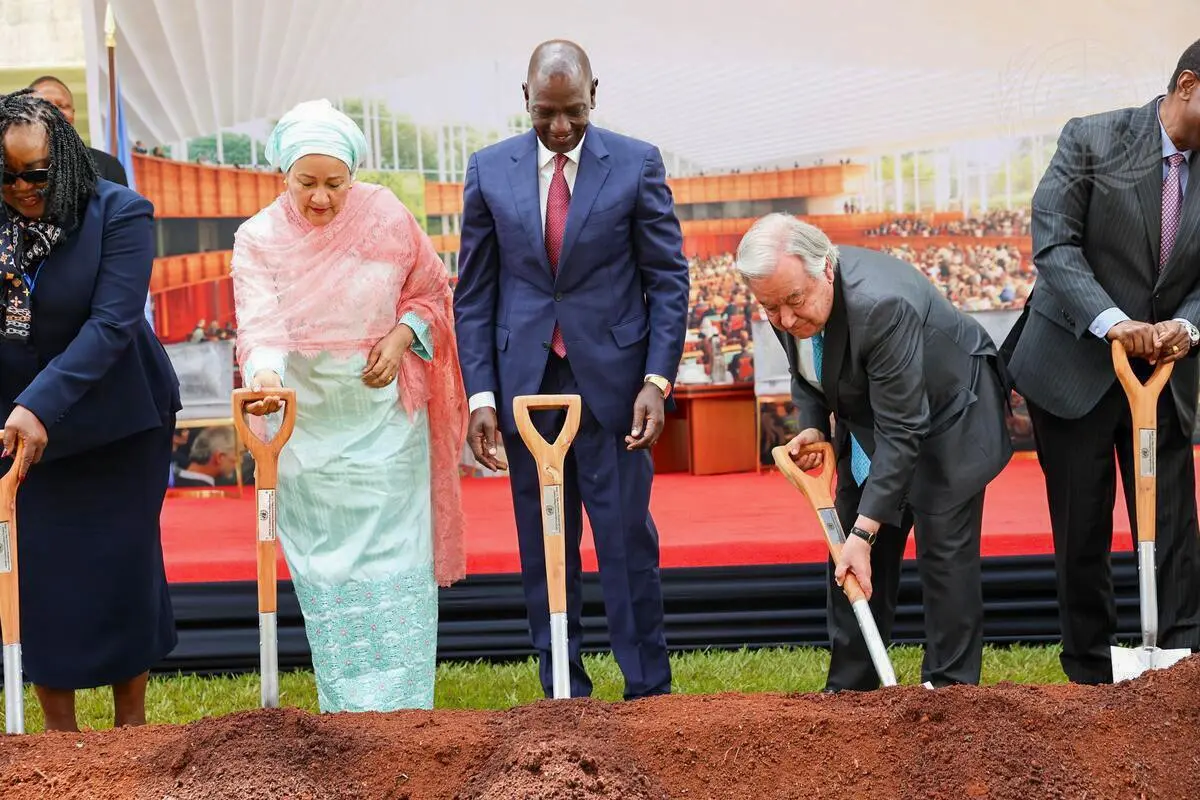
It is designed to increase total seating capacity to 9,000, expand the number of meeting rooms from 14 to 30 and add a 1,600-seat Assembly Hall, a visitors’ centre, media facilities and updated conferencing technology. UNON expects substantial completion by September 2029 and finalisation in early 2030.
UNON cited the attendance of more than 6,000 participants at the seventh session of the UN Environment Assembly in 2025 as evidence of demand for additional space.
The project also includes accessibility and renewable-energy measures. UNON says the facilities are designed to achieve net-zero energy consumption, with solar panels projected to generate three to four gigawatt-hours of electricity annually.
For Bangura, the case for Nairobi extends beyond buildings.
In an interview with NTV Kenya published by UNON on 3 August 2026, she linked the movement of UN staff to the cost of operating in traditional centres such as New York and Geneva, the availability of shared infrastructure in Nairobi and the need to locate some functions closer to the communities served by UN programmes.
“Today we have more UNICEF staff in Nairobi than anywhere in the world,” Bangura said, while clarifying that this is despite Nairobi not being UNICEF’s formal headquarters.
UNICEF, the UN Population Fund (UNFPA) and UN Women have moved some global operations to Nairobi while their formal headquarters remain in New York.
UNON Director of the Division of Administrative Services Chris Kirkcaldy describes the shift as part of a broader change in how agencies use the city.
“We are bringing more entities to do business from Africa, as opposed to a place where we just perhaps do development or humanitarian work,” he said.
Kirkcaldy said Nairobi’s relatively lower operating costs were helping agencies respond to financial pressures across the UN system.
“Nairobi is part of an answer to those financial challenges because Nairobi is a place where entities have found a quite a cost-effective place to do business,” he said.
UNFPA provides a documented example. Its headquarters optimisation initiative included moving its Programme Division and Independent Evaluation Office to Nairobi.
In its proposed integrated budget for 2026–2029, the agency projected net savings of US$7.5 million from the initiative over four years. The figure is a projection for that programme, not a measure of savings already realised across the UN system.
UNICEF has set out a wider decentralisation plan. In an update published in November 2025, the agency said its Future Focus Initiative aimed to relocate at least 70% of headquarters staff to lower-cost duty stations closer to the field, while keeping executive leadership at its primary headquarters in New York. UNICEF has also established Centres of Excellence in Nairobi, Amman, Bangkok and Panama City to provide specialised technical assistance to country and regional offices.
These shifts are taking place as the UN pursues reforms under its UN80 initiative, which includes efforts to improve efficiency, reduce duplication and review how offices and shared services are organised.
A briefing on the UN80 initiative presented to member states on 28 April 2026 identified 87 UN regional offices across Africa: 16 belonging to the UN Secretariat and 71 elsewhere in the wider UN system.
It identified Kenya as the leading African host country for regional-office hubs, with 15.
Nairobi’s existing network is one reason it features in discussions about where the UN could place more work. UNON provides administrative and operational support to UN entities in 166 countries, with services covering finance, procurement, human resources, information technology, logistics, medical support and conference services.
According to UNON, 88 UN offices are based at the Gigiri complex, which hosts more than 4,000 personnel. Across Kenya, the UN has almost 6,000 personnel, alongside approximately 10,000 dependents from Kenya and neighbouring countries. In an NTV interview, Bangura said about 60% of staff at the Nairobi duty station were Kenyan.
Bangura put the UN’s annual economic footprint in Kenya at about US$2 billion, describing it as a UNON estimate and saying a government-led study would be needed to establish the figure independently.
Kirkcaldy pointed to local employment and contracts as further benefits of the UN’s presence. “The UN employs directly and indirectly many 1000s of people in Kenya,” he said, describing the organisation as “undoubtedly a huge economic boon to Kenya”.
He said Kenyan contractors had been awarded construction work and were also responsible for maintaining UN facilities. He added that international conference attendees spent money at Kenyan hotels and restaurants and on tourism, including safaris.
For Bangura, the benefits of Nairobi’s role also extend to the work the UN supports across the region. During the interview, she pointed to the organisation’s humanitarian, development and public-health activities, including refugee assistance, school feeding, responses to disease outbreaks and drought coordination.
Nairobi’s expansion comes as other African governments seek to attract a greater share of the UN’s institutional presence.
Rwanda has formally expressed interest in hosting agencies and functions that may be relocated. In its national statement to the 80th session of the UN General Assembly in September 2025, Rwanda’s Foreign Affairs Minister Olivier J.P. Nduhungirehe said the country had expressed interest in hosting UN agencies as part of efforts to support a more cost-effective and decentralised organisation.
A report by The North Africa Post described Rwanda’s offer as including office facilities, essential services and cooperation on a long-term UN campus in Kigali, alongside privileges, immunities and tax exemptions. The proposal sets out Rwanda’s interest in attracting international institutions; it does not establish that the UN has selected Kigali to host any agency or global function.
Botswana has also indicated interest in expanding its UN presence. According to UNON, President Duma Boko visited the Nairobi complex in May 2026, and discussions included Botswana’s ambition to establish a UN hub in Gaborone.
UNON said it could share technical expertise on common premises and shared services. The visit documents Botswana’s interest, but does not establish that Gaborone is competing for the same functions being considered for Nairobi.
Other African cities already host important UN institutions.
Addis Ababa is home to the headquarters of the UN Economic Commission for Africa, which works on economic and social development across the continent.
Dakar hosts the UN Office for West Africa and the Sahel, whose mandate includes preventive diplomacy, political mediation and regional peace and security.
Credit: Bonface Orucho, Bird Story Agency.