Trending

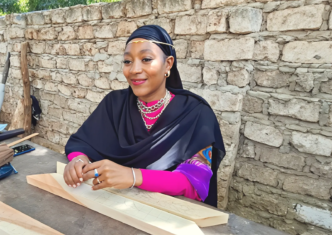
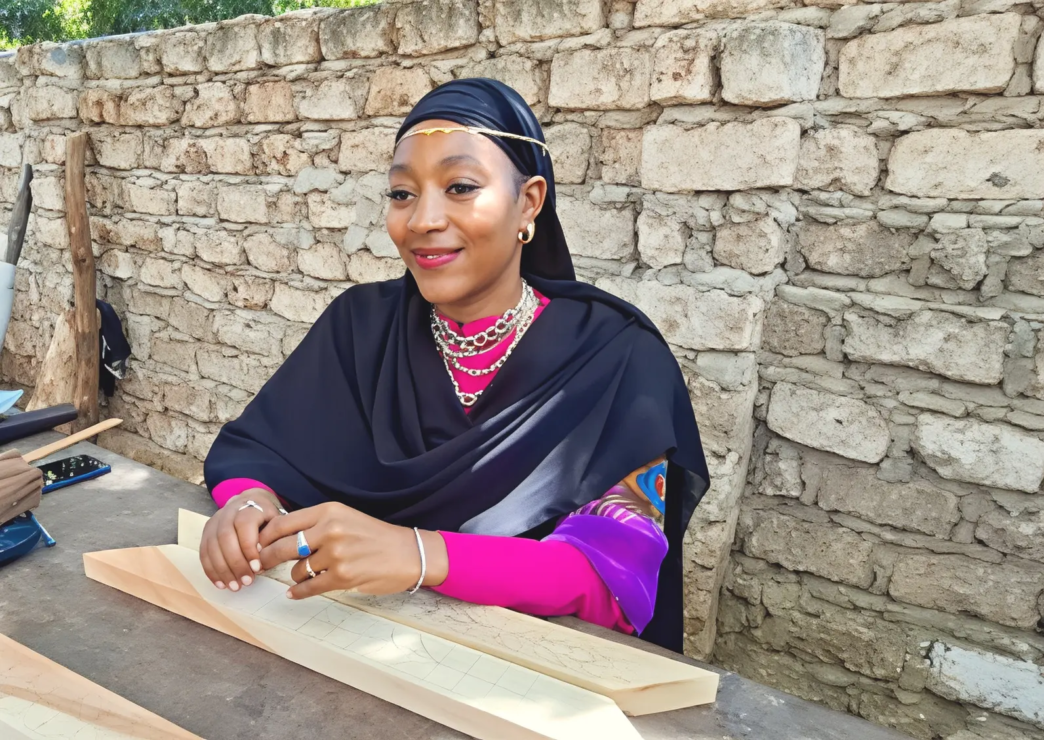
Kenyan digital creator Umazi Mvurya has turned to traditional woodcarving in Lamu, using her skills to celebrate East African culture and preserve a centuries-old craft.
Mvurya, who previously worked in digital art and video production, said she wanted to create things with her hands rather than spend all her time in front of a computer.
“I was in front of my computer and I was working on some things that were art-related but were not the act of creating that art,” she said. “And I just felt like… I just need to be waking up every day and working with my hands.”
Read More : Africa’s Energy Shock Tests Economic Reforms
The Duruma woman, an indigenous Bantu person from Kenya’s coast, began searching for training that would allow her to explore a more hands-on form of art. She said Western-style art did not feel right for her. Instead, she felt drawn to woodcarving in Lamu, a historic island town on Kenya’s northern coast.
“I didn’t think twice. Came here blind, found my teachers on the ground, and took it from there,” she said.
Lamu is known for its carved wooden doors, coral-stone buildings and traditional dhow boats. Its woodcarving skills have been passed down for hundreds of years. The town has been inhabited for more than 700 years and is recognised by UNESCO as one of East Africa’s best-preserved Swahili communities.
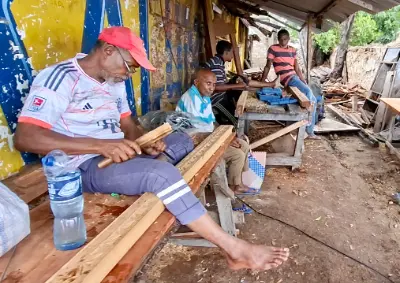
For Mvurya, learning woodcarving has offered a way to connect with the region’s cultural heritage while developing her own artistic style. One of her teachers, known simply as Almasi, is described as a traditional Swahili woman woodcarver who teaches the craft on Lamu Island. Mvurya said she felt a strong connection with her.
Another teacher, Ali Abdi Hamza, popularly known as Alibaba, believes passing on the skill is vital to its survival.
“It is crucial for them to learn because hands-on work never fails you,” he said. “We are eager to pass down this talent to the youth because we refuse to let it vanish from Lamu.”
He added that he welcomed students who showed a genuine interest in learning the trade.
“Personally, I love a student who comes forward directly and says, ‘Teach me the trade,’” Ali said. “It gives me the drive to instruct them.”
Mvurya said Lamu’s famous wooden doors offer a clear view of how art, identity and history connect in the community.
“If you’ve had a chance to walk through Lamu, you can see the Swahili doors, the architecture, and how they decorate the beds,” she said. “Each of these motifs actually have a story.”
The doors often feature floral, geometric and calligraphic designs. Historically, elaborate doors could also signal the wealth and status of the families living behind them.
Traditional dhow-making also depends on woodworking knowledge passed down through generations. These boats have long supported fishing, transport and trade along East Africa’s coast. Mvurya sees the craft as an important part of African identity.
“Swahili wood carving is an indigenous East African art,” she said. “We put all these Western styles of art on pedestals. I want to challenge that.”
Her journey also reflects wider discussions about the role of cultural and creative industries in providing skills and livelihoods. UNESCO’s 2026 report on employment in these industries highlights the need for skills development while pointing to challenges such as informal work, low wages and gender inequality.
Mvurya is learning a trade that remains largely male-dominated. The experience has also changed how she views the technical demands of art.
“It has humbled me because the technical side is all math,” she said. “If you do not understand math, your angles, and your proportions, you’re not going to be able to do wood carving.”
Her interest in geometric shapes, patterns and repetition has found a practical outlet in the craft. However, the materials used in traditional carving have raised environmental concerns for Mvurya. Lamu’s furniture and woodwork have traditionally relied on hardwoods such as mvule, also known as African teak, and mbambakofi.
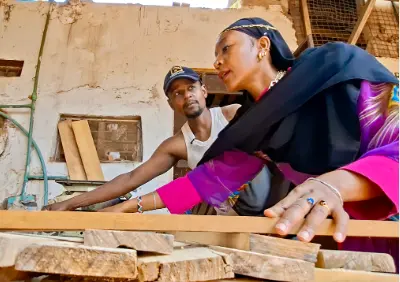
To reduce waste, she uses scrap timber and offcuts whenever possible. She has also pledged part of her profits to conservation efforts around Kaya Mtswakara, a sacred forest and ancestral site of Kenya’s Mijikenda people.
The Mijikenda Kaya forests are protected through traditional knowledge systems and elders’ guidance. UNESCO recognises the sites as important centres of Mijikenda cultural practices and knowledge.
Mvurya’s interest in culture and public life began long before she took up woodcarving. She studied Politics and Law and Society at Oberlin College in the United States. She also developed the I AM KENYAN campaign, a social media project launched ahead of Kenya’s 2013 elections.
The campaign collected more than 21,000 photographs and earned her recognition, including from the BBC. In 2015, Oberlin announced that Mvurya had been accepted into the Stanford Africa MBA Fellowship Program.
Today, her creative process has changed. Instead of relying on digital tools, she must understand the timber before making each cut. Woodcarving requires patience, careful measurements and an understanding of the wood grain. Even a small change in an angle can affect the final design.
For Mvurya, the work is about more than creating art. It also celebrates Lamu’s heritage, supports traditional skills, and encourages a new generation to preserve them.
Credit: Koffi Iranyibutse by Bird Story Agency.