Trending

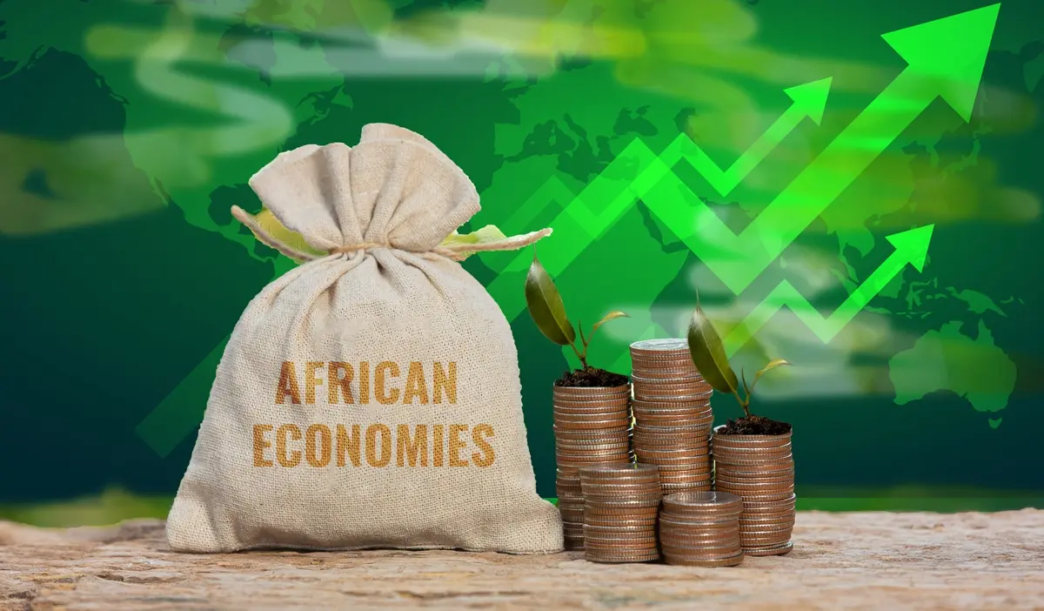
Africa’s economies are projected to grow by 4.5% in both 2026 and 2027, even as a global energy shock raises costs and tightens financial conditions.
Reforms are helping countries absorb the pressure, but rising living costs, expensive borrowing and declining aid threaten to weaken those gains.
The International Monetary Fund (IMF), in its latest October Regional Economic Outlook update, raised its 2026 growth forecast for the region from 4.3% in April to 4.5%, citing stronger-than-expected economic activity and the effects of earlier reforms. Growth is projected to remain at 4.5% in 2027, although the outlook differs across country groups.
The report, titled ‘Resilient Growth, Clouded Outlook,’ points to a combination of policy changes and business adaptation that has helped economies withstand the latest external pressures.
It also warns that this resilience could weaken if energy disruptions persist and rising input costs begin to affect investment, employment and consumption.
“Reforms in the region, such as subsidy reform and exchange rate reform in Ethiopia and Nigeria, structural reform in South Africa, have strengthened macroeconomic stability,” Zeine Zeidane, director of the IMF’s African Department, said at the report’s launch in Bangkok on Thursday, October 15.
The improved outlook comes as disruptions to global energy supplies raise the cost of fuel and transport, while more expensive fertilisers threaten to push up food prices.
The IMF’s October global outlook projects average oil prices of US$96 a barrel in 2026, before easing to US$87 in 2027, while fertiliser prices are projected to rise by 26% compared with 2025.
Although higher oil, copper and gold prices are supporting some commodity exporters, the IMF warns that countries without those advantages are facing slower growth and widening external deficits. Growth in non-resource-intensive economies is projected to ease from 6.4% in 2025 to 6% in 2026, while other resource-intensive economies are expected to grow by 3.8%.
The pressure is also reaching government budgets and households. Median inflation across the region is projected to rise from 3.4% in 2025 to 4.3% in 2026 and 5% in 2027, reducing purchasing power and increasing the cost of providing essential services. Higher fertiliser and other imported input costs could feed into food prices with a lag, potentially affecting planting decisions and subsequent harvests.
Nigeria illustrates both the gains from reform and the difficulties that remain. The IMF projects the country’s economy will grow by 4.2% in 2026 and 4.3% in 2027, supported by higher oil prices, increased foreign-exchange receipts and activity in the services sector.
Zeidane said the improvement in oil prices had increased foreign-exchange receipts and helped strengthen reserves.
He also pointed to declining inflation since 2025 as a factor supporting Nigeria’s broader macroeconomic position.
The gains follow major policy changes, including the removal of petrol subsidies and reforms to the foreign-exchange market in 2023.
Those measures have helped address longstanding economic distortions, but households have faced higher costs as prices adjusted. The challenge now is to sustain the gains while ensuring that growth translates into jobs, stronger purchasing power and improved access to essential services.

Ethiopia has undertaken exchange-rate reform, moving towards a market-based system in July 2024.
The change forms part of wider efforts to improve foreign-exchange availability and strengthen the country’s economic framework, although financing needs and debt vulnerabilities remain significant concerns. Ethiopia has also differentiated temporary fuel subsidies by product and customer to contain the cost of relief, according to the IMF.
In South Africa, structural reforms are part of the effort to address constraints on economic activity.
Improvements in electricity supply, logistics and the business environment remain important to attracting investment and raising productive capacity.
The IMF identifies better power supply, digital connectivity, skills and the business environment as priorities for raising productivity and strengthening the region’s resilience to future shocks.
Evidence from businesses also suggests that the initial impact has been partly absorbed through operational adjustments. Across seven economies representing about half of regional output, purchasing managers’ surveys showed activity weakening in the second quarter before recovering in July. The IMF attributes part of the resilience to firms adapting their sourcing and logistics, although input prices remained elevated.
Across the region, however, governments have limited room to respond to another shock. The IMF estimates that interest payments absorb around 13% of government revenue in a typical country, leaving less money for public investment and social spending. Bilateral aid is projected to fall by a further 12% in 2026 following a steep decline the previous year.
Borrowing remains available to some African governments, but access does not necessarily mean financing is becoming cheaper.
Zeidane noted that countries in the region had issued around US$12 billion in international bonds during the first nine months of 2026, while benchmark borrowing costs had increased as US Treasury yields rose. The IMF warns that a renewed rise in global risk aversion could quickly reverse improvements in sovereign borrowing conditions.
Read More : Nigeria’s Soaring Rents Deepen Housing Crisis
Governments are also relying more heavily on domestic banks to finance their spending. That can reduce the funds available to private businesses seeking loans for investment and expansion, although a well-developed local-currency debt market can also provide benchmarks that help companies raise financing.
The IMF’s advice is to protect vulnerable households without committing scarce public resources to expensive, broad-based subsidies. Its comparison of 19 countries estimates that generalized fuel-price support can cost about 4% of GDP, while transfers designed to preserve the benefit for the poorest 40% of households would cost at most 0.5%. The comparison illustrates the potential fiscal savings from better-targeted relief.
Credit: Bonface Orucho, Bird Story Agency.