Trending
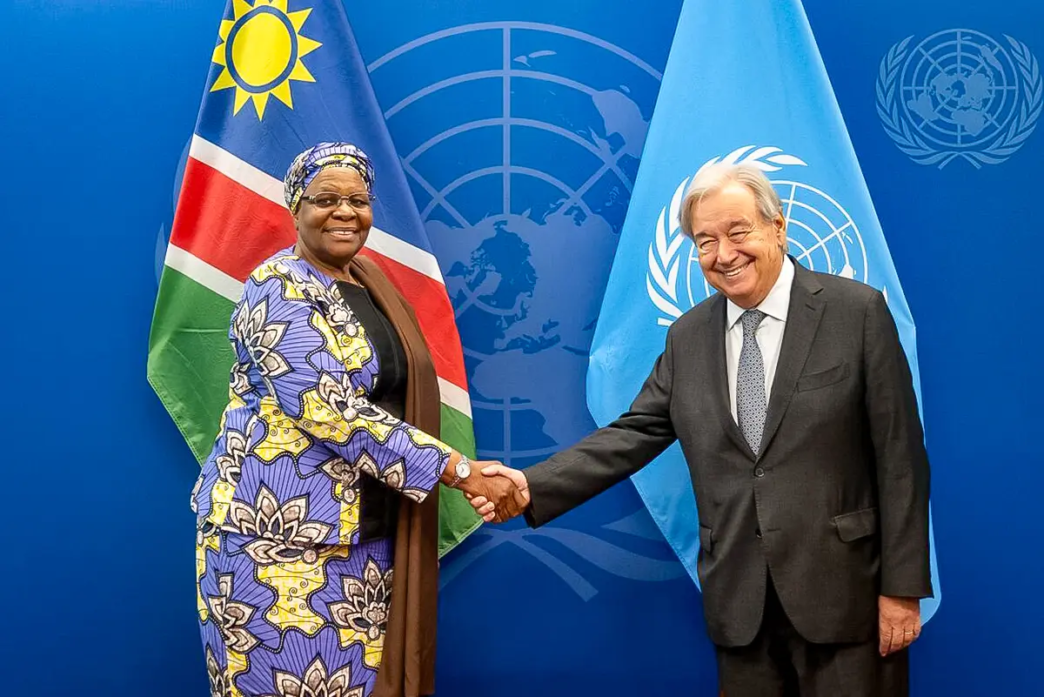
Women are climbing management ranks faster across Africa than in any other region. While leadership progress has slowed in many places, African countries are closing the gap between men and women in management.
By 2025, women held 44.6% of management roles in African countries tracked by the UN — the highest share of any region. That’s a jump of 7.7 percentage points over the past decade, outpacing every other part of the world.
UN data shows this is the strongest regional progress toward the fifth Sustainable Development Goal — gender equality — since 2015.
Read More : Dangote IPO Tests Africa’s Capital Markets
Still, if you step back and look at the rest of the world, the story isn’t as bright. Women make up around 40% of all jobs globally, but only 30.5% of management spots. The gap is wide. And if things keep moving at this speed, it’ll take more than fifty years for women and men to stand equally in management roles.
These numbers come as world leaders meet in New York for the 81st UN General Assembly (UNGA). Once again, the sluggish pace towards the 2030 development goals is up for debate, and gender equality remains a core issue on the table.
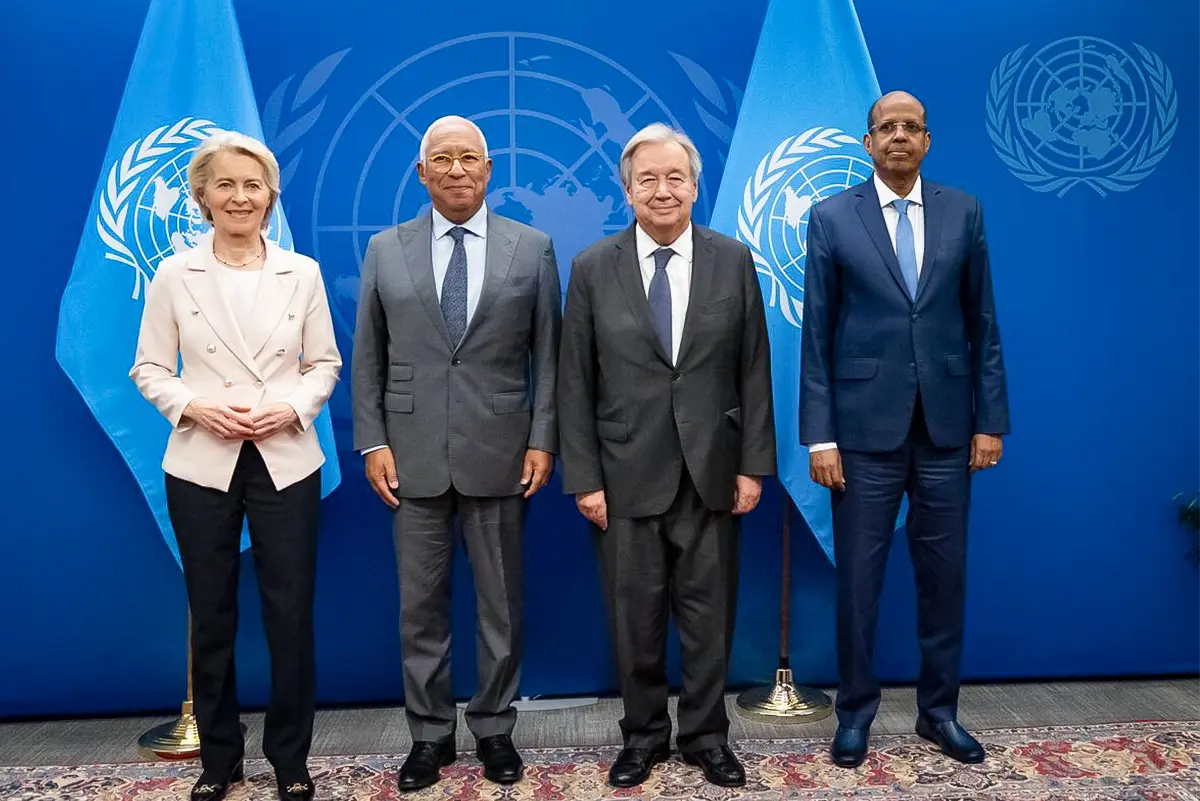
Only 36% of SDG targets with enough data are on track or making moderate progress, the UN says. At an SDG Moment held at the General Assembly on September 18, governments were urged to identify approaches that are working and find ways to scale them before the 2030 deadline.
The General Debate begins on September 22, followed on September 23 by a high-level meeting marking 40 years since the Declaration on the Right to Development, which covers participation in economic and political decisions and equal access to economic opportunity.
Africa’s figures excludes North Africa, which the UN places with Western Asia for statistical purposes, thus falling short of a full continental average. Within the region measured, however, women have moved into management faster than anywhere else globally over the past ten years.
Fresh figures from the World Economic Forum show gains across several African countries on a broader spectrum covering economic opportunity, education, health and political power.
Namibia now ranks fourth out of 145 economies in the 2026 Global Gender Gap Index, just behind Iceland, Finland and Norway, with Britain, New Zealand, Sweden, Australia, Germany and Ireland trailing it.
The southern African country is also among nine economies that have closed at least another 12 percentage points of their gender gap since 2006, when the Forum began tracking the measure.
Elsewhere on the continent, Kenya recorded the biggest rise of any economy this year, climbing 33 places to 65th. Ghana rose 32 places to 56th and Angola jumped 30 places to 87th, placing three African countries among the four biggest movers worldwide.
Since 2006, parity among legislators, senior officials and managers in the World Economic Forum’s African grouping has improved by 28.7 percentage points, its strongest long term gain among the measures highlighted in the report. Tellingly, that change is also visible in Africa’s courts. As of last year, at least eight African countries had women heading their highest courts, compared with just one in 2004. South Africa appointed Mandisa Maya as its first woman Chief Justice in 2024, joining Kenya and a growing group of African states where women have reached the top of the judiciary.
Stephanie Musho, a human rights lawyer working on financing for the Sustainable Development Goals and reform of the global financial system, said the gains in countries such as Namibia, Kenya and Ghana should feed into a wider push for African women to take part in decisions over money and development.
“I think you also need to agitate for more women and more Africans at the table when issues of global financial architecture reform are being discussed,” Musho told bird story agency from New York, where she is attending UNGA.
She placed management gains alongside a wider debate on the role developing countries have in decisions over debt, climate finance and reforms at the World Bank and the International Monetary Fund.
Musho said many of those talks require deeper knowledge of technical financing tools and stronger representation from African governments and institutions.
“When they’re having those conversations at the World Economic Forum, and at the IMF, World Bank and UNGA, they know exactly how to engage,” she said.
The UN tracking shows that women held 38% of management jobs in Africa in 2022, after their share rose by 11.3% from 2000 compared with a global rise of 2.8% over the same period.
Management in the UN measure covers top, senior, middle and junior management across organisations of different sizes. Separate data on the highest corporate positions show a narrower share of women at the top.
Across 62 economies covered by LinkedIn data used in the World Economic Forum report, women held 19.1% of chief executive jobs. Their share stood at around a quarter among chief financial officers and chief operating officers, while women occupied about two-thirds of chief human resources and chief people officer roles.
Government data show a similar pattern, with the number of ministerial portfolios headed by women rising by 26% since 2008, according to the Forum.
Around one in ten portfolios held by women is classed as highly influential, a proportion that has changed little over the same period.
Musho said women reaching leadership roles also depended on conditions beyond the workplace, pointing to health, access to finance, conflict and climate shocks as factors affecting women’s ability to participate in economic and public life.
“You have to look at it from a very holistic perspective because it has to work in tandem with other thematic areas,” she said, citing maternal health, pregnancy discrimination and humanitarian crises among pressures that can affect women’s participation.
Meanwhile, across national parliaments, women held 27.4% of seats at the start of 2026, while their share of elected local government positions reached 35.6% in 2025.
UN data show countries using legislated quotas elected more women, with a 15 percentage point difference in national parliaments and 17 points in local government compared with countries without such measures.
Political representation has expanded over a longer period. Among the 97 economies tracked by the World Economic Forum since 2006, the ratio in national parliaments has moved from one woman for every 5.6 men to roughly one for every three men.
The share of women in elective office has grown, with WEF showing their ratio in national parliaments across 97 economies shifting from one woman for every 5.6 men in 2006 to about one for every three men today. Women’s political empowerment rose eight percentage points over the same period.
At the highest level of politics, the share of economies led by a woman in that constant sample peaked at 27% in 2022 and has since returned to its 2016 level.
UN Women and the UN Department of Economic and Social Affairs brought those figures into the General Assembly week with the release of the 2026 Gender Snapshot on September 17.
It found that women hold 31 of 175 chief justice posts worldwide and that 32% of national gender‑equality institutions reported losing authority over the past two years.
The report also found that none of the indicators under the gender equality goal is on track for 2030.
Results across Africa vary widely, with the WEF placing its African grouping sixth on overall gender parity at 68.8% of the gap closed while also recording the widest spread of country outcomes.
Although Namibia ranks fourth globally, several other African economies still sit much further down the table.
The UN data also show differences between professional authority and decision-making in private life.
Across 78 countries with available information, 56.3% of married or partnered women reported full decision-making power over contraception, reproductive health care and whether to have sex. The corresponding figure in the African regional grouping was 36.8%.
Musho said greater African representation in international decision-making should accompany the gains recorded at home, particularly as financing takes a larger place in negotiations over development and climate action.
“Africa, now is the time to show up,” she said.
This year’s General Assembly programme includes discussions on the SDGs, the right to development, climate action, health and racial equality.
Read More : AI Transforms Nigeria’s Classrooms
The UN is billing the high‑level week as a final push toward the 2030 goals, while the 2026 Gender Snapshot flags leadership and access to authority as key challenges for governments.
That leaves Africa with one of the strongest recent records on women moving into management as the 2030 deadline approaches.
By Seth Onyango, bird story agency.