


 Trending



China’s economy grew 4.5% in the third quarter, slightly above analysts’ expectations, but weak domestic demand and rising energy costs continue to weigh on its outlook.
Data released by the National Bureau of Statistics (NBS) on Monday showed that gross domestic product expanded faster than the 4.3% recorded in the previous quarter and edged past the 4.4% forecast in an AFP poll of economists.
However, the latest figure leaves China facing a challenge in meeting its annual growth target of 4.5% to 5%, the lowest range set by Beijing in decades.
Read More : Nigeria Rejects 124 Percent Debt Ratio Claim
The world’s second-largest economy has increasingly relied on strong exports, particularly products linked to artificial intelligence, to offset a prolonged property crisis and weak consumer confidence.
Guo Shan of Hutong Research warned before the figures were released that exports appeared to be the economy’s main source of strength. She said China could fall short of its growth target unless authorities accelerated spending on infrastructure and introduced stronger support for the housing market.
Beijing has recently expanded mortgage subsidies for certain home purchases and pledged support for infrastructure investment. Shan argued that the government would need to deploy the funds more quickly to achieve its annual target.
Consumer spending showed some improvement, with separate data released on Monday indicating that retail sales rose 1.1% in September, their fastest increase since March.
However, higher energy costs linked to the Iran war have added pressure to the economy by disrupting shipping through the oil-rich Gulf. China, the world’s largest crude oil importer, is particularly exposed to rising global energy prices.
The International Monetary Fund (IMF) last week lowered its forecast for China’s economic growth this year to 4.5%, citing higher energy prices, prolonged uncertainty and deeper structural challenges.
IMF officials meeting with World Bank representatives in Bangkok also characterised Beijing’s recent economic support measures as limited.
Economists have called for China to reduce its dependence on exports, property development and construction by encouraging stronger domestic consumption.
The shift, widely described as economic rebalancing, has yet to take hold, according to Krishna Srinivasan, director of the IMF’s Asia and Pacific Department.
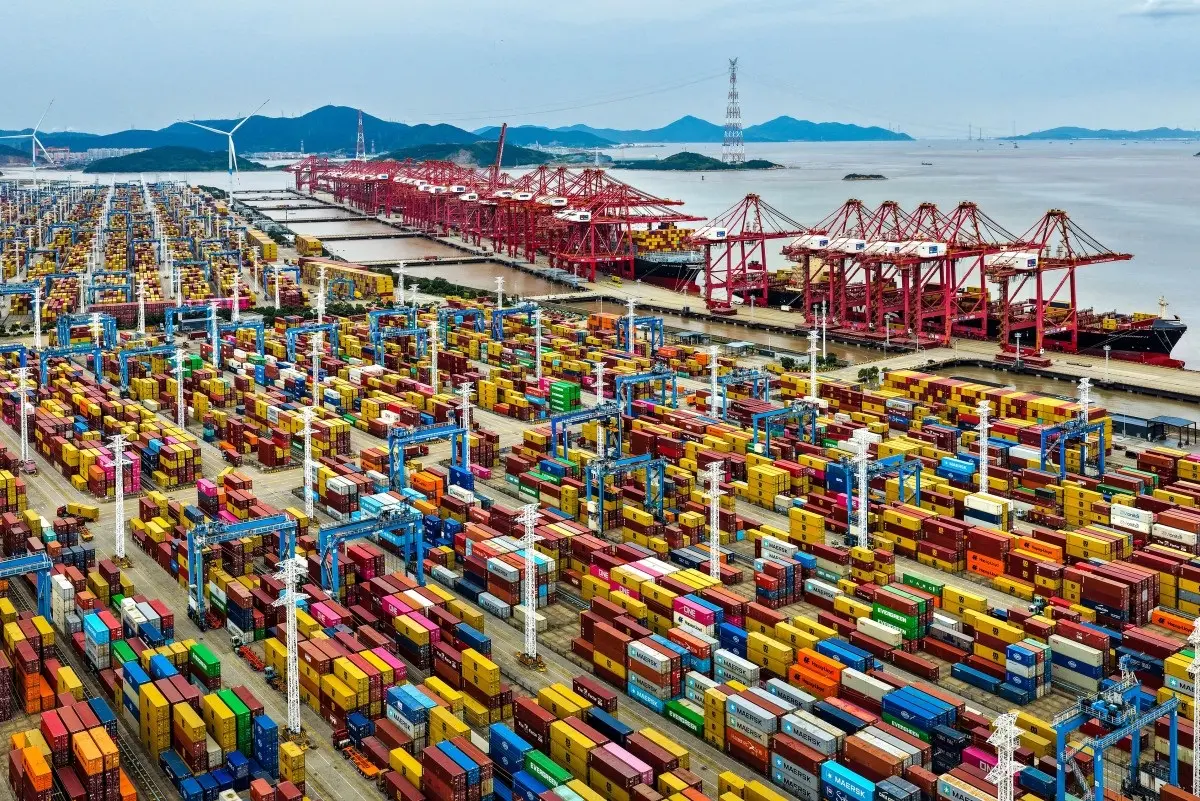
Exports remain a major source of growth. Figures published last week showed a sharp increase in overseas shipments, putting China on course to record a trade surplus exceeding the $1.2 trillion reported last year.
Much of the export growth has come from global demand for artificial intelligence-related products, including computers, semiconductors and data centre equipment.
However, China’s growing trade surpluses have increased disagreements with major trading partners, particularly the European Union and the United States.
Read More : Oil Lifts Saudi Stocks as Egypt Market Falls
Negotiations this month between EU trade chief Maros Sefcovic and China’s commerce minister, Wang Wentao, ended with an agreement to limit Chinese hybrid vehicle exports to Europe.
Critics argue that extensive government subsidies have given Chinese manufacturers an unfair advantage in international markets.
Weak demand at home has compounded the problem, pushing manufacturers to seek more customers abroad as they struggle to find sufficient growth within China.