Trending
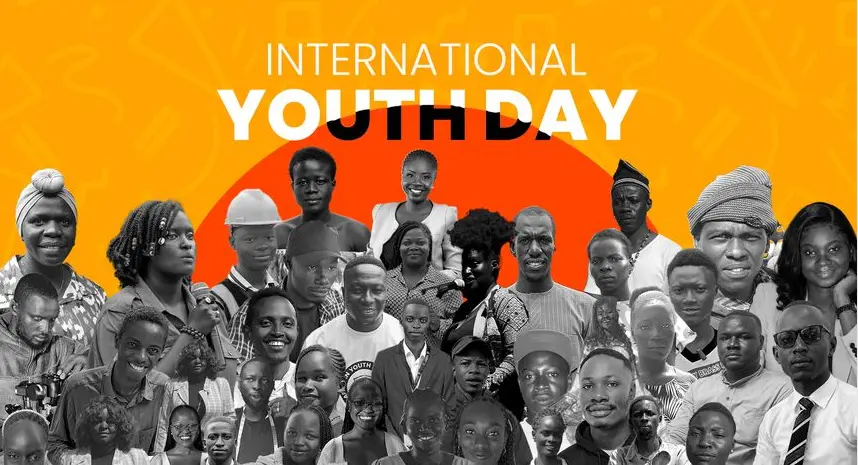
Observed every August 12 since the United Nations General Assembly designated the day in 1999, International Youth Day provides an opportunity to spotlight young people’s experiences and their influence on the societies they are helping to shape.
The issue carries particular weight in Africa, the world’s youngest continent.
According to the United Nations, about 70% of the population of sub-Saharan Africa is below 30.
Read More : Surging Ebola Outbreak Overwhelms Congo
UN population projections also indicate that Africa’s 15-to-24-year-old population is expanding faster than that of any other region, placing much of the continent’s future in the hands of its youth.
Across their experiences, young Africans point to a common set of challenges: turning education into decent opportunities, transforming talent into sustainable livelihoods and ensuring that political commitments translate into genuine participation.
Yet their stories are also marked by optimism.
Many see their generation’s creativity, resilience and entrepreneurial drive as powerful tools for tackling challenges and developing solutions within their own communities.
Africa’s Young people Want opportunity, Not Escape
Across Africa, young people are imagining futures in which success does not require leaving home.
From entrepreneurs and journalists to developers, designers, students and professionals, their aspirations are remarkably similar: better education, access to resources, decent jobs, stronger institutions and a greater say in the decisions shaping their lives.
For International Youth Day, young Africans across the continent shared what they want Africa to become, the obstacles standing in their way and the reasons they remain hopeful.
Their responses reveal a generation caught between enormous potential and limited opportunities, but unwilling to surrender its future.
For Bana Tchoumon, a 25-year-old aspiring entrepreneur in Cotonou, Benin, the future begins with young people understanding their rights and receiving the support they need to navigate the workplace.
“I want to grow and prosper in a continent where I can contribute to informing, supporting, and advocating for young people in the professional environment. I deeply believe that a young person who knows their rights, is well-informed, and receives appropriate support is better equipped to build their future,” she said.
But she identified a basic problem that continues to affect young workers: “In one phrase, our biggest hurdle is the poor awareness of our rights, injustice, abuses, and harassment in the workplace.”
Tchoumon wants to use her own experience to help change that.
The Struggle to Turn Skills into Livelihoods
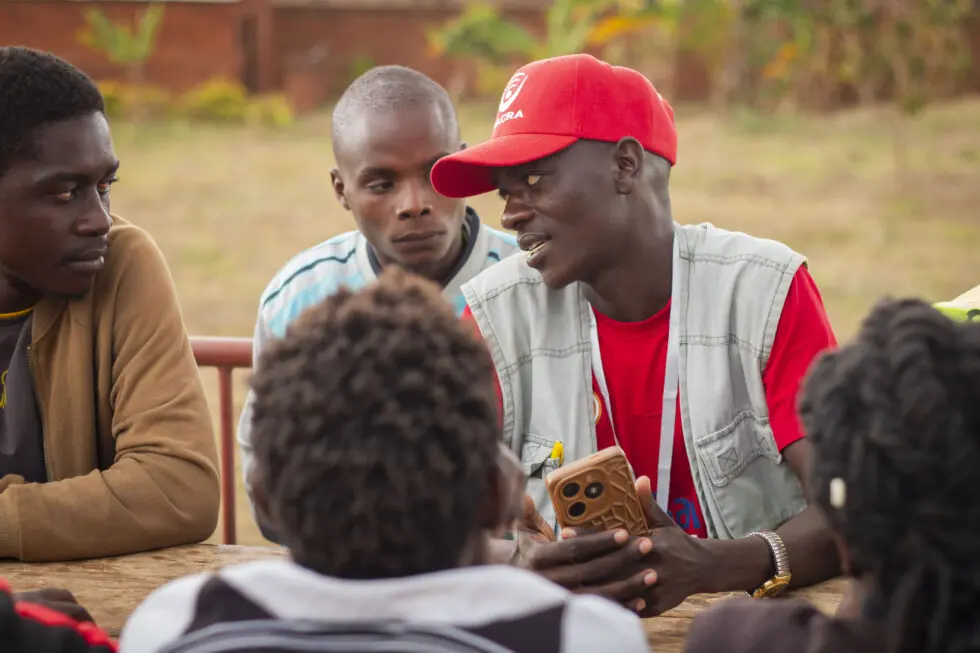
For many young Africans, education remains central to their ambitions, but a certificate does not always translate into employment.
In Yaoundé, Cameroon, 30-year-old security guard Thomas Ndifon sees poor leadership and inadequate skills as major barriers to progress.
“It would be interesting to build a future in an Africa where good governance—transparency, accountability, and providing basic needs like water and electricity thrives, but these are lacking,” Ndifon said.
“It would be impossible to build a future in Africa without good leadership. Leadership skills are absent in Africa.”
For him, the problem is also embedded in the education system.
“Looking at the educational system in Africa, there is more focus on theory than practical learning or skills, taking Cameroon as an example. Young people go to school to acquire certificates and lack ideas and know-how to start their own business.”
He believes the continent’s digital transformation offers an opening for young people, provided they acquire the skills to take advantage of it.
Building Despite the Obstacles
In Ouagadougou, Burkina Faso, fashion designer and patternmaker Inoussa Belgo, 30, sees peace as a prerequisite for young people to pursue their ambitions.
“I would begin by saying that we need a peaceful Africa, free from conflict. Such an environment allows every young person to find ways to realise their ambitions and pursue their projects,” he said.
Belgo runs his own workshop, where he makes clothes using traditional fabrics including Faso Dan Fani and Kokodonda. The business has not been easy to sustain financially, but he continues.
“Whatever the circumstances, however, young people must keep fighting and believe in the work they are doing. Not believing in it means living without hope and preparing for failure,” he said.
His ambition extends beyond his own business.
“Ultimately, I dream of a peaceful Africa where youth entrepreneurship is treated as a national priority and supported with financing.”
In Goma, Democratic Republic of the Congo, agro-food entrepreneur Alima Genevieve Kavugho, 31, is also building from what is available around her.
“I want to build my future in a Central Africa where young people can seize opportunities, learn practical skills and turn what they have into something useful,” she said.
Kavugho produces natural beverages and uses carrots to give her passion-fruit juice a natural colour.
But the biggest obstacle to expanding her business, she said, is “the high cost of opportunity.”
“One of the biggest challenges for young people is our education system, which does not encourage enough young people to learn practical trades from an early age,” she said.
“In my own business, I also lack the financial and material resources to grow. We still do much of the production by hand, and I need more training in natural beverage production, better equipment and packaging.”
Still, she continues to push forward.
The Resources Gap
In Accra, Ghana, 29-year-old full-stack developer Daniel Oye wants an Africa where young people can succeed without their background or connections determining their prospects.
“I want to build an Africa where young people can dream, where hard work actually pays, and where resources are given to young people to realise their dreams,” he said.
“I want an Africa where not only your background or connections can take you as far as you can go, but also where resources are given to young people to succeed.”
Oye hopes to use technology to solve problems in sectors such as health and agriculture.
“As someone who is interested in technology and development, I want to be able to use my skill sets to help the health sector, to help the agric sector, where IT or technology can be used to help reduce the workload on our farmers, where students will be able to use technology to facilitate their academics.”
His biggest concern is access to resources.
“The biggest hurdle for young people in Africa these days, or nowadays, is the limited access to resources,” he said.
Yet he sees enormous potential in the generation coming through.
Staying Home to Build
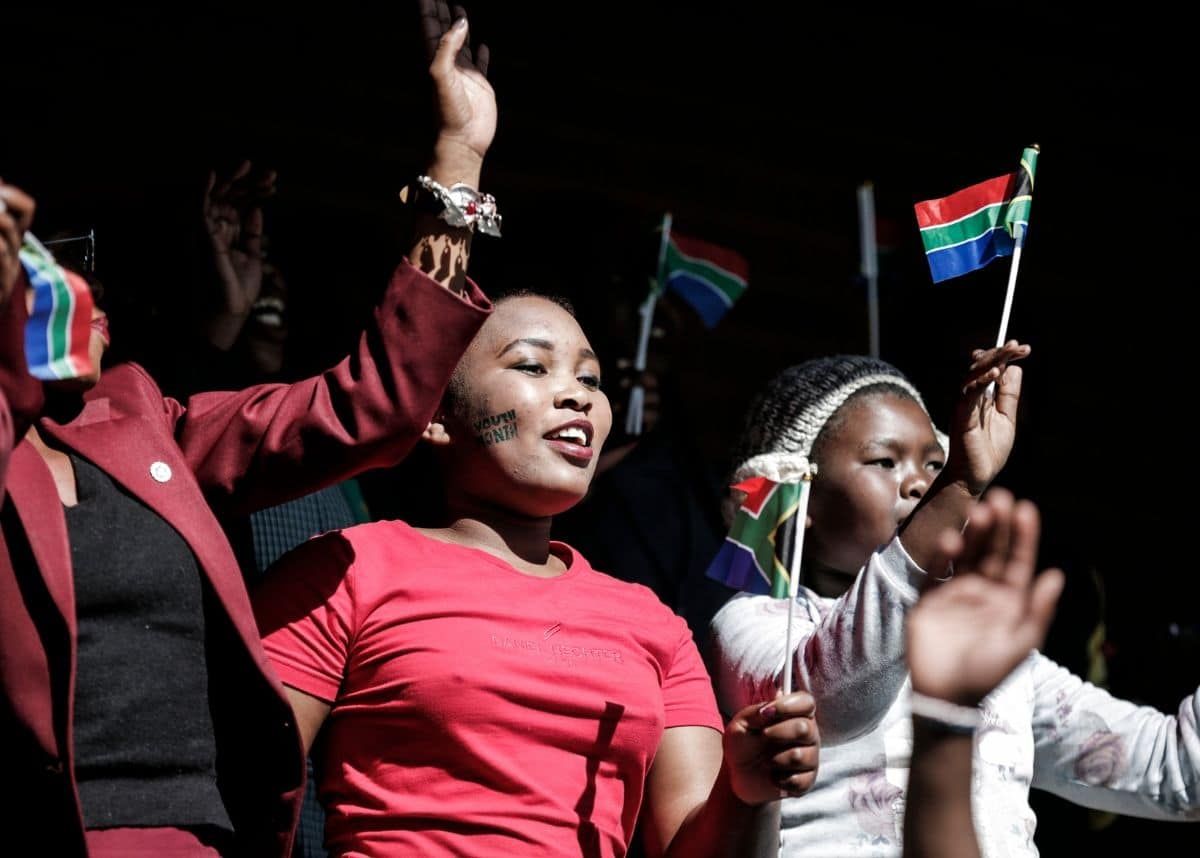
The desire to create opportunities at home is echoed across the continent.
In Blantyre, Malawi, 22-year-old journalism student Lonely Titaniah Mbewe does not want young Africans to believe that leaving their countries is the only route to success.
“I would like to build my future in an Africa where young people do not have to leave their countries to find opportunities or think that success is only possible outside their home country,” she said.
“As a Journalism student, I want to live in an Africa where education actually opens doors, where young people are able to find stable employment, create businesses and use technology & innovations to build sustainable livelihoods.”
For Mbewe, the central problem is the distance between what young people can offer and the opportunities available to them.
“Young people have ideas, ambition, skills and even passion to achieve different goals, but we struggle to find jobs to turn what we learn in school or the ideas we have into meaningful careers.”
But she is determined to become part of the solution.
In Harare, Zimbabwe, 23-year-old student journalist Tinomudaishe Muzanenhamo shares the same ambition.
“I want to build my future in an Africa with so many opportunities that I do not have to leave home to find them,” she said.
“As a young journalist, I want an Africa where I do not have to choose between speaking the truth and feeding my family.”
Muzanenhamo said a lack of opportunities can push some young people towards harmful choices.
“Right now, I see many young people facing serious challenges. Some turn to drugs, others end up in rehabilitation centres, while some resort to stealing simply to survive,” she said.
“I believe this happens partly because young people do not have enough opportunities to explore their talents and build meaningful futures.”
She also wants adults to listen more closely to young people.
Beyond Certificates
Muzanenhamo’s experience also reflects a broader concern about how African societies define success.
“Growing up, many of us were told to focus on subjects such as mathematics, science and English. If you did not have a degree or diploma, it often felt as though you had no future,” she said.
“Sports, music and art were largely treated as hobbies rather than potential careers.”
She wants that thinking to change.
“The Africa I want is one that invests in the talents of its young people. It is an Africa filled with opportunities, where young people can turn their passions into careers and contribute meaningfully to their communities.”
For her, that includes protecting journalism and ensuring young journalists can make a living without compromising their principles.
“I want an Africa that protects press freedom, supports young journalists and creates an environment in which we can tell the truth without having to choose between our principles and our livelihoods.”
A Continent Young People Can Own
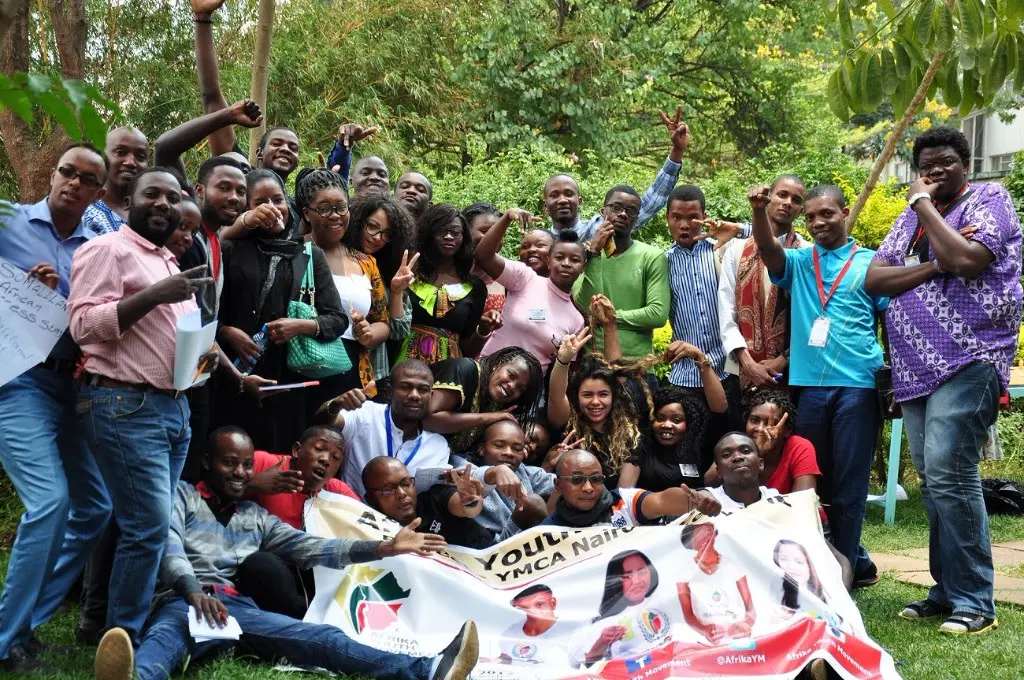
For some, the desired future is also about breaking down the borders and divisions that constrain young Africans.
In Enugu, Nigeria, 27-year-old architect Ogbodo Raphael wants a more integrated continent.
“The Africa I want to build my future in is united: an Africa with one economy, one currency and one visa; where tribe and language are not barriers, where we see each other as brothers and sisters, and where peace and love are the order of the day.”
He identifies a lack of agency as one of the biggest problems confronting young people.
“In one phrase, the biggest hurdle for most young people today is a lack of agency,” he said.
“Artificial intelligence may have expanded access to knowledge, but a lack of personal agency contributes to problems such as drug abuse, unemployment and digital fraud.”
His hope lies in young Africans taking greater ownership of their future.
In South Africa, 24-year-old Master of Laws candidate Sanelisiwe Mabhanti also wants a continent where young people are prioritised.
“I’d want to build my future in an Africa that is united. You know, where Africans are not fighting amongst one another, but are working towards building a better future for every African person,” she said.
She also wants opportunity to be based on merit rather than identity or connections.
For Mabhanti, high youth unemployment across parts of the continent is evidence that young people are not receiving the investment they need.
“We have Southern African countries such as South Africa and eSwatini, for example, with one of the highest unemployment rates in the world. We have South Africa, for example, sitting in a youth unemployment rate of over fifty percent. And that goes to show that the youth is not prioritised in our countries.”
“The youth is the future and if the youth is not invested in then what kind of Africa are we building?”
Turning Hope into Action
Across these countries, the young people interviewed describe different lives and professions, but their demands converge.
They want education that leads somewhere. They want skills that can be converted into livelihoods. They want access to capital and resources. They want institutions that work. They want to be heard, trusted and given room to lead.
And, perhaps most importantly, they want the option to stay.
The message running through their stories is not one of hopelessness. It is a demand for an Africa where hope is matched by opportunity and where young people are not treated merely as the continent’s future, but as participants in its present.
Read More : News Central Makes African TV History at UNGA 81
Their vision is ambitious: a continent where talent is not wasted, education opens doors, entrepreneurship is supported, technology solves local problems, and young people can build meaningful lives without having to leave home to find them.
By Bird Story Agency