Trending
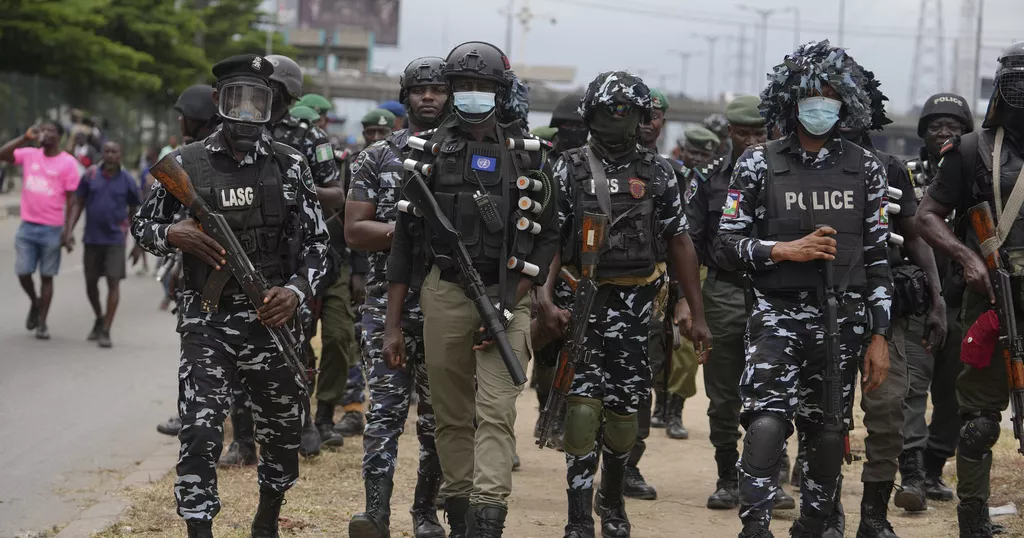
On May 7, 2026, I had the privilege of listening to and participating in a News Central TV Town Hall on the troubling question of why violent attacks continue to persist in Plateau State and the wider Middle Belt.
The conversation was passionate, sometimes heated, and deeply revealing.
Many important issues were raised, including government failure, jihadist campaign, and the growing helplessness of affected communities.
Read More : Thales to Build Nigeria’s New Telecom Satellite
While I agree with the majority of the contributions on the underlying and immediate causes of insecurity in Plateau state, I thought I could provide further insights on certain aspects of the conversation that were not extensively touched during the Town Hall.
First, I think it is high time we begin to call the security problem we are experiencing by its proper name. This is because one of the greatest obstacles to finding a lasting solution to this crisis in Plateau state and across the Middle Belt is the persistent mischaracterisation of the violence.
For too long, the crisis has been simplistically described as merely: “farmer-herder clashes”, “ethno-religious or inter-communal conflict,” “violent conflict” or “armed conflict”, “reprisal attacks”. etc
While Plateau has indeed carried the painful burden of intercommunal tensions for decades, the present reality has clearly moved beyond ordinary communal conflict.
The scale, coordination, sophistication, and brutality of recent attacks in Barkin Ladi, Riyom, Bassa, and other villages across the Middle Belt suggest something more sinister, such as organised armed violence, terrorism, territorial displacement, land grabbing, and in some cases, patterns that resemble ethnic cleansing or genocide.
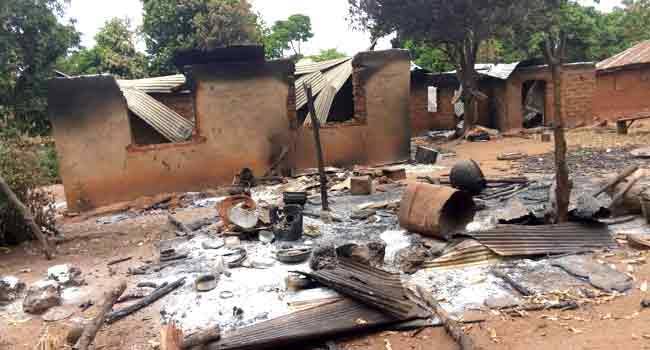
This mischaracterisation is not a small matter.
When a security crisis is wrongly diagnosed, the response will almost always be inadequate.
For example, if terrorism is handled as an intercommunal conflict, then the response becomes dialogue without deterrence, mediation without protection, reconciliation without justice, and endless peace meetings without real security stabilisation.
Let us be honest here. Peacebuilding cannot succeed where citizens are still living under active attack. Similarly, communities facing existential threats cannot negotiate meaningfully while buried in fear, grief, and trauma. This is why Plateau and the Middle Belt urgently require a security-first approach.
This approach does not make peacebuilding irrelevant. On the contrary, it creates the minimum conditions for peacebuilding to work.
Without security guarantees, displaced persons cannot return home, farmers cannot access their farmlands, children cannot go to school, and dialogue loses its credibility, as is the case in the Plateau and across the Middle Belt.
At the same time, we must confront the untreated legacy of decades of intercommunal conflict. Deep-seated levels of mutual distrust, suspicion, resentment, inherited trauma, and narratives of victimhood have fractured relationships across communities.
As far as peacebuilding is concerned, this is one of the biggest elephants in the room.
Sadly, we have an entire generation growing within this poisonous narrative of victimhood and grievance.
These unresolved tensions now provide fertile ground for radicalisation and manipulation by terrorists, bandits and other extreme criminal groups. In that sense, while the old communal conflicts may not fully explain today’s insecurity, yet they have unquestionably created the necessary conditions for the current crisis.
The Nigerian state must therefore reclaim its constitutional responsibility to protect lives and property. Security must no longer be merely reactive after attacks; it must be preventive, intelligence-driven, community-informed, and firm enough to restore public confidence.
Read More : Otti Urges Igbo Traders to Embrace Manufacturing
Ultimately, Plateau’s crisis is not simply an inter-communal conflict. It is a national security challenge with implications for food security, displacement, national cohesion, and democratic stability.
We cannot continue to use yesterday’s language for today’s realities.
Peace without security is fragile; but security without justice, reconciliation, and healing is ultimately unsustainable.