Trending
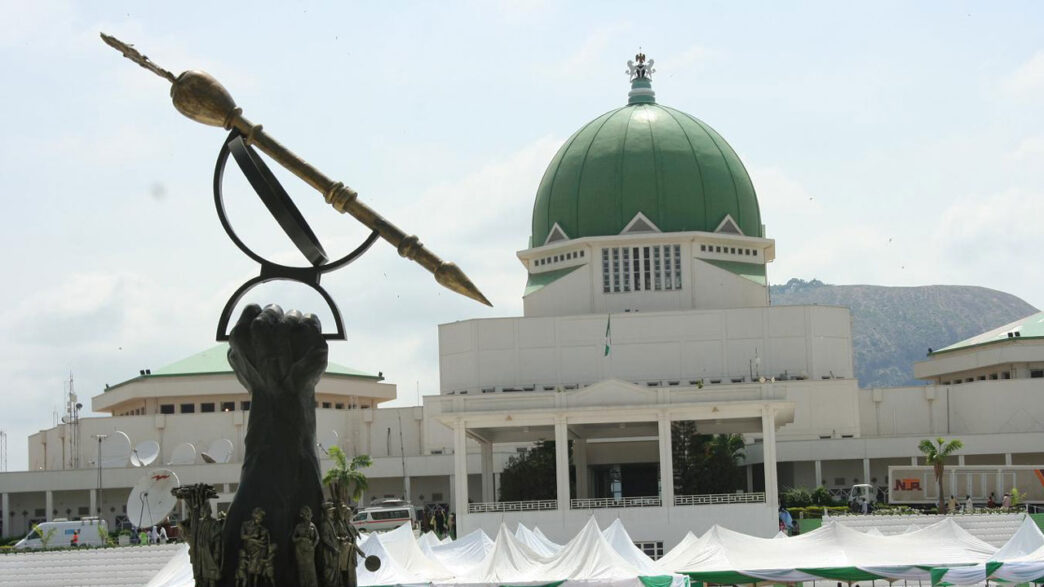
A High Court in Lagos has declared the National Assembly’s N110 billion vehicle and allowance schemes unlawful.
The ruling was delivered in a landmark judgment that found the expenditures to be in breach of procurement laws, constitutional provisions, and public accountability standards.
The court ruled that spending N40 billion on 465 vehicles for lawmakers and N70 billion in support allowances for newly elected members violated due process requirements and amounted to a breach of the public trust.
Read More : Iran Claims Capture of US Underwater Drone
Justice Yellim Bogoro delivered the judgment on Wednesday, May 6, 2026, in a suit filed by the Socio-Economic Rights and Accountability Project (SERAP) against the National Assembly. According to SERAP, the certified true copy of the judgment was obtained last week.
The court also ordered the Senate President, Godswill Akpabio, and Speaker of the House of Representatives, Tajudeen Abbas, “to ensure that all future procurements or expenditure of public funds by the National Assembly comply strictly with due process requirements and are also guided by the principles of transparency, accountability and value for money.”
SERAP had filed the suit in August 2023 challenging plans to spend N40 billion on 465 vehicles and N70 billion in allowances for new lawmakers despite worsening economic hardship in the country.
Justice Bogoro held that the scale of the expenditure, coupled with the absence of demonstrable due process, rendered it arbitrary and inconsistent with procurement standards.
“Looking at the magnitude of the expenditure, coupled with the absence of demonstrable due process, leads me to conclude that the procurement is arbitrary, disproportionate and inconsistent with statutory procurement standards.”
The court also noted that the beneficiaries of the expenditure were the same officials who approved it, describing the arrangement as a case of self-dealing and a conflict of interest.
Justice Bogoro further held that the expenditure demonstrated a failure to prioritise national interest in light of Nigeria’s economic challenges.
“I have taken judicial notice of the economic realities in Nigeria and the widespread financial hardship affecting Nigerian citizens. In this context, the allocation of N110 Billion for the benefit of lawmakers demonstrates a failure to prioritize national interest.”

Credit: The Guardian
She also dismissed the argument that legislative autonomy barred judicial intervention, stating that separation of powers cannot protect illegality.
The court further held that public office must not be used for personal enrichment and that lawmakers are bound by constitutional and statutory obligations.
“The allocation of N110 Billion for the benefit of lawmakers also undermines the fiduciary duty owed to the Nigerian people. Public office must not be used for personal enrichment. Public Officers must act within constitutional boundaries and in good faith. I hold that the conduct complained of is inconsistent with the oath of officе.”
SERAP had argued that the expenditure violated provisions of the Public Procurement Act, the Code of Conduct for Public Officers, and constitutional provisions on public accountability.
In response, the defendants had argued that the suit was based on media reports, that the funds had already been spent, and that SERAP lacked locus standi.
However, the court dismissed these objections, affirming SERAP’s standing to bring the case in the public interest.
On jurisdiction, the court held that public interest litigation is recognised under Nigerian law.
The court also ruled that the case was not academic, despite claims that the expenditure had already been implemented.
Justice Bogoro concluded that SERAP had successfully established its case and was entitled to the reliefs sought.
SERAP described the judgment as a victory for transparency and accountability, while human rights lawyer Femi Falana, SAN, urged immediate compliance and reforms in public spending.
In a follow-up letter dated June 6, 2026, SERAP urged the National Assembly leadership to fully comply with the judgment, describing compliance as essential to restoring public trust and strengthening the rule of law.