Trending

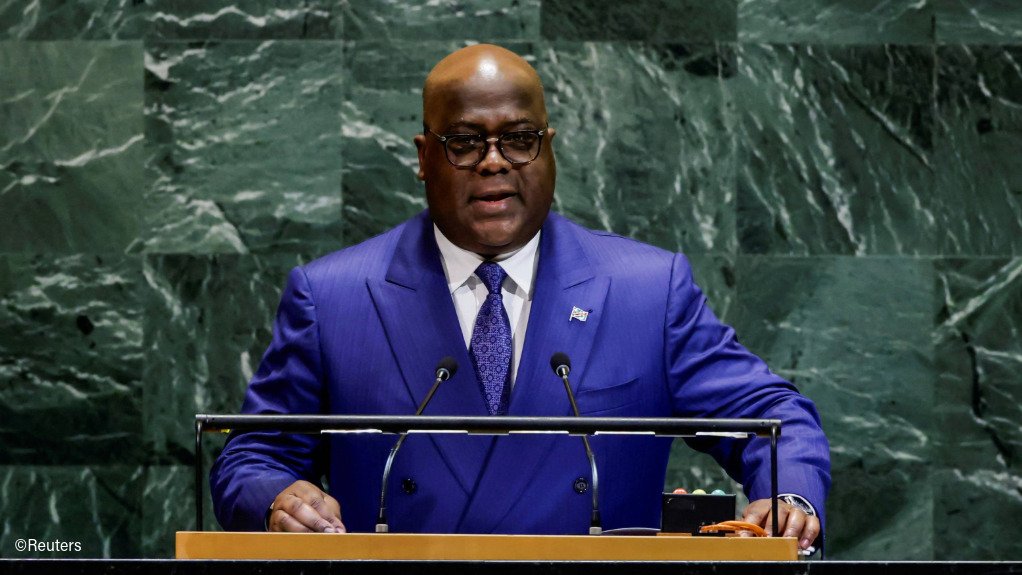
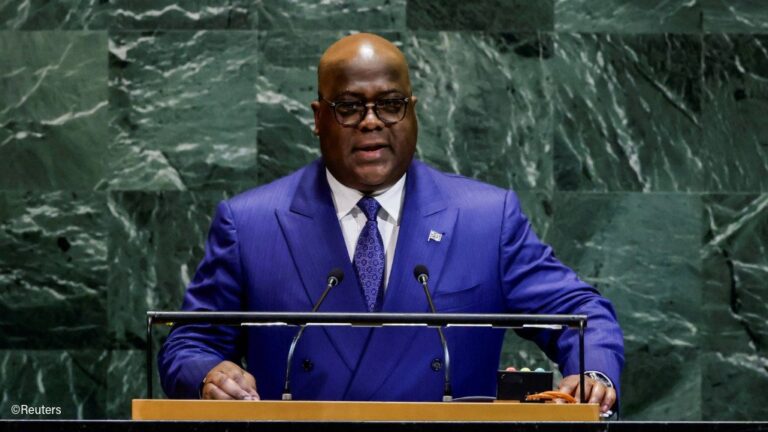
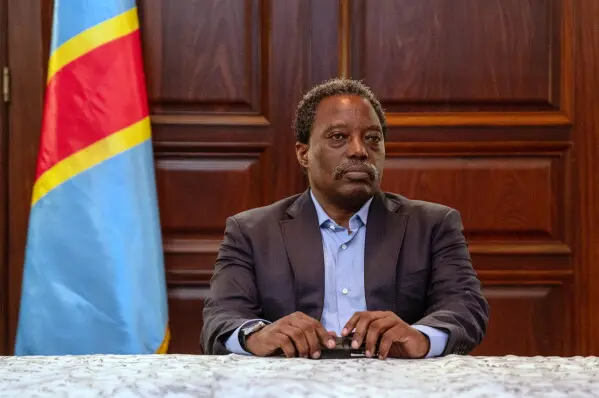
Democratic Republic of Congo (DRC) President Félix Tshisekedi has accused his predecessor, Joseph Kabila, of acting as a proxy for Rwandan President Paul Kagame after joining the Rwanda-backed M23 rebel movement.
Speaking to lawmakers from his ruling coalition on Tuesday, Tshisekedi described Kabila as “a big coward”. He accused Kagame of bringing his predecessor out of the shadows to lead the latest offensive.
“Rwanda’s President Paul Kagame asked his proxy, who had been lurking in the shadows, to come out and take the reins of this offensive,” Tshisekedi said in a speech broadcast on X by the Congolese presidency.
Read More : Africa Ebola Outbreak Exceeds 10,000 Cases
Kabila, who ruled the country from 2001 to 2019, has returned to the political and military crisis in eastern DRC, where fighting has continued despite a US-brokered truce in December.
Earlier this month, he joined forces with the M23 movement and took a direct role in the insurgency. His new political group, the Front for the Refoundation of the Nation (FRN), has vowed to end what it calls tyranny in the country, using “any means, including force”.
Tshisekedi added that the move showed the rebels were struggling to find solutions to the conflict.
“It is quite simply because they were at a loss for solutions that they had to push my predecessor into the thick of it,” he said.
The M23 movement has seized large areas of eastern DRC since resuming its armed campaign in 2021. The region is rich in critical minerals sought by global powers and has endured decades of conflict.
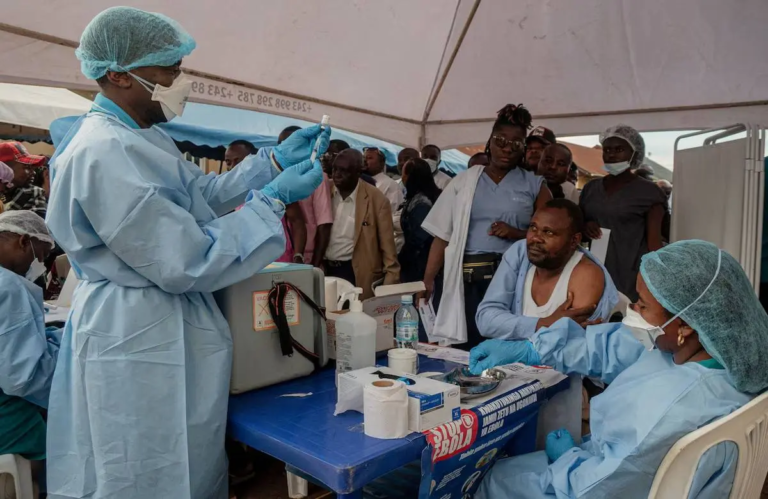
Despite the US-brokered truce in December, fighting has continued. The region is also facing an Ebola epidemic.
Kabila’s return has added to tensions in Congo, where Tshisekedi faces accusations that he wants to remain in office beyond the constitutional limit. The 63-year-old president is due to complete his second five-year term in 2028. The constitution limits him to two terms.
Tshisekedi has rejected claims that he wants to cling to power, while arguing that constitutional changes are needed to put the country on the right path.
“I don’t like this constitution, but let’s not link the change of the constitution, or my desire to change the constitution, with any supposed intention to cling to power,” he said.
He added that his priority was to end what he described as aggression against the country and put it on a path to progress.
“My mission is to put an end to the aggression against my country and to set it on the right path so that it can move forward, and that right path also involves revising this constitution,” he said.
Meanwhile, opposition parties have sought to distance themselves from Kabila. In their first statement since he took charge of the rebellion, the main opposition coalition condemned “any seizure of power by force”.
The opposition leaders also said they wanted to meet both Tshisekedi and Kabila to find a solution to the crisis.
Diplomatic sources and observers have warned that opposition to Tshisekedi could be wrongly interpreted as support for Kabila’s rebellion.
Kabila, who is under US sanctions for supporting the Rwanda-backed group, has denied allegations of treason. He was sentenced to death in absentia in the DRC a year ago over accusations that he colluded with the M23 movement.
He reappeared in May 2025 in Goma, a city under M23 control, after spending several years abroad. He has since made regular visits to rebel-held territory.
Read More : DR Congo Ebola Spreads to Eighth Province
An offensive by the M23 and the Rwandan army in early 2025 led to the capture of Goma and Bukavu, the capitals of North Kivu and South Kivu provinces. Although the front line has since stabilised, fierce clashes have continued, particularly in South Kivu.
United Nations experts have reported that Rwanda still has thousands of troops supporting the M23 and exercises de facto control over the group. Rwanda has repeatedly denied providing military support.
However, Rwanda says it faces an existential threat from a Congolese militia founded by ethnic Hutus involved in the 1994 genocide of Tutsis in Rwanda.