Trending
Google has launched a new feature allowing Google Earth users to generate AI-driven visualisations over the service’s satellite imagery, prompting immediate concerns about a potential wave of geospatial disinformation.
The “create image” tool uses Google’s Nano Banana 2 technology to synthesise realistic fabrications in seconds based on existing satellite, aerial, and 3D data.
While Google markets the feature for “visualising history” or planning real estate, researchers and open-source intelligence experts warn it provides bad actors a powerful means to abuse a cornerstone tool for fact-checking and verification.
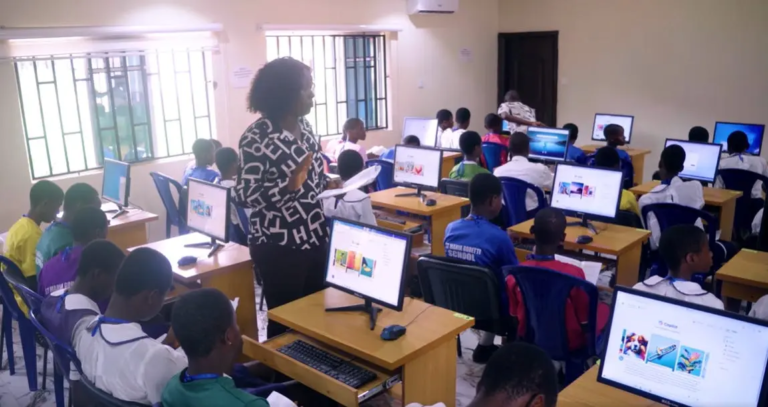
Read More : AI Transforms Nigeria’s Classrooms
Digital investigations expert Henk Van Ess stressed that these fakes gain inherent credibility because they reside within the world’s standard reference map.
In response, Google stated they embed digital watermarks known as SynthID into any AI-generated media to allow detection.
The company also pointed to policies prohibiting misinformation and claimed it blocks image creation on harmful topics.
However, tests by AFP on Friday successfully fabricated satellite images depicting high-consequence events, including a nuclear site in Iran, explosions in Paris, and a bomb crater in Russia, bypassing these protections.
Researchers argue that such AI fakes, already growing more common, can quickly erode public trust in satellite imagery and complicate the essential work of journalists and investigators globally.
Open-source intelligence groups like the Centre for Information Resilience have called Google’s move deeply irresponsible, fearing it could irrevocably damage hard-won public trust.
Read More : Google Fined €403 Million Over Location Data
Volunteer verification project GeoConfirmed also urged Google to reconsider the feature.
They reported that individuals are already exploiting the new tool to manipulate the information environment, such as fabricating military positions or misleadingly relabelling critical buildings like schools.
Experts emphasise that earlier AI-altered images, like a fake Pentagon explosion, have already caused real-world market disruptions.