Trending
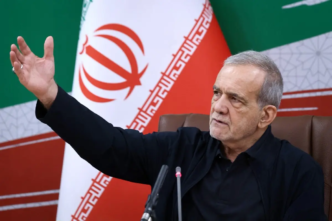
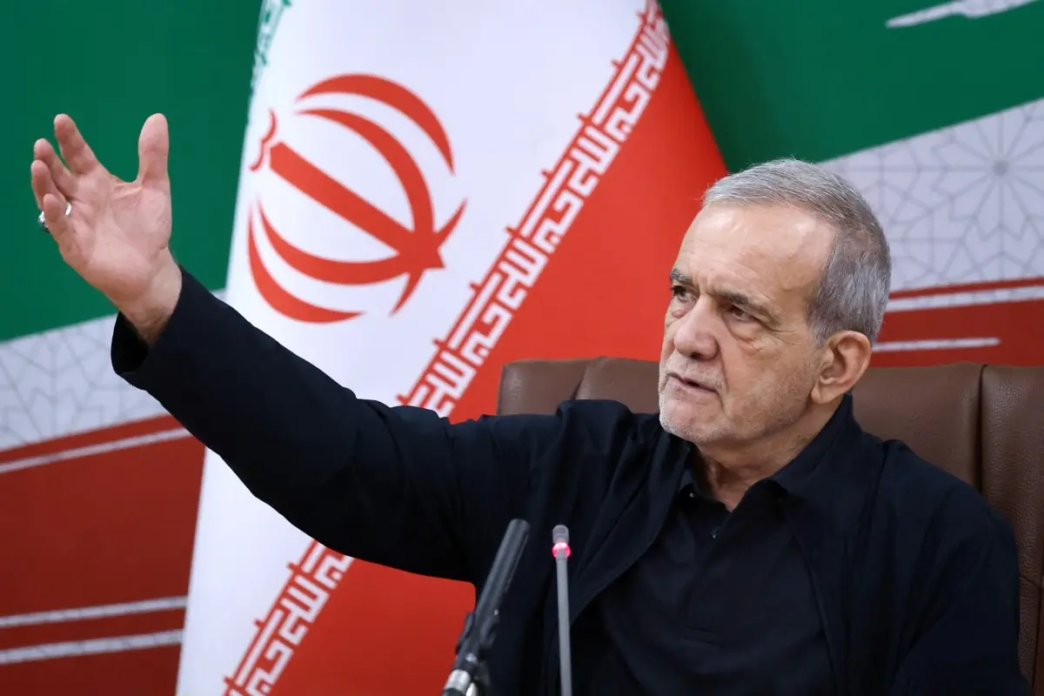
Iran has welcomed a new defence pact between Saudi Arabia, Turkey and Pakistan, describing the agreement as evidence that countries in the region are reassessing their reliance on the United States for security.
Iranian Foreign Ministry spokesman Esmaeil Baqaei made the comments on Monday, days after the three countries signed the agreement amid heightened tensions across the Middle East.
Speaking at a weekly press conference, Baqaei said the pact reflected what he described as a changing regional perception of the United States and its role in providing security.
“The countries of the region have realised that security is not a commodity that can be bought from false brokers,” Baqaei said, in an apparent reference to Washington, which maintains close ties with all three countries.
He added that regional governments could no longer depend on American security guarantees in the same way they had in the past.
“Countries in the region cannot rely on the claim of security provided by the US as in the past,” he said.
Despite concerns that the agreement could strengthen military cooperation against Tehran, Baqaei said Iran was not worried that the pact was directed at it. He pointed to Iran’s longstanding relationships with Saudi Arabia, Turkey and Pakistan, citing their “deep religious, historical and civilisational ties”.
“There is no reason to worry that this treaty will be against Iran,” he said.
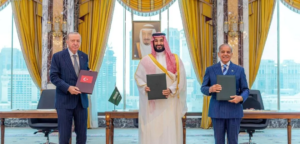
Saudi Arabia, Turkey and Pakistan signed the defence agreement on Friday as a five-month war between the United States and Iran continues to reshape security dynamics across the region. The conflict has also affected surrounding countries and disrupted important regional shipping routes.
Pakistan’s Foreign Ministry said the agreement establishes a collective defence principle under which an attack on one member would be considered an attack on all three. Islamabad said the pact was “intended to strengthen collective deterrence”.
Analysts have interpreted the agreement as an effort by the three countries to strengthen their own security arrangements, deter Iran and reduce their dependence on Washington amid uncertainty over the future of US security commitments in the region.