Live stream row tests Nigeria-South Africa reset.
Credit: Femi Fani-Kayode/X
The cornerstones of statecraft, discretion, institutional patience, and quiet backchannels were sacrificed on the altar of the deadline on a Friday morning in Pretoria.
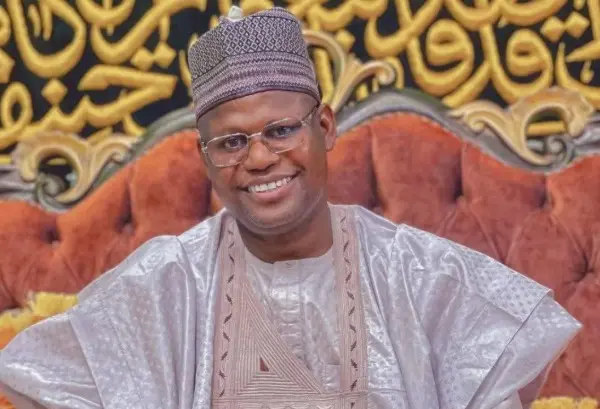
Just three weeks after arriving in South Africa on October 25, 2026, Chief Femi Fani-Kayode, Nigeria’s first official envoy in four years and newly accredited High Commissioner, turned a routine technical issue at the Presidential Guest House into a high-stakes bilateral soap opera.
Fani-Kayode raised his complaints directly to X (previously Twitter) instead of using formal diplomatic procedures to remedy a brief disruption in the live streaming of his credentials address.
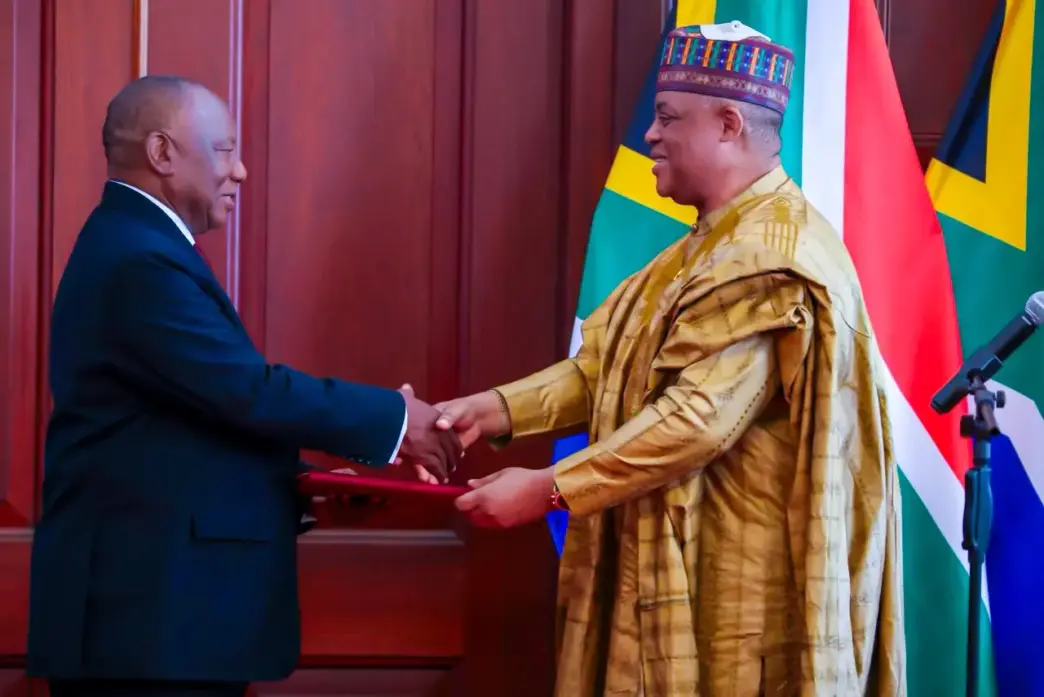
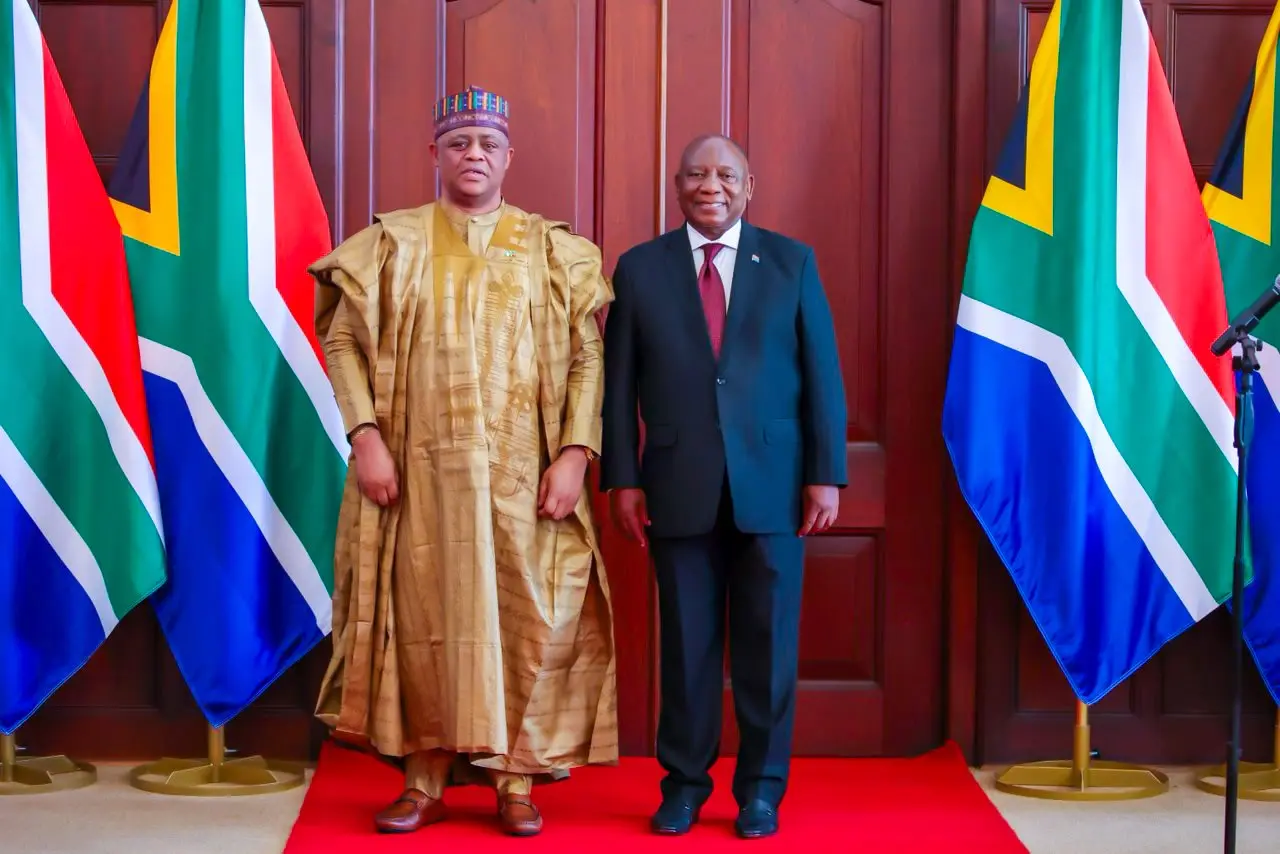
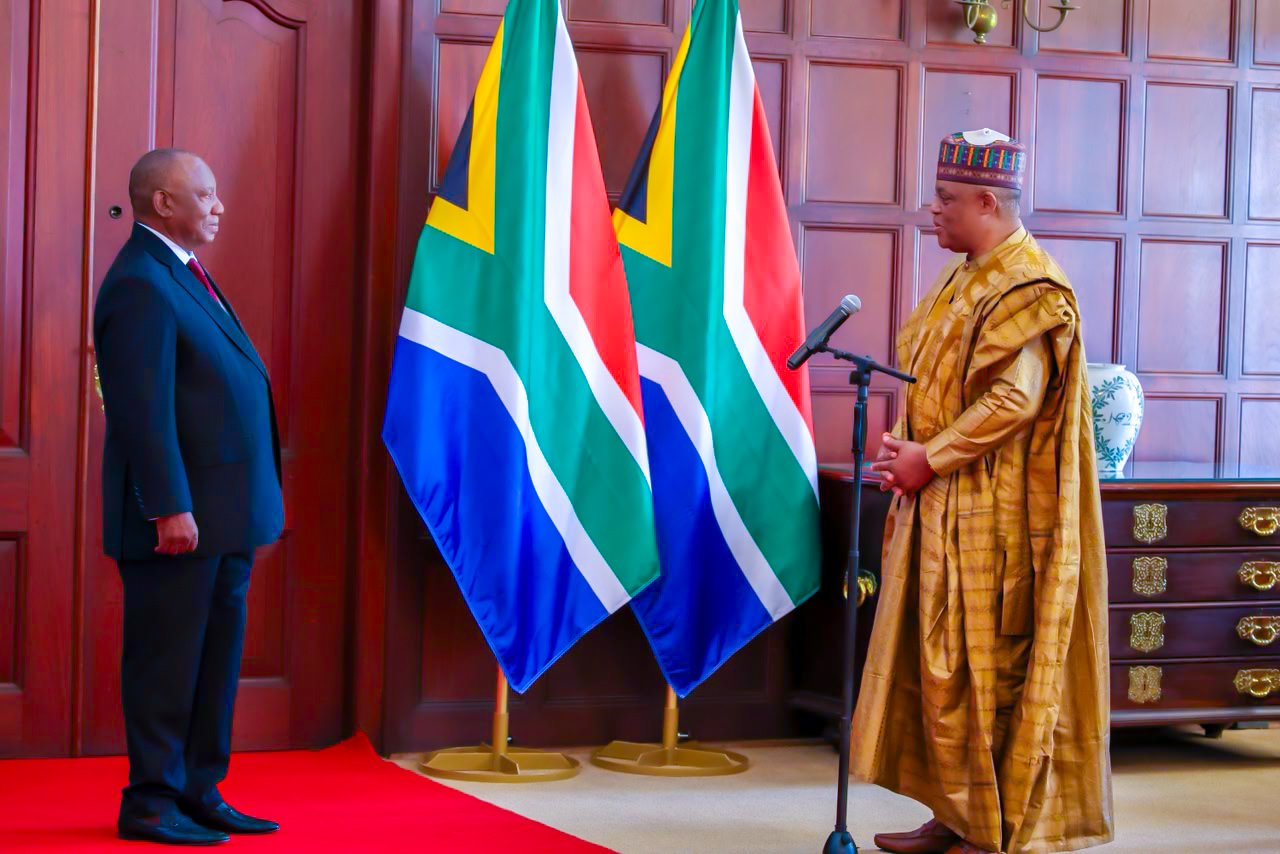
It was a great and historic morning today at the South African Presidential Guest House in Pretoria where I had the honor and privilege of presenting my letters of credence to His Excellency President Cyril Ramaphosa @CyrilRamaphosa, the President of the Republic of South Africa, along with Ambassadors from 14 other countries.
It was a beautiful and historic occassion which witnessed the first posting of a substantive Ambassador of the Federal Republic of Nigeria to the Republic of South Africa in four years.
The entire event was livestreamed by @PresidencyZA (the South African Presidency) where millions of Nigerians, South Africans, Africans and members of the international community were watching in real time.
Every single one of the 15 Ambassadors that were present were introduced formally and gave a speech.
Curiously the South African Presidency refused to air the introduction of my goodself and the Nigerian delegation or to air my speech.
They went a step further by cutting us out of the livestream completely and went back on livestream only after my speech was concluded.
15 Introductions and Speeches
Of all the 15 introductions and speeches that were made and delivered this morning only Nigeria’s was cut out.
I raised the issue with President Ramaphosa directly during the course of the photo session and whilst we were still on the premises and, in fairness to him, he took me to the relevant officials and acted with despatch.
Right there in my prescence he questioned them and directed them to resolve the issue immediately.
Sadly by then it was too late and Nigeria had been left out. To be clear, I repeat, we were the ONLY ones that were left out.
Live stream row tests Nigeria-South Africa reset. Credit: Femi Fani-Kayode/X
Clearly some elements in South Africa do not want to hear what we have to say or see our faces but we are here to stay as long as we are welcome and have the confidence of President Ramaphosa, which I am sure we do.
Luckily for us there were at least two Nigerian television stations at the event and all that I had to say was fully recorded by them and will be released to the Nigerian public.
There is also footage that will be released in which I complained directly to the President and in which he called his staff and told them what to do.
Whilst still on the premises, when offered an interview by @SABCNews
(the South African State Broadcaster), I turned them down as a consequence of the deplorable way we were treated and I told them to go and listen to my speech instead which their Presidency officials had refused to air.
One thing is clear, I have immense respect and affection for South Africa and the South African people but I will not be anywhere or tolerate anyone that disrespects or treats our Government or our people flippantly.
My thanks goes to President Ramaphosa for his concern and timely intervention.
God bless the Federal Republic of Nigeria and God bless the Republic of South Africa.
The Nigerian High Commission and South African presidential spokespersons engaged in a virtual altercation that exposed the precarious relationship between Africa’s two major economic powers.
Tensions broke out after 15 ambassadors sent letters of credence to President Cyril Ramaphosa. Fani-Kayode bemoaned the event in a lengthy thread, writing:
“Curiously, the South African Presidency refused to air the introduction of my goodself and the Nigerian delegation or to air my speech. They went a step further by cutting us out of the livestream completely and went back on the livestream only after my speech was concluded.”
He stated that he declined the South African State Broadcaster’s immediate offer of an interview:
“I turned them down as a consequence of the deplorable way we were treated, and I told them to go and listen to my speech instead, which their presidency officials had refused to air.”
Officials from South Africa retaliated with equal vigour. The envoy’s allegations of presidential intervention were denied by presidential spokesman Vincent Magwenya, who wrote:
“Even when it’s institutionalised, a lie remains a lie. There was no such intervention from the president or the presidency, and there will never be. Read our constitution and laws and familiarise yourself with the SABC editorial code. Stop disgracing yourself and your country.”
Live stream row tests Nigeria-South Africa reset. Credit: Femi Fani-Kayode/X
Magwenya was swiftly rebuked by the Nigerian High Commission in a harsh thread:
“You are the disgrace and no one else’s. Outside of that, your insolence and ignorance know no bounds. You are bringing your nation into disrepute and wilfully and purposely burning the bridge of peace and reconciliation.”
The mission went on to defend the ambassador’s behaviour, stating:
“Did you really expect him to simply stomach your ill manners and keep quiet? If so, you have misunderstood the character and nature of the Nigerian. We cannot be easily cowed.”
Continental Unity
However, the irony was as quick as it was painful: around two hours after the commotion, the South African Presidency posted the entire, uncut event to YouTube, showcasing Fani-Kayode’s full, statesmanlike speech that praised continental unity and bilateral anti-apartheid solidarity.
His digital complaint had completely overshadowed his own message of reconciliation.
The timing of this online altercation is extremely dangerous.
Just two months earlier, in September 2026, Nigeria’s National Assembly decided to limit official government travel to South Africa due to growing worries about localised violence against foreigners.
Fani-Kayode’s main responsibilities in this unstable environment were intended to be quiet consular advocacy, friction reduction, and systematic institution-building.
Livestream Dispute
Rather, the livestream dispute revealed a basic structural weakness: technical difficulties may quickly turn into geopolitical insults when there is a great deal of mutual hostility.
More significantly, it emphasised the dangers of public diplomacy on social media. Senior envoys run the risk of exchanging long-lasting, behind-the-scenes leverage for transient virtual recognition when they play to home internet galleries, escalating small etiquette mistakes into diplomatic catastrophes.
Both countries must maintain strong diplomatic discipline if they are truly serious about removing travel restrictions and mending years of mutual alienation.
To deprive conspiracy ideas of oxygen, South African protocol teams must ensure faultless technical performance at high-level state events.
At the same time, Nigeria’s diplomatic missions need to understand that meaningful negotiations in ministry halls are necessary for effective representation rather than quick salvos on social media.
The two biggest economies in Africa have too much continental responsibility to let drama driven by algorithms determine their shared future.
Abisoye Adedoyin Adeyiga holds a PhD in Languages and Media Studies and a Master’s in Education (English Language). Trained in digital marketing and investigative journalism, she is passionate about new media’s transformative power. She enjoys reading, traveling, and meaningful conversations.
Weekly roundups. Sharp analysis. Zero noise. The NewsCentral TV Newsletter delivers the headlines that matter—straight to your inbox, keeping you updated regularly.





 Trending