Trending
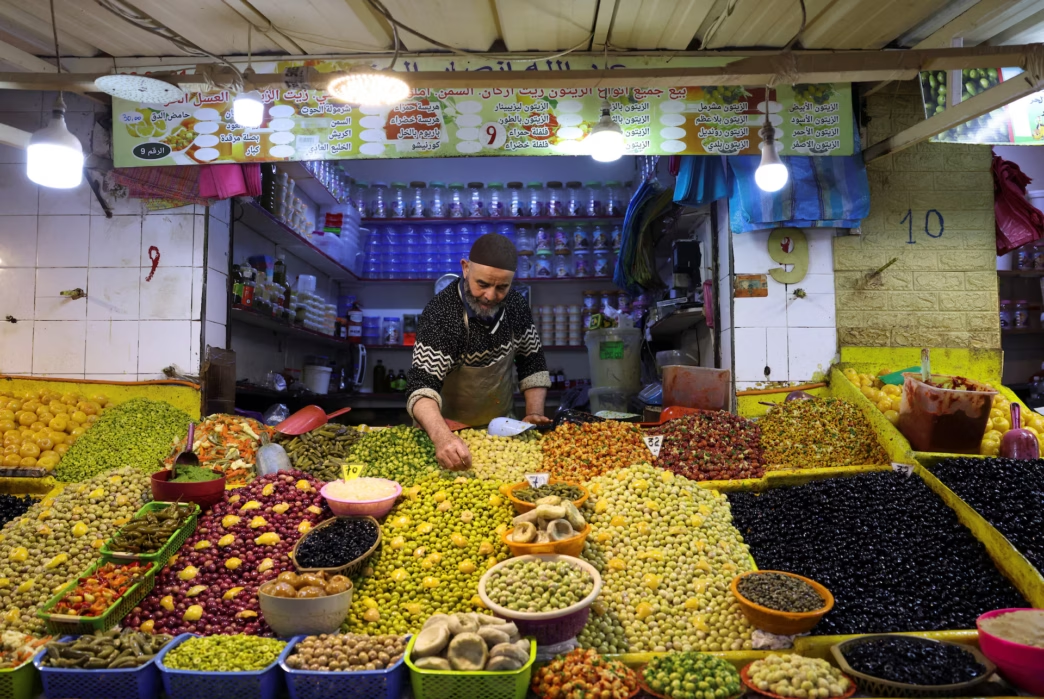
Morocco’s annual headline inflation rate, tracked by the consumer price index, climbed to 1.7 per cent in April, marking a notable increase from the 0.9 per cent recorded the previous month.
Data released by the national statistics agency on Friday indicates that the upward shift was driven by a combination of domestic and global market pressures.
Food prices, which historically serve as the primary driver of inflation across the country, saw a modest year-on-year increase of 0.6 per cent, while non-food commodities rose by 2.5 per cent over the same period.
A primary catalyst for the accelerating rate was a sharp 8.4 per cent spike in transport costs, triggered by a global surge in fuel prices following recent geopolitical conflicts in the Middle East.

In contrast, core inflation—which strips out highly volatile goods and state-regulated prices—remained relatively subdued, experiencing a 0.3 per cent decline compared to the previous year, though it managed a slight 0.1 per cent increase on a month-on-month basis.
To protect the domestic market and consumers from the ongoing impact of these international tensions, the Moroccan government has announced structural interventions.
The country plans to inject an additional 20 billion dirhams ($2.17 billion) into its 2026 fiscal budget.
This emergency funding will be heavily directed toward expanding public subsidies, ensuring that retail prices for public transportation, household cooking gas, and electricity remain stable for ordinary citizens.