


 Trending

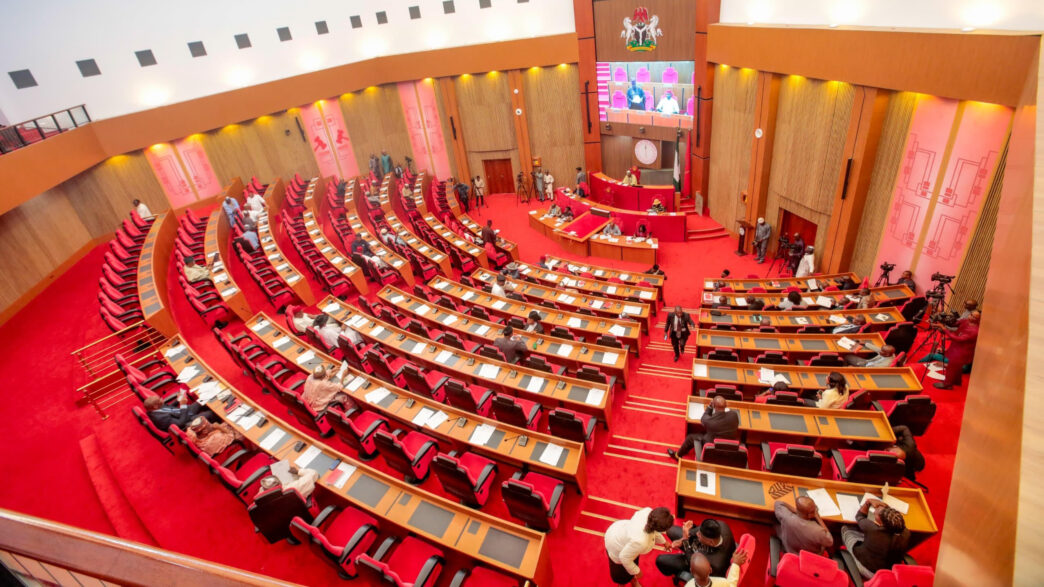
The Nigerian Senate has called for stricter tenancy laws requiring landlords to verify tenants’ identities, including through the National Identification Number (NIN), to help tackle human trafficking, kidnapping and other crimes.
The upper chamber has also urged the National Agency for the Prohibition of Trafficking in Persons (NAPTIP) and other security agencies to investigate travel agencies allegedly linked to human trafficking and the exploitation of Nigerians abroad.
The proposed investigations would examine recruitment networks, financial transactions and travel arrangements connected to the alleged offences. The Senate also called for laws to regulate short-let apartments, warning that criminals could use unverified rental arrangements to avoid detection.
Read More : Kogi Assembly Passes State Police Bill
The resolutions followed consideration of a report on protecting Nigerians from trafficking, slavery and human rights abuses in Libya. The Senate Committees on Diaspora and Non-Governmental Organisations; Judiciary, Human Rights and Legal Matters; Foreign Affairs; and Special Duties presented the report.

Senate President Godswill Akpabio said landlords who rent properties to unidentified individuals could unknowingly provide cover for criminal activities. He called for a review of existing laws to ensure tenants can be identified and traced when necessary.
Former Sokoto State Governor and Senator Aminu Tambuwal said he initiated similar legislation while serving as Speaker of a State House of Assembly. He proposed measures covering tenant registration, rent control and security checks. He also said landlords should provide proof of ownership of their properties.
Tambuwal urged the National Assembly to encourage state legislatures to adopt similar measures. Meanwhile, Senator Babangida Hussaini, representing Jigawa North-West, cited Lagos State’s existing legislation as a possible model.
Senator Adams Oshiomhole highlighted the organised nature of human trafficking. He noted that international networks and foreign collaborators often play a role in the crime. Oshiomhole also called for action against the demand for trafficked persons in foreign countries, alongside efforts to dismantle trafficking networks.
The Senate further called for a review and stronger enforcement of existing anti-trafficking laws, including the Trafficking in Persons (Prohibition) Enforcement and Administration Act, 2015, and the Child Rights Act, 2003.
To strengthen enforcement, lawmakers called for increased funding for NAPTIP and other relevant agencies to improve investigations, prosecutions and support for victims.
The Senate also urged the Nigerian Government to establish a National Reintegration and Protection Programme for returning victims and other vulnerable Nigerians. It proposed that the National Commission for Refugees, Migrants and Internally Displaced Persons coordinate the programme in collaboration with NAPTIP.