Trending


In the annals of Nigerian political history, we have witnessed military coups, civilian transitions, and the persistent struggle against corruption. Yet, the story of Prince Adeniyi Adeyemi Matthew and his purported “Presidential Foreign Intervention Promotion Council” (PFIPC) presents a novel and profoundly disturbing chapter. It is a scandal that strips the government bare, revealing not merely the audacity of a con artist, but the rotting infrastructure of a state where due process appears to be a mere suggestion.
The official narrative, as articulated by the Presidency, is designed to be simple: a lone fraudster, armed with forged documents and a history of deception, managed to hoodwink the system. We are told he secured office space in the Federal Secretariat, interacted with foreign ambassadors, and even succeeded in having a phantom agency allocated the princely sum of ₦1.3 billion in the 2026 budget. The Chief of Staff, Femi Gbajabiamila, we are assured, was the whistleblower who exposed this elaborate ruse.
This narrative, however, is an insult to the intelligence of the Nigerian people. It asks us to believe that a single individual, with no apparent governmental authority, was able to infiltrate the innermost sanctums of power with the ease of a spectre. A historian must look beyond the “rogue elephant” explanation and examine the institutional failures that made such a feat possible. The question is not, “How did a conman do this?” but rather, “How did the system allow it to happen?”
Read More : Is Nigeria Becoming a Fake Country?
The most damning evidence against the “lone wolf” theory is the budget itself. The allocation of ₦1.3 billion to the PFIPC in the 2026 Appropriation Act did not materialise from thin air. As Adeyemi himself rightly pointed out, the national budget is a document of immense scrutiny, or it is supposed to be. It passes through the technical drafting of the Budget Office, the coordination of the Executive, the review by the Federal Executive Council, and, crucially, the legislative scrutiny of the National Assembly.
For the PFIPC to appear in the final, passed budget, it must have been included in the initial proposal or inserted at some stage of this labyrinthine process. If the agency was “fictitious” and had “no legal or administrative backing,” how did it survive the scrutiny of the Senate and House of Representatives Committees?. What level of due diligence was applied before approving a line item for a body that, according to the Office of the Secretary to the Government of the Federation, was not recognised by the National Government? The notion that a ghost could be given such a substantive budgetary allocation speaks not to the skill of a charlatan, but to a profound, systemic rot within our legislative and executive processes. It suggests that budget approvals have become a political rubber-stamp, a charade of oversight where few, if any, are paying attention to the contents of a document that dictates the nation’s economic direction.

The Presidency’s attempt to isolate Adeyemi as a “clear case of a con artist” crumbles under the weight of his operational scope. How was he able to secure office accommodation within the Federal Secretariat? How was he able to convene a meeting with ambassadors at a major hotel without the Ministry of Foreign Affairs raising an alarm until after the fact? How was he able to secure a bank account at the Central Bank of Nigeria, albeit through misrepresentation to the Office of the Accountant-General?
These were not the acts of a phantom; they were the acts of an entity that enjoyed, at the very least, tacit recognition from various nodes of the state apparatus. As one presidential aide conceded, “internal collaborators enabled Adeniyi to get this far”. This admission is the most critical takeaway from the entire affair. It confirms what the public has long suspected: that Nigeria’s governance architecture is weak, and its gatekeepers are often the ones opening the doors to fraudsters. The question that must be investigated is who these collaborators are, and why they were willing to aid a “con artist” in constructing such an elaborate edifice of deceit.
To accept the government’s framing of this as a mere case of fraud is to accept a continuation of the status quo. It is to accept that the system is so brittle that a single man can game it to the tune of over a billion naira. A truly serious response would involve a comprehensive, independent, and transparent public inquiry. We must move beyond prosecuting Prince Adeniyi Adeyemi Matthew and begin to investigate and, crucially, punish the systemic failures and the “internal collaborators” that made his scam possible. The integrity of our institutions must be restored, for if we cannot trust the budget, the office, or the word of our leaders, then we have lost the very foundation of the state.
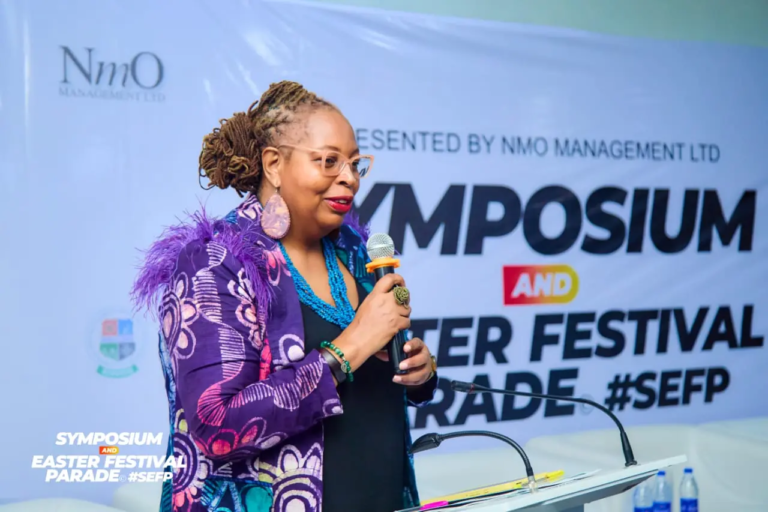
In her renowned 2009 TED Talk, The Danger of a Single Story, the celebrated Nigerian author Chimamanda Ngozi Adichie warned of the perils of reducing complex realities to simplistic narratives.
“The single story creates stereotypes,” she said, “and the problem with stereotypes is not that they are untrue, but that they are incomplete. They make one story become the only story.”
The Presidency’s portrayal of Prince Adeniyi Adeyemi Matthew as a lone wolf is precisely such a single story, a convenient, incomplete narrative that absolves the system of its failures while placing the entire blame on one man.
It is a story that allows the powerful to sleep soundly while the architecture of corruption remains intact. But Nigerians deserve more than a single story. We deserve the whole truth, the names of the collaborators, the extent of the institutional collapse, and the reforms necessary to ensure that no ghost ever receives a billion naira again.