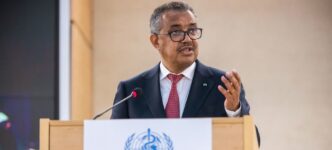
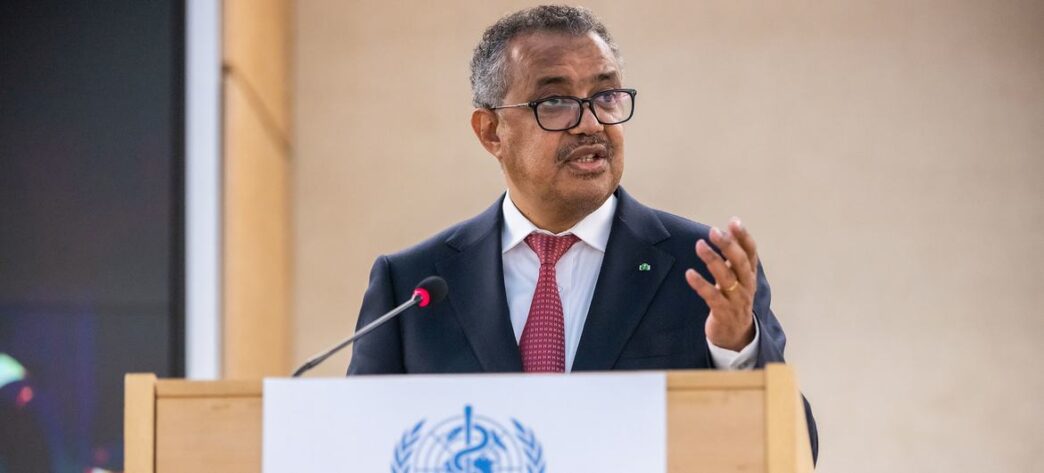
WHO Chief Tedros Adhanom Ghebreyesus. Credit: Pacific Islands News Association.
More than 900 suspected Ebola cases have been identified in the Democratic Republic of Congo (DRC) as surveillance efforts continue to expand, the World Health Organisation (WHO) has revealed.
WHO Chief Tedros Adhanom Ghebreyesus said in a post on his official X page on Sunday that the cases include 101 confirmed infections as the outbreak spreads in the conflict-hit Ituri province, where nearly 5 million people live during ongoing insecurity.
In Ituri, one in four people needs humanitarian support, while one in five has been forced to leave their homes due to violence.
As surveillance efforts have been scaled up in the #DRC#Ebola response, more than 900 suspected cases have been identified so far, including 101 confirmed cases.
In Ituri province, the epicentre of the outbreak, nearly 5 million people live amid ongoing conflict. Today, 1 in 4… pic.twitter.com/hgIydPGZxD
— Tedros Adhanom Ghebreyesus (@DrTedros) May 24, 2026
Ghebreyesus said the insecurity is making it difficult for health workers to trace contacts and identify new infections early, thereby providing care. Fear and mistrust in communities are also slowing down the response. Despite the challenges, WHO and its partners remain active in the region, including hard-to-reach and high-risk areas.
“The violence is forcing people to flee, including health and humanitarian workers. This is severely impeding efforts to scale up Ebola contact tracing and identify infections early enough to provide supportive care. Ongoing insecurity and fear are also fueling mistrust within communities,” Ghebreyesus said.
World Health Organisation (WHO). Credit: Drug Discovery World.
He added that the WHO and its Health Cluster partners are providing essential services such as maternal and child healthcare, treatment for severe malnutrition, mental health support, medical supplies, routine vaccinations, and care for survivors of sexual violence.
“Our Health Cluster partners are supporting the delivery of: maternal, reproductive, newborn, child, and adolescent healthcare, treatment of severe acute malnutrition with complications, mental health services, wound care, and support for survivors of sexual violence, medical supplies, routine immunisation, community health services”, he said.
WHO Chief reassured that the agency is keen on delivering comprehensive healthcare services, which is important not only for treating patients but also for building the trust needed to control the Ebola outbreak.
Deborah Akwa is a content writer with over four years of experience creating brand stories, editorial content, and audience-focused articles on topics like health, lifestyle, and entertainment.
When she isn't writing, she is behind the scenes managing editorial operations and helping the content team work better.
She loves using words to connect brands with their audiences. Outside of work, she enjoys watching movies and engaging in thought-provoking conversations.
Weekly roundups. Sharp analysis. Zero noise. The NewsCentral TV Newsletter delivers the headlines that matter—straight to your inbox, keeping you updated regularly.
 Trending