Trending


Nigeria’s wage adjustments and allowances cost the government ₦9.39 trillion between June 2023 and December 2025, exceeding the total savings from fuel subsidy removal, according to Finance Minister Taiwo Oyedele.
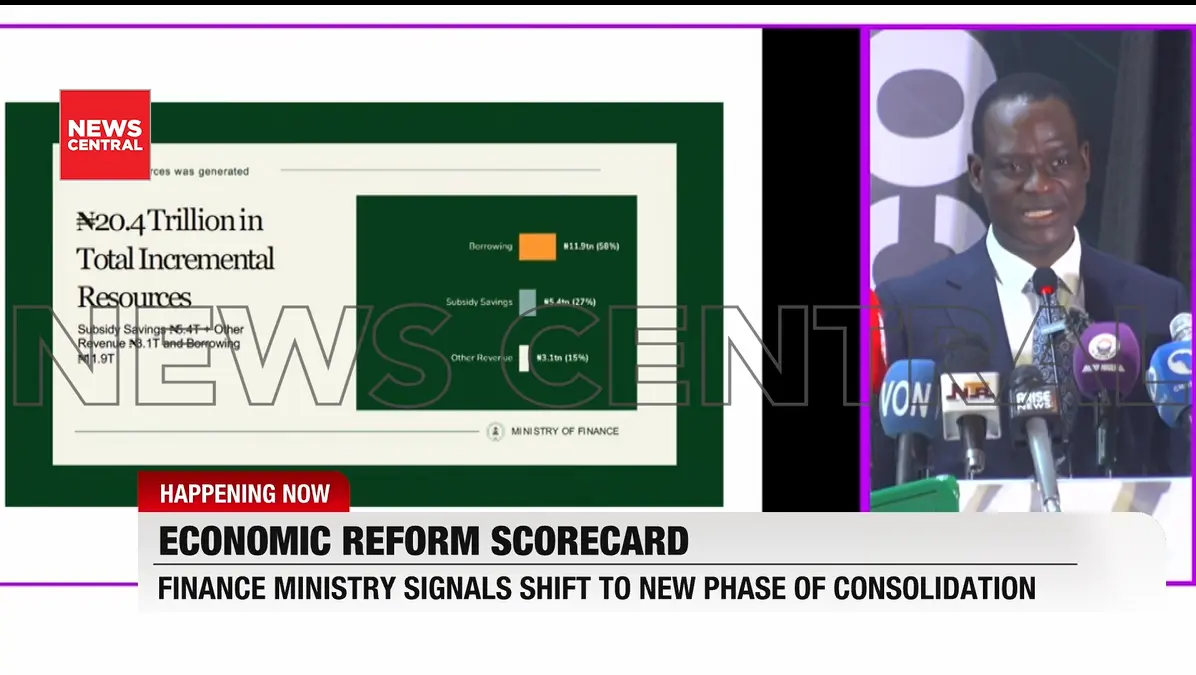
Speaking to the press on Wednesday at the administration’s economic reform scorecard, the minister said the government mobilised ₦20.4 trillion in additional resources over the period, comprising savings from fuel subsidy removal, increased independent revenue and new borrowing.
Of that amount, ₦11.9 trillion came from incremental borrowing, while ₦3.1 trillion came from incremental independent revenue, mainly remittances from government-owned entities and surpluses from government agencies.
Read More : Tinubu Orders Probe Into Ondo Air Crash
The minister said the borrowing would have been substantially higher without the fiscal space created by the government’s economic reforms.
“So altogether, the federal government’s incremental resources over the period, remember, subsidy savings, independent revenue, and incremental borrowing, came to 20.4 trillion Naira,” the minister said.
“That money did not sit idle. It partly funded incremental expenses,” Oyedele added.
“For that same period, the incremental expenses of the federal government alone, not the federation, was 30.64 trillion Naira.”
The government’s additional spending, however, exceeded the additional resources it raised during the period, reaching ₦30.64 trillion.
Wages Consume Subsidy Savings
The largest component was ₦9.39 trillion spent on wage adjustments, minimum wage increases and allowances for public servants.
The minister cited the figure as evidence that the government’s increased revenue and savings were channelled into higher personnel costs.
“And I think this is a point that should be of interest to everyone,” the minister said.
“The incremental amount that the federal government spent paying higher wages is more than the entire savings that the federal government earned from subsidy removal.”
The government removed the petrol subsidy shortly after President Bola Tinubu took office in May 2023, triggering a sharp increase in fuel prices and contributing to higher living costs.
The minister said the reform was not primarily intended to raise revenue.
“This is evidence that the reform was never introduced for revenue purposes, but to address entrenched corruption in an artificially managed foreign subsidy and foreign exchange markets,” the minister said.
Debt Servicing Takes ₦9.37 Trillion
The second-largest spending item was external debt servicing, which consumed ₦9.37 trillion during the period.
Oyedele attributed the increase in naira costs partly to currency depreciation.
“If we’re paying $1 million before in interest on our foreign debts, it is still the same $1 million. But instead of 460 Naira, it’s now 1415,” the minister said.
“That’s more Naira that we need to incur.”
He defended the government’s decision to prioritise debt payments, saying obligations to foreign creditors could not simply be postponed.
“And I’ve said this before. When you have debt service to pay, you don’t negotiate. You don’t delay. You pay,” he added.
“Because delays or defaults have consequences.”
₦6.5 Trillion Spent on Infrastructure
Oyedele noted that another ₦6.5 trillion went into strategic infrastructure, making it the third-largest expenditure category.
“Every Naira of this is accounted for,” the minister said, adding that a detailed breakdown was included in the government’s scorecard.
Read More : Tinubu Ends Lagos Visit, Returns To Abuja
The figures show how the government says it deployed additional resources generated during the first 30 months of Tinubu’s administration.
The government has repeatedly defended its economic reforms, including the removal of the petrol subsidy and changes to the foreign exchange regime, as necessary steps to address longstanding distortions and place the economy on a more sustainable footing.
However, the reforms have also fuelled a cost-of-living crisis, with higher fuel, food and transportation costs putting pressure on households and businesses.