Trending
There is a cruel irony at the heart of African politics. The continent that birthed humanity now borrows its governing philosophy from those who, not long ago, used philosophy as a weapon against it.
The West exported a system engineered for its own history, culture, and institutions, then called it universal. Africa has paid the price. It is time the continent builds its own model, one that works for Africans, not just in theory, but in the street, in the village, in the blood.
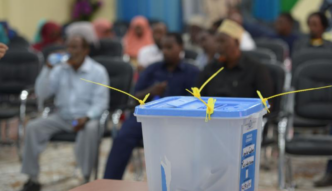
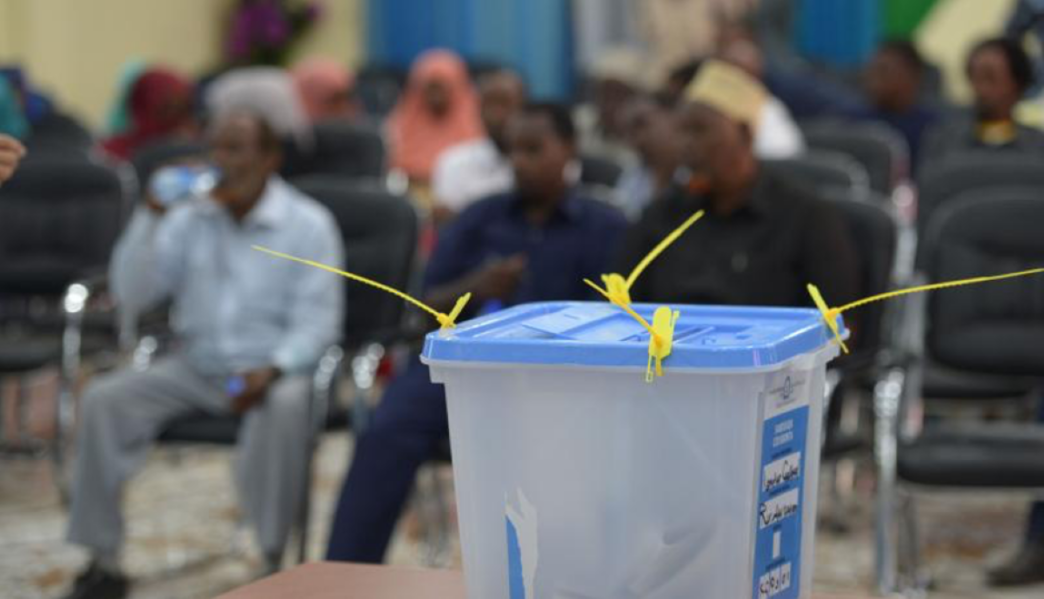
Liberal democracy, free elections, multiparty systems, checks and balances arrived on African soil packaged with foreign aid, diplomatic pressure, and the quiet assumption that what worked in London and Washington would, with sufficient patience, work in Lagos and Lusaka too. It has not. Not fully. Not yet. And perhaps not ever in its current form.
This is not an argument against democracy. Democracy remains the only honest system that enshrines the dignity of citizens, limits the tyranny of rulers, and gives a people the ultimate weapon: the vote. But democracy is not a single, fixed thing. It is an idea, and like all great ideas, it must be adapted, localised, made to fit the body it is supposed to clothe. What Africa has largely imported is a democratic costume, cut for someone else’s measurements.
The Evidence is Damning
Since the wave of independence swept through Africa in the 1960s, the continent has held thousands of elections. Coups have followed. Incumbents have rewritten constitutions. Opposition leaders have been jailed, exiled, or simply disappeared. Tribal arithmetic, not policy platforms, decides elections across much of the continent.
In Nigeria, the most populous black nation on earth, elections are events to be survived, not celebrated. In Zimbabwe, a liberation hero became the very tyrant he had once fought. In Sudan, elections gave way to generals. The pattern is familiar, the cycle exhausting.
Why? Because Western liberal democracy was not designed for societies where ethnic identity is stronger than national identity, where formal institutions are younger than the men running them, where illiteracy rates can top 60%, where the colonial border cuts through languages and lineages that were never meant to share a president.
It was designed for post-Enlightenment Europe, with its particular histories of property rights, the printing press, Protestant individualism, and centuries of institutional evolution. Africa arrived at the democratic table without that baggage, or rather, with entirely different baggage of its own.
As of 2024, Freedom House classifies fewer than a quarter of African nations as “free.” Sub-Saharan Africa has experienced more than 200 coups or coup attempts since independence. Yet the continent’s democratic frameworks are largely modelled verbatim on Western constitutions.
In much of Africa, politics is a zero-sum game. You eat, or you are eaten. You capture the state, or the state is used against you. Power is not a tool for governance; it is the resource itself. This is not a racial pathology. It is a structural one, born of colonialism’s deliberate destruction of indigenous governance systems, the weaponisation of ethnicity, and the creation of winner-takes-all states where losing an election means losing everything. When survival is the prize, elections become wars.
The West, for all its contradictions, had centuries to evolve the unwritten rules, the gentleman’s agreement that power is temporary, that the loser concedes, that the institutions matter more than the individuals.
Africa’s elites were given those institutions without the culture that makes them work. And culture cannot be legislated into existence by a donor conference in Brussels.
China did not democratise its way to prosperity. Rwanda did not vote itself into order. The lesson is not to abandon principle, it is to sequence it correctly.
The Asian and Rwandan Mirror
Look east. China has lifted 800 million people out of poverty under a one-party system that would make any liberal theorist shudder. Singapore, under Lee Kuan Yew, built one of the world’s most functional, least corrupt states through technocratic authoritarianism. South Korea and Taiwan democratised only after they had already built strong economies and capable bureaucracies. The sequence mattered: institutions first, then rights, not the other way around.
Now look closer to home. Rwanda under Paul Kagame is perhaps the most instructive case in modern African history. Walk into Kigali today: no litter on the streets, no open gutters, a booming tech economy, functioning public services, extraordinary security.
Kagame is no democrat by Western standards; he controls the press, he limits opposition, and he wins elections with improbable margins. But Rwanda is also a nation that pulled itself out of the most savage genocide in modern memory in 1994 and built itself, brick by brick, into the cleanest, most functional state in sub-Saharan Africa. His citizens live longer, learn more, and earn more than almost anywhere on the continent. Is that to be dismissed because it does not meet the procedural checklist of liberal democracy?
What a Bespoke African Democracy Looks Like
It begins with honesty: that elections alone are not democracy, and that democracy without capable institutions is theatre.
Africa’s model must be built around three reinventions. First, the philosophy of Ubuntu, “I am because we are”, must move from poetry into policy. Governance structures that reward consensus, that bring elders, women’s councils, and community assemblies into formal decision-making, that distribute power downward rather than concentrating it upward. Not a rejection of representation, a deepening of it.
Second, a developmentalist mandate must be baked into the constitutional contract. Citizens must be able to hold governments accountable not just for holding elections but for delivering schools, hospitals, clean water, and roads. A government that wins 80% of the vote but leaves 60% of its people in poverty should face constitutional sanction, not protection. Rights must be paired with responsibilities and results.
Third, African nations must resist the pressure to democratise before they have institutionalised. Build the civil service. Professionalise the military. Make the judiciary genuinely independent. Create bureaucracies capable of delivering services regardless of who wins an election. Then and only then can elections be truly safe. Without strong institutions, every election is a gamble on the winner’s character. With them, it barely matters.
The Courage to Design for Ourselves
None of this will be easy. Africa’s political elites benefit enormously from the current dysfunction. The international community, donors, lenders, and NGOs often prefer a compliant democracy that ticks boxes over a messy, evolving sovereignty that challenges orthodoxy. And Africa’s own citizens, exhausted by broken promises, often swing between cynical participation and dangerous longing for the strongman.
Read More : The Road Home Should Not Be A Death Sentence
But the continent is young in population, in ambition, in possibility. The median age in sub-Saharan Africa is under 20. These are people who did not choose the systems inherited from colonialism, who did not vote for the Cold War politics that twisted their nations’ early institutions, who are already building a future in tech hubs from Lagos to Nairobi to Accra that looks nothing like what their parents were handed. They deserve a democratic model that was actually designed for them.
Africa does not need less democracy. It needs better democracy; fiercer, more rooted, more honest about context. A democracy that does not pretend the village does not exist. A democracy that does not collapse every election cycle into ethnic arithmetic and organised theft. A democracy with teeth, with memory, with African bones.
The world did not give Africa its freedom. Africa took it. Now it must decide what to do with it.