Trending
Aso-Oke has become one of Nigeria’s most celebrated cultural exports, appearing on international fashion runways and in luxury collections worldwide.
Yet behind its growing appeal is another story.
The women who helped build the country’s iconic textile trade are grappling with rising production costs, imported raw materials and a shortage of skilled artisans as they work to keep a centuries-old tradition alive.
Read More : Oyo Vows Swift Rescue of Abducted Corps Members
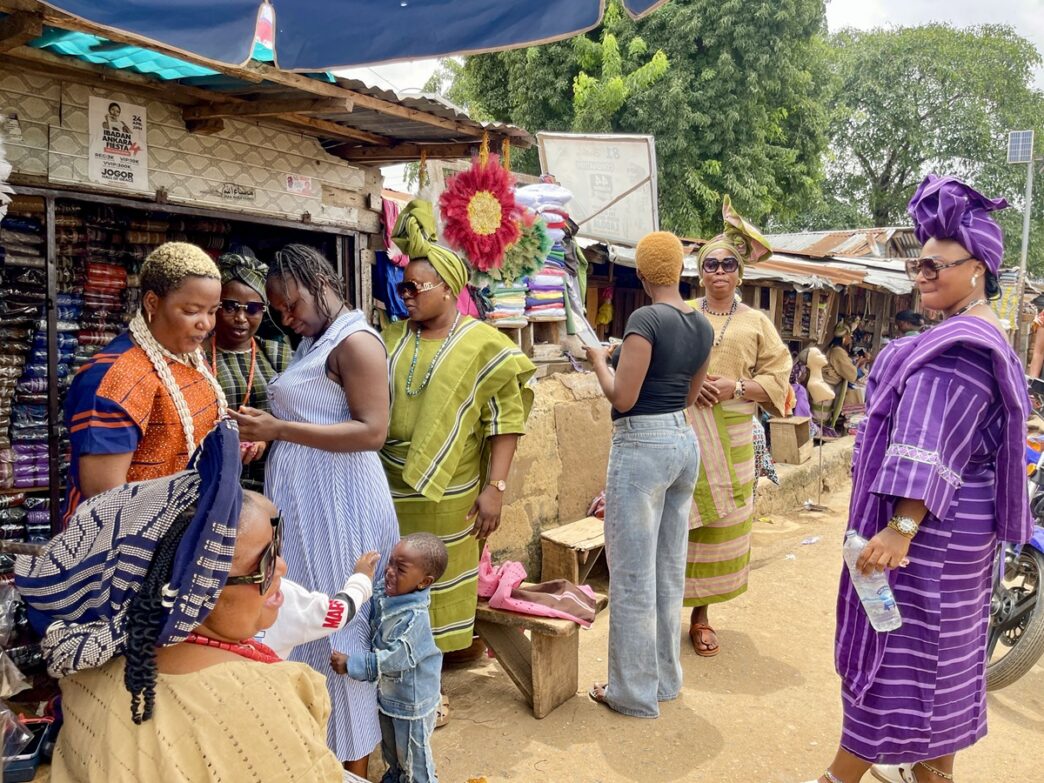
Every morning, Olugbesan Omosolape opens her shop at the Olabisi Onabanjo International Market in Ijebu-Ode, Ogun State, to rows of brightly coloured Aso-Oke. Crimson, emerald, sapphire and gold fabrics fill the shelves, waiting to be transformed into bridal outfits, ceremonial wrappers and elaborate headpieces worn during some of life’s biggest celebrations.
Customers continue to patronise her business. Some visit the shop, while many others place orders through their mobile phones.
They are searching for the handwoven fabric worn by Yoruba kings, brides, and families for generations.
Aso-Oke is a prestigious handwoven cloth traditionally made from Nigerian-grown cotton.
It remains an important part of Yoruba culture and is produced mainly in Iseyin, Oyo State, and Ilorin, Kwara State.
For Omosolape, however, the colourful display inside her shop conceals a growing concern.
Her family has been involved in the trade for four generations, but she is uncertain whether the tradition will continue.
“My mother inherited it from her own mother and now I have continued it. We are the fourth generation,” Omosolape said.
The business has done far more than provide an income. It has paid school fees, sustained livelihoods and given generations of women in her family financial independence.
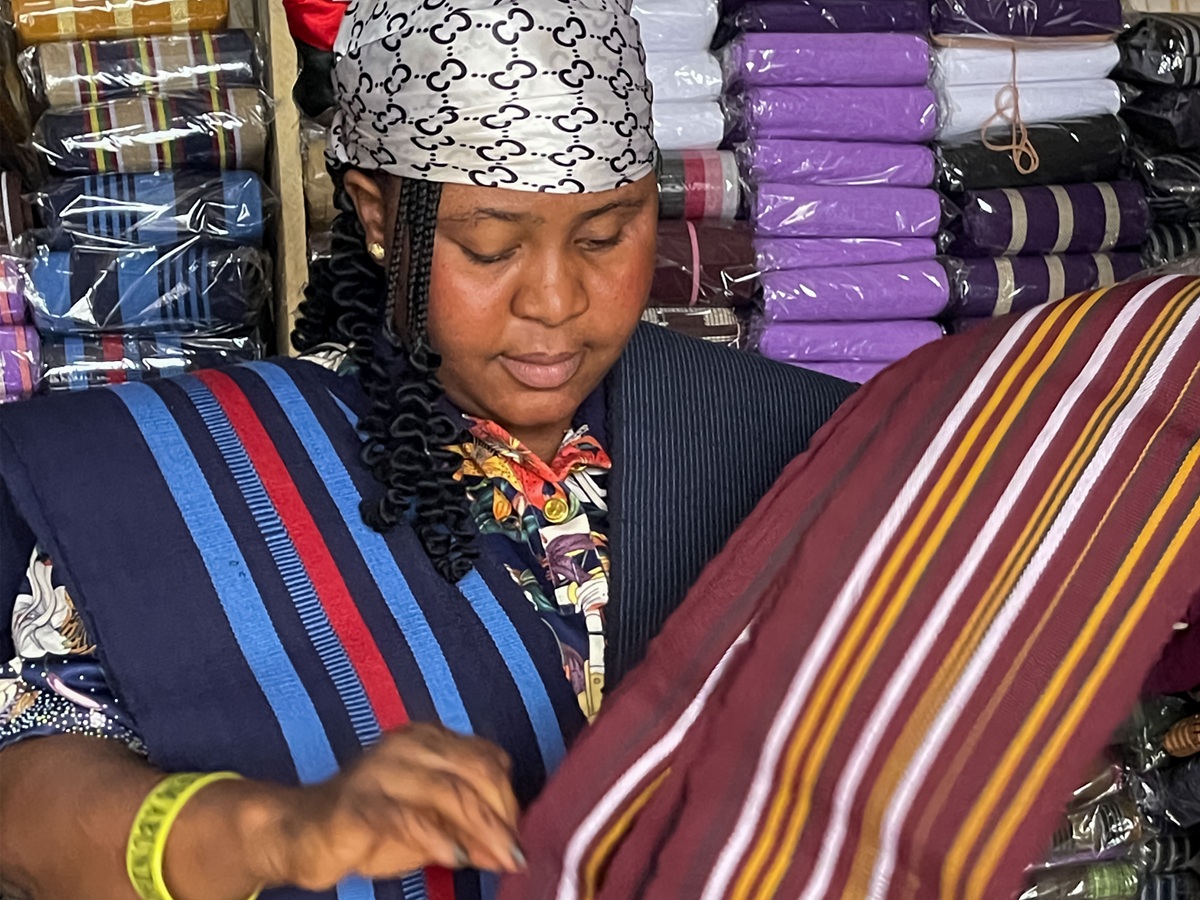
She hopes her daughter will one day take over, but she worries the business no longer offers the same opportunities.
“I would love to pass the business on to my daughter, however, I am worried that because the business is no longer as profitable as it used to be, she may not be interested in continuing it.”
Her concerns reflect wider changes taking place across one of Nigeria’s oldest indigenous industries.
Although Aso-Oke is enjoying renewed popularity in fashion houses, export markets and on runways in cities such as New York and Paris, many of the women who built its commercial success say they are finding it increasingly difficult to benefit from that growing demand.
For decades, the industry relied on a well-established division of labour.
Men traditionally operated the wooden looms, carefully weaving the narrow strips of cloth that are later sewn together to produce ceremonial fabrics.
Women, many of whom also wove Aso-Oke in earlier generations, gradually became traders, financiers and marketers.
They funded production, advised customers, nurtured family relationships and passed businesses from mothers to daughters. For many of them, selling Aso-Oke represented family heritage as much as commerce.
“My great grandmother was involved in it,” Omosolape recalls.
“When my grandmother married into the family, she learnt from her. My mother continued in the trade and now I am part of it.”
That inheritance quietly created economic opportunities for thousands of women across southwestern Nigeria, even if their role has often received little attention.
Omosolape believes the industry’s success depends on both men and women.
“I wouldn’t limit it to women,” she explained.
Most of the weavers she works with are men, and all of her suppliers are male.
While men have largely retained the technical skills required to produce the fabric, women continue to dominate the commercial side of the business. Today, both groups face growing challenges.
“When I was growing up, there were only a handful of sellers here, including my grandmother.
Today, there are hundreds, even thousands, as people capitalise on smartphones and social media,” said Omosolape.
The growth of social media has transformed the Aso-Oke business, opening the market to a new generation of traders and changing how customers buy the fabric.
Retailers who once specialised in lace, Ankara and other textiles now sell Aso-Oke through Instagram, Facebook and WhatsApp.
At the same time, many buyers purchase directly from weavers, reducing the role of long-established merchants whose businesses were built over decades through trust, referrals and family relationships.
The changing marketplace has increased competition across the value chain. Businesses now compete not only on price but also on convenience, branding and online visibility.
Demand has also expanded beyond traditional ceremonies. Some corporate organisations, particularly in Nigeria’s oil and gas sector where local content policies have gained greater prominence, now incorporate Aso-Oke into staff uniforms and corporate events.
Even with these opportunities, many traders say the broader economy has made it increasingly difficult to grow their businesses.
“The Nigerian economy has made it difficult for the business to grow the way it should,” Omosolape believes.
She noted that rising unemployment has encouraged many young graduates to enter the Aso-Oke trade, helped by widespread smartphone use and the growth of online commerce.
While this has expanded the market, it has also intensified competition among sellers.
For Tosin Asana, who has sold Aso-Oke at Dugbe Market in Ibadan for nearly a decade, customer interest has remained strong. The bigger problem is that many people simply cannot afford the fabric anymore.
“About seven or eight years ago, when I started, a bundle of Aso-Oke sold for about N4,500 ($3.26). Today, that same bundle sells for about N23,000 ($16.65),” Asana said.
She explained that customers often admire the fabric but change their minds after hearing the price.
The rising cost of Aso-Oke begins long before it reaches the market.
In Ilorin, Kwara State, where many families have woven the fabric for generations,
Abdulraham Jamiu has watched production costs climb steadily since he entered the business in 2014 after learning the craft from his father.
One of the biggest increases has been the cost of thread, a key raw material used in weaving.
In 2022, a pack of thread cost N22,000 (USD $16.00), but by 2026 the same pack was selling for N120,000 (USD $87.00).
The increase has squeezed profit margins for weavers. Although finished fabrics now sell for higher prices, much of the additional income goes toward purchasing imported raw materials.
Many artisans say they earn less than they did several years ago, despite supplying customers in premium markets, including the United Kingdom.
Jamiu is also concerned about another problem that money alone cannot solve: finding enough skilled workers.
Like many experienced weavers, he says fewer young people are willing to learn the trade.
Apprentices often leave in search of office jobs or other occupations they believe offer better pay and more stable careers.
“The younger people who should be learning the trade are not interested because the wages are too low,” he said.
As global demand for Aso-Oke grows, the number of people with the skills needed to produce it continues to shrink.
Industry estimates published in media reports in 2024 showed that Nigeria’s Aso-Oke sector supported more than 50,000 artisans and generated about US$120 million in export revenue in 2023.
The figures demonstrate the industry’s economic importance, but those working within it say sustaining that success will require investment in local production and skills development.
Lameed Safi, Chairman of the Ilorin Emirate Aso-Oke Weavers Association, believes one important step would be to revive Nigeria’s textile industry so that the thread used for weaving can once again be produced locally rather than relying heavily on imports.
That, he argues, would reduce production costs and make the industry more sustainable for future generations.
For fashion designer Lois Ogunbiyi, the greatest challenge facing the Aso-Oke industry is not the introduction of modern technology but the gradual decline in quality.
Growing up in Ondo State, she remembers watching her mother carefully bring out pieces of Aso-Oke that her grandmother had inherited.
Those fabrics had survived decades of use without losing their appeal.
“You could immediately see the quality,” she recalls. “The texture, colours and craftmanship were still intact after decades.”
She acknowledges that machinery and new production techniques have made weaving faster and expanded access to the fabric. However, she believes the improvements have come at a cost.
“Technology and machinery have changed the production process. While they make weaving faster and more accessible, the quality is no longer the same,” Ogunbiyi said.
She also points to growing competition from countries such as China, where manufacturers produce African-inspired textiles that resemble Aso-Oke but lack the craftsmanship that has defined the fabric for generations.
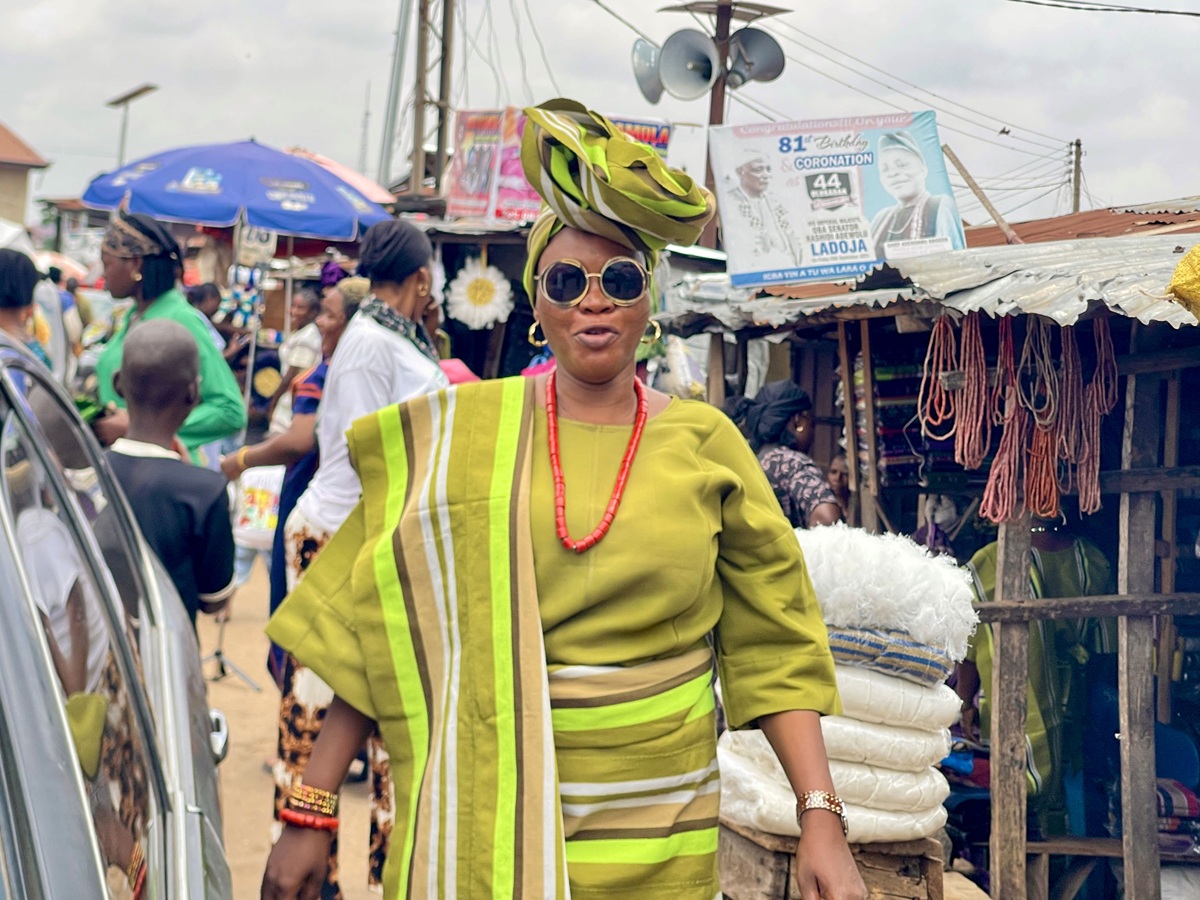
To Ogunbiyi, Aso-Oke represents far more than the finished cloth displayed in shops or worn at ceremonies.
“Aso-Oke is much more than weaving clothes. It starts from sourcing raw materials, preparing threads, producing dyes and then weaving fabrics,” Ogunbiyi noted.
She fears that fabrics once treasured as family heirlooms are gradually becoming disposable fashion items.
“There was a culture of preserving these fabrics so they could be passed from one generation to another.
Sadly, much of what is available today cannot be passed down because it simply does not last.”
Economist and Chief Executive Officer of the Centre for the Promotion of Private Enterprise (CPPE), Dr Muda Yusuf, believes the industry tells two stories at once.
It represents one of the Yoruba people’s greatest cultural achievements while also revealing the economic pressures facing traditional industries.
“This is one of the biggest cultural heritages of the Yoruba people. It has stood the test of time,” Yusuf said.
He noted that although men now dominate weaving, women remain the backbone of the industry’s commercial activities.
“They dominate marketing, retailing and customer advisory services. Many of them don’t just sell Aso-Oke, they advise customers on colour combination, recommend size for ceremonies and coordinate complete outfits.”
Yusuf remembers a period when nearly every stage of production depended on locally sourced materials.
“I remember watching my grandmother produce thread directly from locally grown cotton.”
He believes reviving domestic textile production would reduce dependence on imported inputs while creating more value for everyone along the supply chain.
Entrepreneur Inikpi Sule has seen the fabric evolve beyond ceremonial clothing into premium fashion products.
As Chief Executive Officer of Briobird International Limited, she now exports Aso-Oke handbags and accessories to customers in France, Canada, Ireland and several African countries.
Her interest in the fabric began with a discovery in her own family.
She found that the Aso-Oke worn during her parents’ wedding had been carefully preserved for more than 30 years.
“Those fabrics were still intact,” she said, “and that moment convinced me that Aso-Oke was the fabric I wanted to explore.”
Her company now provides jobs for artisans, about 80 percent of whom are women.
Even so, she says the shortage of skilled workers remains one of the industry’s biggest obstacles.
“I look forward to a time when skilled artisans will be more accessible. Many have not received adequate training,” Sule said.
Back in Ijebu-Ode, Omosolape continues arranging brightly coloured fabrics across the shelves of her shop, welcoming customers who still value a craft that has survived generations of social and economic change.
She believes Aso-Oke can continue to thrive, but only if the industry adapts to new realities while protecting the skills and traditions that made it unique.
For women like her, preserving the business is about far more than making sales.
It is about safeguarding a family legacy, supporting livelihoods and ensuring that knowledge passed from one generation to the next is not lost.
She hopes that, despite today’s challenges, her daughter will one day see the same possibilities that inspired the women before her.
“My hope is to build the business into something much bigger,” she said.
Read More : Police Foil Bandit Attack in Sokoto
“I want to become a role model for my daughter and inspire her to continue our family’s tradition.”
By Uyojo Jeremiah, Bird Story Agency.