Trending
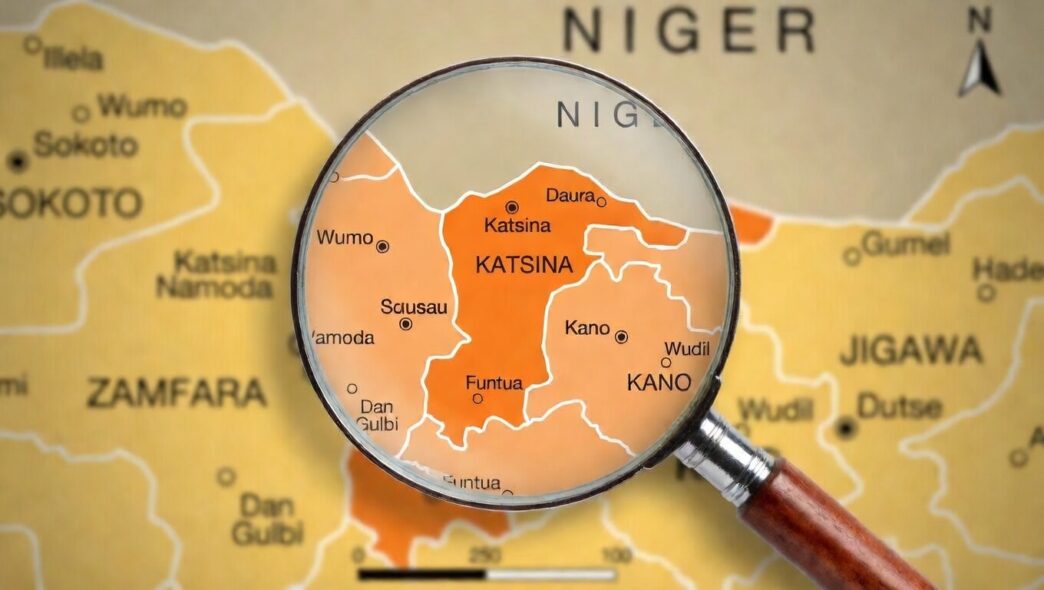
For Jemila Jamilu, the horrors of December 16, 2025, remain as vivid today as they were that morning.
The resident of the Kankiyya Local Government Area of Katsina State, who is in her early twenties, had travelled to a neighbouring community to visit her aunt and attend a wedding. It was meant to be a joyful gathering. Instead, it became the day that changed her life forever.
Bandits riding on motorcycles stormed the community, killing residents and abducting scores of others. During the attack, Jamilu was raped.
Read More : Ronaldo Hails Messi After Argentina Retirement
Months later, the physical wounds may have begun to heal, but the trauma remains. The memories of that day continue to haunt her, leaving scars she says she still carries.
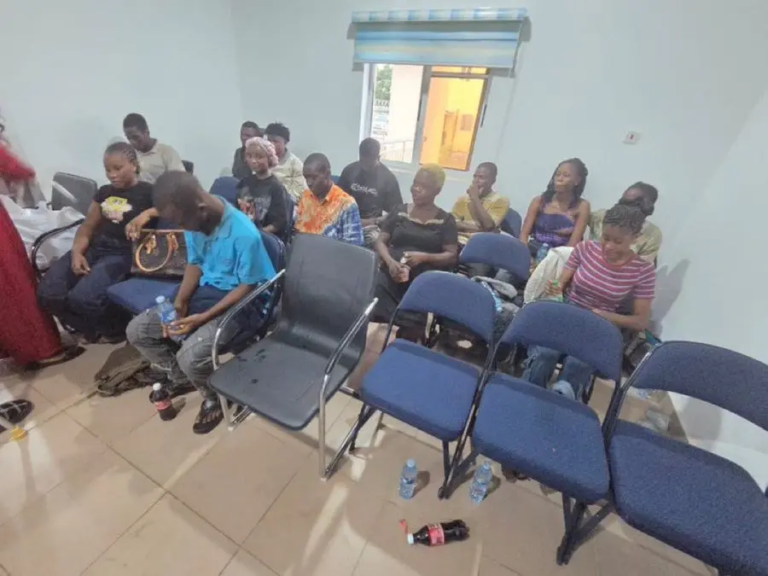
Seven months later, Jamilu stood before a crowd at News Central’s Town Hall in Katsina with a baby strapped to her back.
As she recounted the attack, she rarely looked up. Her eyes remained fixed on the ground, and her voice faltered as she struggled to hold back tears. The painful memories were still raw.
By the time she finished speaking, many in the audience were in tears.
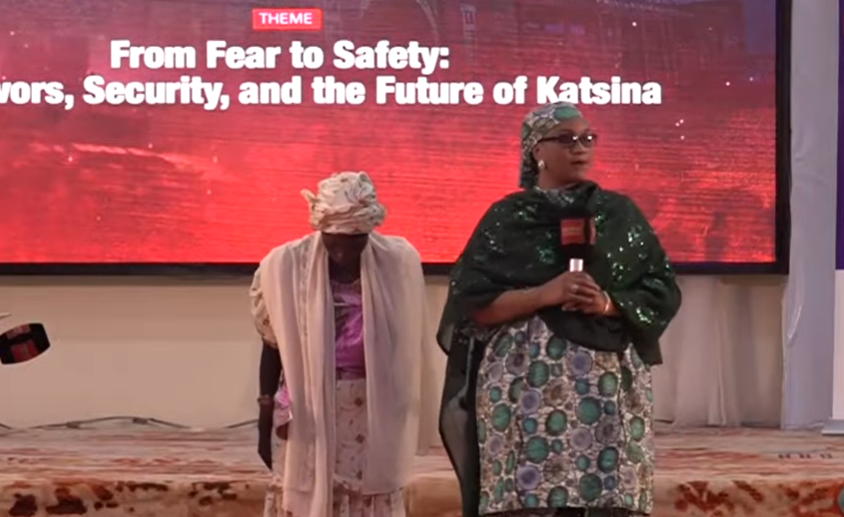
Jamilu’s story is one of many that lay bare the human cost of the violent attacks that have plagued parts of northern Nigeria for decades.
The Toll of Persistent Attacks
Jemila’s experience is far from isolated.
Across Katsina and much of northwestern Nigeria, stories like hers have become tragically common as armed groups continue to raid villages, kill residents, abduct women and children, and force thousands to flee their homes.
What was once seen as sporadic banditry has evolved into a prolonged security crisis that has devastated livelihoods, disrupted education and left entire communities living in fear.
Behind every statistic is a survivor forced to live with memories that refuse to fade, carrying emotional scars long after the gunfire has stopped.
Data from the Armed Conflict Location & Event Data Project (ACLED) recorded more than 21,500 conflict-related fatalities and 8,600 security incidents across Nigeria between January 2024 and December 2025, with Katsina among the states worst affected.
During the same period, hundreds of thousands of people were displaced by conflict, while mass abductions, including school kidnappings, continued to spread across the country, turning insecurity into one of Nigeria’s most pressing humanitarian challenges.
On Thursday, News Central gathered survivors of bandit attacks in Katsina, traditional rulers and government officials to discuss the growing humanitarian crisis in the region that has been under siege for over a decade.
Muryamu Musa, another resident of Kankiyya, knows all too well the cost of the violence that has gripped Katsina.
Before dawn on September 29, 2025, bandits attacked her community and brutally killed her husband, the family’s sole breadwinner.
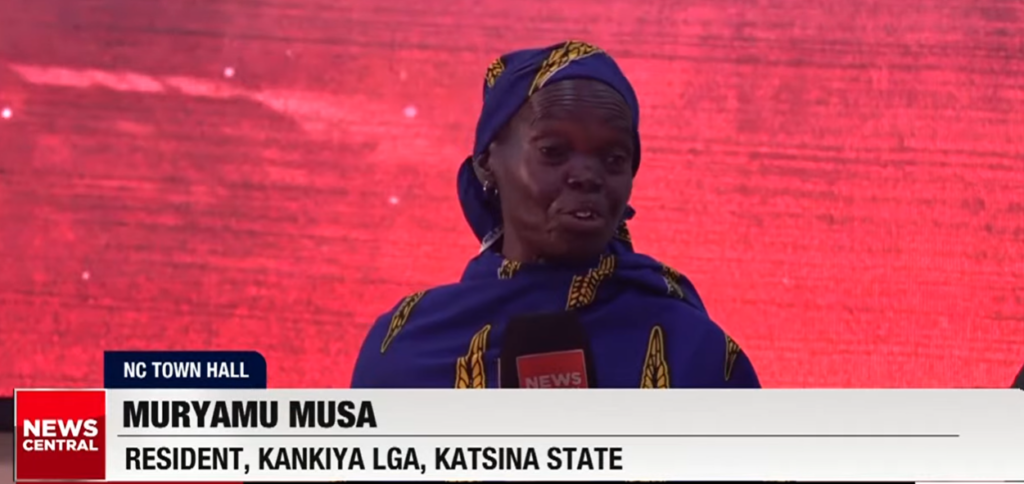
In an instant, she was left to mourn the man she had built a life with while shouldering the responsibility of raising their seven children alone.
Speaking at News Central’s Town Hall in Katsina, Mariam recounted the attack with quiet anguish, describing how a single act of violence upended her family’s future and plunged them into an uncertain struggle for survival.
“Our daughter was about to be engaged before he was killed. He was attacked and killed by bandits who stormed our community and made me a widow. Life has never remained the same since the incident happened,” she narrated.
The violence extends far beyond the attacks themselves, stripping victims of their livelihoods and plunging many households into poverty and severe economic hardship.
For Abdullahi Dalla, a resident of Daddara in Katsina State, surviving abduction came at a high cost. His relatives were forced to raise ₦700,000, borrowing the money after his abductors demanded a ₦10 million ransom to secure his release.
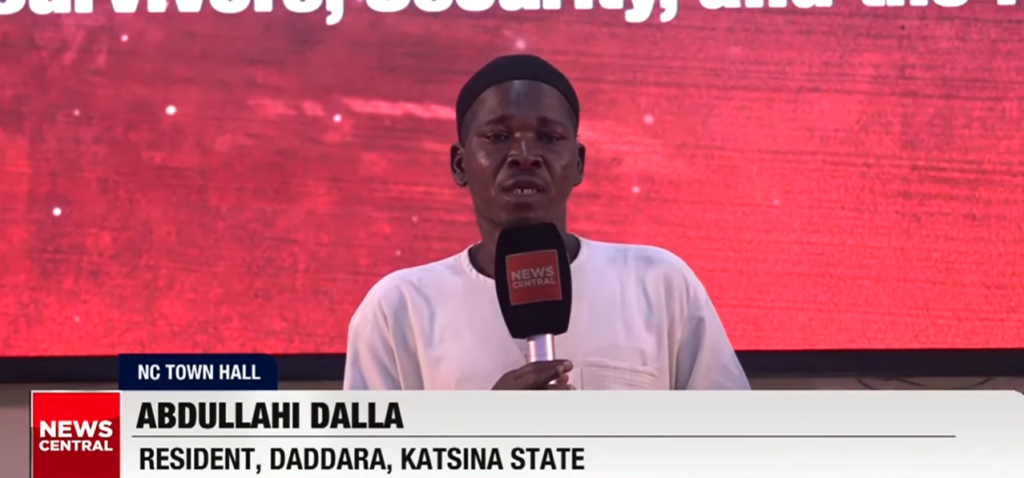
He was captive for 18 months and watched as the bandits killed his brother.
“The bandits tortured me and slaughtered my brother in my presence. I was taken away to a mountain where i spent 18 months with them. They requested N10 million, but my relatives could not afford it. They eventuallty paid the bandits N700,000 so i could be rescued,” Dalla recounted.
For Ahmad Atiku, the violence became deeply personal when bandits abducted his wife and their nine-month-old baby, leaving him desperate and uncertain if he would ever see them again.

According to him, nights in the community are no longer for rest. Residents stay awake, keeping watch for signs of approaching bandits, and only retire to bed at about 4 a.m., when they believe the danger has eased.
For survivors like Jemila Jamilu, Mariam Musa, Abdullahi Dalla and Ahmad Atiku, the scars of the attacks extend far beyond the day the violence occurred.
Read More : Police Arrest Suspected Quack Doctor in Oyo
Each passing day is a reminder of what they have lost and the uncertain future they now face.
While security operations continue across Katsina and other parts of northwestern Nigeria, many residents say they need more than promises. They want to return to a life where children can go to school without fear, farmers can cultivate their land in safety, families can sleep through the night, and communities can once again celebrate weddings and other gatherings without the sound of gunfire.