Today, September 10, marks World Suicide Prevention Day, a day observed globally to raise awareness that suicide can be prevented. This year carries particular significance because it is the final year of the three-year theme “Changing the Narrative on Suicide,” with its urgent call to action: “Start the Conversation”.
The theme challenges us to shift from silence and misunderstanding toward openness, empathy, and support to break the stigma that keeps people from speaking about their pain or seeking help. For Nigeria, this day arrives at a moment of profound legal transformation. After decades of treating suicide attempts as crimes, the West African nation is on the verge of decriminalising them, but as mental health professionals and advocates are quick to point out, changing the law is only the beginning.
For decades, Nigerian law has treated suicide attempts as criminal offences. Under Section 327 of the Criminal Code Act, which applies in southern Nigeria, any person who attempts to kill himself or herself is guilty of a misdemeanour and liable to imprisonment for one year. In northern Nigeria and the Federal Capital Territory, Section 231 of the Penal Code carries similar provisions. These laws are colonial-era relics, inherited from British rule and retained long after independence.
“The idea is attempted suicide is not a crime,” Pate said during a briefing after the FEC meeting.
“This legal approach discourages help-seeking behaviours and also conflicts with our national mental health policy and the National Mental Health Act 2021, which provides for supportive care, protection and treatment for individuals at risk of self-harm.”
A Crisis Measured in Lives
According to World Health Organisation data cited by the Nigerian government, suicide is responsible for more than 7,000 deaths annually in Nigeria, with an estimated 300,000 suicide attempts recorded each year. More than 450,000 Nigerians require psychosocial support yearly because suicide also affects families, friends, and communities.
Globally, more than 720,000 people die by suicide each year. The International Association for Suicide Prevention (IASP) notes that suicide is the third leading cause of death among 15- to 29-year-olds worldwide.
In Nigeria, a recent investigation by Daily Trust identified at least 23 reported suicide cases between September 2025 and August 2026, a figure that almost certainly represents only a fraction of the true burden. WHO warns that suicide data are often incomplete because deaths can be under-reported or misclassified, particularly where stigma surrounds suicide.
The reported cases involved people of different ages and circumstances. Some followed marital and family crises. Others were associated with substance use, academic pressure, financial distress, and gambling. Meanwhile, Mental health experts caution against reducing each death to the event that immediately preceded it, noting that there is no health without mental health and stressing the need to integrate mental health into the wider health system.
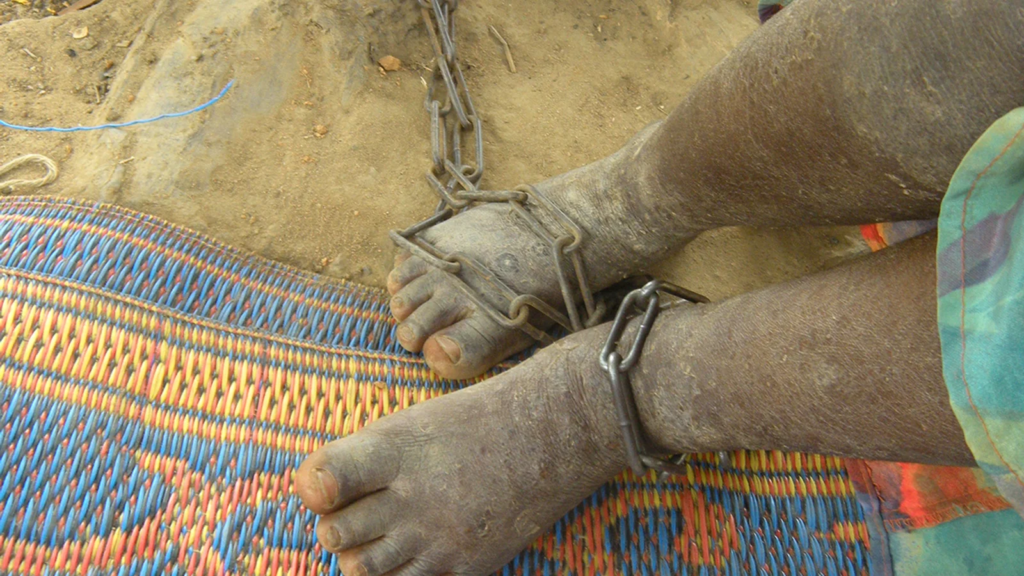
What Happens the Day After Nigeria Decriminalises Suicide?. Credit: Guardian UK.
But behind every statistic is a person. Two survivors of suicide attempts illustrate what the law looks like when it is applied to people in crisis and what happens when the system fails them.
Adesewa, not her real name, has lived with suicidal thoughts since she was 12 years old. That was the age she moved from her mother’s home to live with her father and stepmother. What followed, she told News Central, was a period of emotional distress that went unrecognised and untreated.
At that age, she attempted suicide three times. Twice, she used “the chemical in footwear that they usually write ‘do not eat'”, a substance she believed at the time was poisonous.
The third attempt was an attempt to hang herself in her compound. She was caught by Jehovah’s Witnesses who had come to preach to her. They counselled her and told her parents. She was later beaten by family members for it.
“Later in life, when I found out that what I had been taking was called silica gel and it’s not actually poisonous,” she told News Central.
“Looking back, I was also grateful I was not caught. I could not even imagine being in that state of mind and also being in jail, especially a Nigerian jail.”
David, also not his real name, attempted suicide after his girlfriend left him. It was his first attempt, and it was met not with medical attention but with the police. He was taken to a police station, where, according to his account to News Central, an officer slapped him. He was detained and later released on bail. No one offered him counselling. No one asked what had driven him to that point.
A few months later, he attempted suicide again. This time, he was taken to the Federal Neuro-Psychiatric Hospital in Yaba, Lagos, commonly known as “Yaba Left.” But even that was not the end of his ordeal.
“I think it became worse with the drugs,” he told News Central.
“After I was released, I was told I had run mad again. I was told I walked from Lagos to Ogun State and I was found somewhere around Opic and was taken to a traditional madhouse, where awful things happened to me.”
He says the episode has not fully left him. “I’m glad it’s over, but the episode is still there. The stigma is still there, especially from old people who knew me but I have learned, after talking to a church member, to manage it and I think life is a bit better now, unlike before.”
These experiences resonate with what Hauwa Ojeifo, founder of She Writes Woman and a leading advocate for mental health reform in Nigeria, describes as the fundamental problem with treating suicide attempts as crimes.
Ojeifo, who in 2020 became the first person openly living with a mental health condition to testify before Nigeria’s National Assembly, has spent years documenting what happens when survivors are met with punishment instead of care. Today, she sits on the National Task Force for the Decriminalisation of Attempted Suicide as co-chair of the Stakeholder Engagement Subcommittee.
“We must ensure that frontline workers stop treating people who have attempted suicide as if they are criminals, as if they are coming from a crime scene, and start treating them as an emergency—a social emergency, a medical emergency.”
Over the past decade, Ojeifo organisation’s helpline has logged more than 25,000 calls. A brief experiment with a text-based chat service yielded 38,000 messages before the team, overwhelmed, had to shut it down, leaving 7,000 messages unread.
“And it just showed us; it was just a proof for us to see that even the option for a text-based service was also a very budding and very, very vibrant option that Nigerians were very eager to adopt,” Ojeifo told News Central.
“We averted over 250 potential suicide attempts,” she said.
“And our general data is pointing us in the direction that one in two persons [calling from certain parts of the country] is living with some sort of deep mental health condition that is causing them to have thoughts of wanting to take their own lives.”
The data reveals gendered patterns. Both men and women experience suicidal ideation, but women are more likely to be vocal and seek early intervention, while men are more likely to be at the point of crisis before they seek support.
“That tells us layers and layers of sociocultural conditioning around male pain, male suffering, and patriarchal practices,” Ojeifo says.
But the deeper revelation is not just that people are in crisis. It is why. Ojeifo insists on asking a question that the mental health conversation often skips: What happened to them?
“People didn’t just get born, and then they came into certain kinds of crisis. It’s due to overtime; what happened to them?”
The trigger areas are consistent: financial pressures stemming from Nigeria’s socioeconomic situation, jobs, housing, and the ability to provide for oneself. Poverty is a major indicator. Marriage and relationships are another significant trigger, Ojeifo noted.
This is why, for Ojeifo, decriminalisation is not the big thing. It is the thing that steps aside so the big thing can be addressed.
“If there are layers and layers of legislation or systemic barriers to either conversations or support or reporting or care, then we must remove those layers first so that we can begin to address the issues for what they are. I look at decriminalisation of attempted suicide not as the big thing, but as the thing that steps away so that we can address the big thing.”
And the big things, she says, are the socioeconomic issues, the sociocultural issues, and the economic indicators. “We cannot divorce mental health outcomes from socioeconomic factors, from the social determinants that really affect everyday people.”
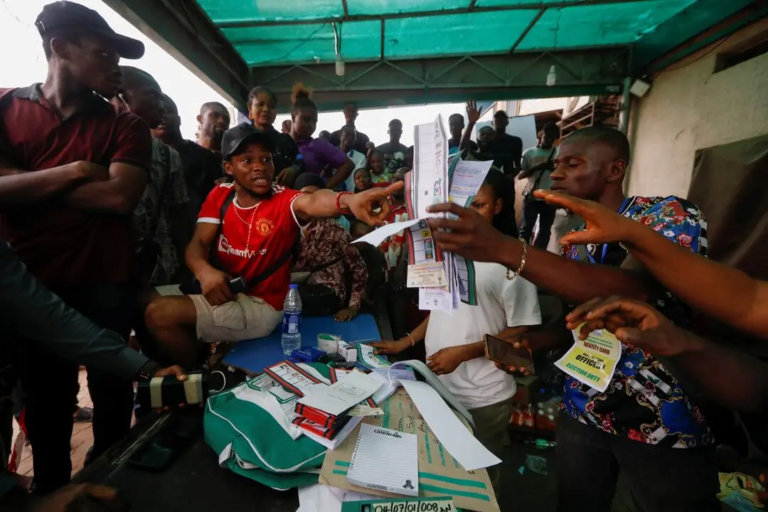
What Happens the Day After Nigeria Decriminalises Suicide?. Credit: Daily Trust.
What Decriminalisation Actually Means
It is important to understand what decriminalisation does and does not do.
Decriminalisation means that attempting suicide would no longer be treated as a criminal offence. Survivors would not face arrest, prosecution, or imprisonment. Instead, they would be directed toward medical and psychological support.
The government hopes this shift will encourage help-seeking behaviour. As Pate explained, “Attempting suicide is not a crime. If someone, because of mental health illness, attempts to harm themselves within the context of those colonial-era laws, you can arrest them and prosecute them for breaking the law. But these are people that are actually ill. It’s like getting somebody who has tuberculosis and asking, ‘Why did you have tuberculosis?’ So it’s changing the paradigm to one whereby they require care and support.”
But decriminalisation alone does not create a functioning mental health system. It removes a barrier; it does not build the care infrastructure that Nigeria desperately needs.
What Comes Next
APN has stressed that decriminalisation must be supported by proper implementation of the Mental Health Act and wider access to quality mental health services.
“The Act has remained largely on paper for far too long, despite its enormous potential to transform mental healthcare delivery across the country,” the association said.
“Decriminalising suicide must be accompanied by a deliberate expansion of access to quality mental health services.”
Nigeria faces a severe shortage of mental health professionals. With fewer than 300 psychiatrists for a population exceeding 200 million, the country cannot rely on specialists alone to address the crisis.
Ojeifo pushes back on the framing that psychiatrists are the solution at the community level. Psychiatrists, she notes, are not supposed to be the primary care providers at the grassroots. The real frontline consists of community health workers, community health extension workers, and social workers – people who are already embedded in communities but who are “grossly underpaid and not well taken care of.”
“We have an infrastructural problem, that’s the truth,” she says.
“And you cannot just build the entire solution of an infrastructural problem on a particular group of people who are grossly underpaid and are not well taken care of, to be very honest. If we’re going to talk about the people who are closest to populations that typically would not have access, then we should be thinking about community health workers, community health extension workers, social workers, but we must be thinking also and talking also about how to compensate them accordingly with the additional workload.”
What Happens the Day After Nigeria Decriminalises Suicide?Credit: Guardian.
Beyond compensation, she calls for creativity rather than what she terms “a crisis of imagination.” Nigeria has healthy mobile phone penetration. Why should every touchpoint be physical and in-person?
“We do not need to reinvent the wheel. There are low-cost, low-resource solutions that we can scale and integrate, especially when it comes to existing solutions that civil society organisations are already showing proof that it works.”
She Writes Woman’s helpline is one such proof. Over ten years, it has delivered mental health care to people in rural communities, urban areas, and suburbs; to people of different socioeconomic statuses; and to people who speak English, Pidgin, and other Nigerian languages. The organisation has done this, Ojeifo says, “for a fraction of the investment that typically we hear when it comes to mental health care and support.”
“It is important that you’re not looking for a government that is going to create from scratch or duplicate effort. Why do we need to do that? It’s a waste of resources. That’s when we start hearing things like, ‘Oh, it’s so expensive to do this.’ And that’s because we’re thinking too much in terms of brick and mortar. We’re thinking too much in creating something new when there are existing solutions that we can scale, integrate, and consolidate into the existing infrastructure that Nigeria already has.”
What Happens the Day After Nigeria Decriminalises Suicide?Credit: Guardian.
She also stresses what must happen the day after the law changes. First, reorienting and retraining frontline workers, emergency room staff, primary health care workers, doctors, and police.
“It’s not enough for us to pass a piece of paper in the legislation and say, ‘Yay, it’s done,'” she says. “Whilst we’re clearing out the legal stigma, we haven’t cleared out the cultural stigma, the social stigma, which is how people think about people who try to end their lives. We must ensure that frontline workers stop treating people who have attempted suicide as if they are criminals, as if they are coming from a crime scene, and start treating them as an emergency—a social emergency, a medical emergency.”
Second, funding referral and care pathways. “Decriminalisation without building systems of crisis care—such as our helpline, 0800 800 2000, and psychosocial support—just sort of removes punishments without replacing it. It’s like, ‘Oh yeah, we’ve done this, but then what? What do people then do?'”
Third, public and media literacy campaigns. “Since the law removes the legal stigma but not the cultural stigma, the government needs to do a parallel push in terms of responsible reporting for journalists and community and faith leaders’ engagement. So that the message is not just, ‘Oh, it’s not a crime anymore,’ but, ‘This is where help exists. This is where you need to go. This is who you need to call. This is how you can support people who need help.'”
The World Is Changing Its Mind on Suicide
Nigeria is not alone in confronting this issue. Across Africa, and beyond, countries are recognising that criminal law is the wrong tool for addressing mental health crises, though the path is not always linear. Kenya has moved furthest and fastest on the continent. In January 2025, the High Court declared Section 226 of the Penal Code, which criminalised attempted suicide, unconstitutional. The court found that the provision violated fundamental rights, including equality, human dignity, and the right to health, and that it revictimised already vulnerable people.
Ghana decriminalised attempted suicide through the Criminal Offences (Amendment) Act, 2021, which expunged the offence from the penal code. Previously, Section 57(2) of the Criminal Offences Act, 1960 (Act 29), made “attempt to commit suicide” a misdemeanour punishable by up to three years’ imprisonment. Uganda has not yet decriminalised attempted suicide, but momentum is building. Under Section 210 of the Penal Code Act, attempted suicide remains a misdemeanour punishable by up to two years in prison.
Malawi is among the 19 countries in the world where attempted suicide remains a crime. Section 229 of the Penal Code states that “any person who attempts to kill himself shall be guilty of a misdemeanour,” with a maximum sentence of two years. However, change is on the horizon. Malawi’s new Mental Health Bill stipulates that suicide attempts are no longer criminal acts. Instead, it mandates compassionate care for individuals experiencing suicidal crises, recognising their condition as a health issue rather than a moral failing.
The Road Ahead
The amendment must still pass both houses of the National Assembly and receive presidential assent before becoming law. If enacted, Nigeria will join a growing list of countries that have recognised suicide attempts as a health issue rather than a crime.
But the day after the law changes, the real work begins. Reorienting frontline workers, including police, emergency room staff, and primary health care providers, will be essential. Investing in crisis services, helplines, and referral pathways cannot wait. Public awareness campaigns must run alongside legal reform to address the cultural and social stigma that no legislation can erase overnight.
The APN has urged the National Assembly to give the bill speedy passage.
“Nigerians should not have to wait indefinitely for policies already legislated and assented to by the President that have the potential to save lives,” the association said.
Ojeifo mirrors that sense of urgency and of unfinished work, saying, “It does feel like progress. It feels like a step in the right direction. It feels like our voices are finally being heard.
“But the work is not done, and that’s something that we must not lose sight of. It is important that we celebrate it, but we must recognise that we do have a very short timeline to see this pulled through.”
On this World Suicide Prevention Day, as Nigeria joins the global community in observing the final year of “Changing the Narrative on Suicide”, the challenge is clear. The law can remove the threat of punishment. It cannot, by itself, ensure that help is available when someone needs it.
As the theme reminds us, starting the conversation is essential, but so is ensuring that when someone speaks, someone is ready to listen and that the systems exist to provide the care they need.
Jimisayo Opanuga is a web writer in the Digital Department at News Central TV, where she covers African and international stories. Her reporting focuses on social issues, health, justice, and the environment, alongside general-interest news. She is passionate about telling stories that inform the public and give voice to underreported communities.
Weekly roundups. Sharp analysis. Zero noise. The NewsCentral TV Newsletter delivers the headlines that matter—straight to your inbox, keeping you updated regularly.





 Trending