Trending

The true state of relations between two countries is not always found in presidential speeches, diplomatic communiqués or trade statistics. Sometimes, you find it in the frightened voice of a mother trying to reach her son.
There is news of another attack somewhere in Johannesburg. Her son lives there. She calls once. No answer. She calls again. Still nothing. At that moment, Nigeria–South Africa relations have nothing to do with presidents, foreign ministers or bilateral commissions. For that woman, the entire relationship between two countries has been reduced to one question: Is my son safe?
The same applies to a South African living and working peacefully in Lagos who suddenly wakes up to hostility because of something that happened thousands of kilometres away and in which he played no part.
Read More : Defections, Divisions and Tinubu’s 2027 Edge
Or consider the Nigerian businessman preparing for meetings in Johannesburg when somebody forwards a WhatsApp message claiming that South Africa has stopped issuing visas to Nigerians. Within hours, the message has travelled through several groups. Calls are made, trips are reconsidered and business plans are put on hold. Before anyone establishes whether the information is true, the damage has begun.
This is where Nigeria–South Africa relations really live today: in our homes, airports, businesses, universities, markets and, increasingly, on our mobile phones.
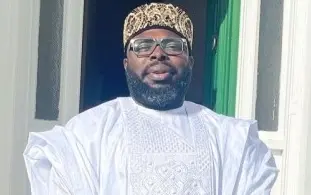
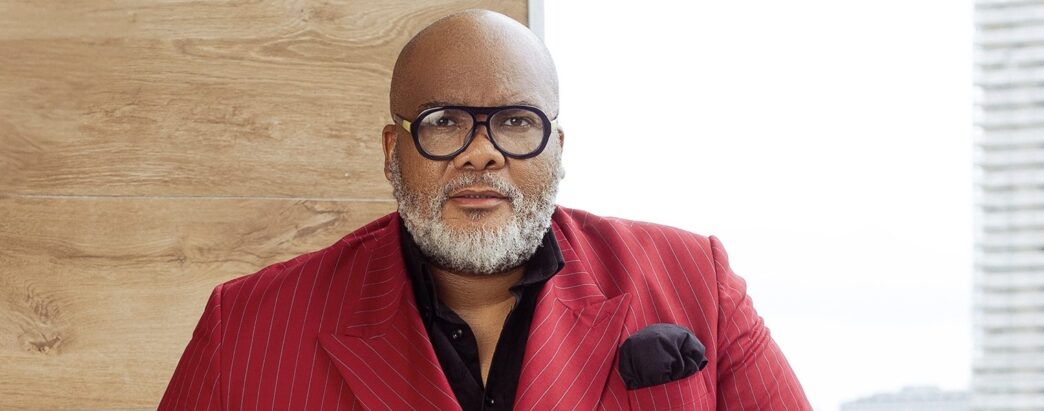
In the middle of this complicated relationship, one South African diplomat has spent years trying to keep both sides talking: Professor Bobby J. Moroe.
I have followed Moroe’s engagement with Nigeria over the years. What stands out for me is not merely the number of years he has spent here or the various diplomatic responsibilities he has undertaken. It is his understanding of something that diplomacy sometimes forgets: countries do not have relationships in isolation; people do.
Moroe has become one of the most familiar faces of South African diplomacy in Nigeria, with extensive engagement in both Abuja and Lagos. Anyone who understands Nigeria knows why that matters.
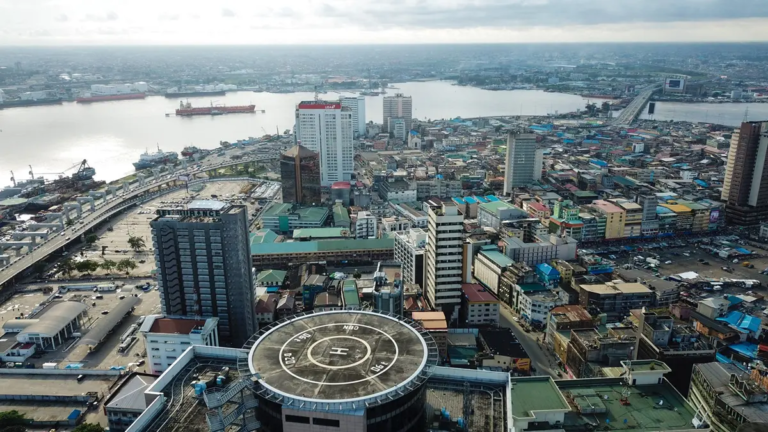
Abuja gives you government, protocol, ministries, embassies and official Nigeria. Lagos gives you something else entirely. It gives you commerce, entertainment, immigration frustrations, visa applicants, traders, students, travellers and the everyday Nigerian trying to make sense of government decisions.
A diplomat who understands only Abuja understands the Nigerian government. A diplomat who understands Abuja and Lagos has a better chance of understanding Nigerians.
Moroe understands both.
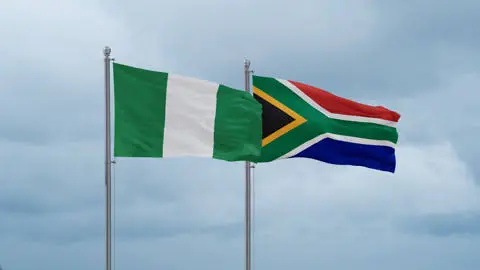
WHEN THE RELATIONSHIP ALMOST BROKE
I remember the atmosphere surrounding the xenophobic violence of 2019. For Nigerians, it was not simply another foreign news story.
People watched disturbing videos of shops being destroyed and foreign nationals being attacked. Some of the material circulating online may not even have been properly attributed, but by then the emotional damage had been done.
Nigerians were furious.
There were protests and retaliatory attacks against South African-owned businesses in Nigeria, and diplomatic relations came under enormous pressure.
But behind all the politics and statistics were real families.
Somebody’s brother owned a shop in Johannesburg. Somebody’s daughter was studying in Cape Town. Somebody’s husband was trying to make a living in Pretoria. Families were making frantic telephone calls asking the most basic question imaginable: Are you safe?
That is the part of xenophobia that diplomatic statements cannot adequately capture. Fear has a human face, and when fear is allowed to grow, it very quickly becomes anger.
During that difficult period, Moroe remained engaged. He spoke, explained and listened. He defended his country where necessary, as any diplomat would, but he also appeared to understand that Nigerians were genuinely hurting.
That distinction is important.
Diplomacy is relatively easy when presidents are shaking hands and cameras are flashing. Its real test comes when people are angry with the country you represent and you still have to face them, hear their grievances and find a way to keep communication open.
Many Nigerians, myself included, believe Moroe’s calm and people-oriented approach during those difficult periods helped prevent an already dangerous situation from deteriorating further.
There is something important in that approach. You cannot simply lecture people out of pain. You have to acknowledge what they feel before asking them to trust you again.
THE PROBLEM IS NOW BIGGER THAN XENOPHOBIA
The Nigeria–South Africa problem has changed over the years. Xenophobia remains a painful part of the conversation, but today we are also dealing with something extraordinarily difficult to control: perception.
And perception now travels at the speed of a smartphone.
A disturbing video can convince thousands of Nigerians that South Africans hate them. An inflammatory post can reinforce the belief among South Africans that Nigerians are responsible for problems in their communities. A false claim about visas can disrupt genuine travel plans. Even football banter can suddenly become a national argument.
By the time government officials prepare a formal response, thousands, sometimes millions, of people may already have formed an opinion.
This is why the old model of diplomacy is no longer enough.
A TikTok narrative cannot effectively be answered three days later with a carefully worded communiqué. Neither can a viral WhatsApp message be defeated by silence from government institutions.
Diplomats today must understand communication almost as much as they understand protocol.
When confusion recently circulated about South Africa’s openness to Nigerian travellers, Moroe publicly engaged the issue and reinforced the message that South Africa remained open for legitimate business, tourism and other forms of travel.
It may seem like a routine clarification until you consider the person affected.
Someone has saved money for months for a holiday. Another person has paid hotel deposits. A businessman has arranged meetings. An entertainer is preparing for a performance. Then somebody forwards a message saying, “South Africa has stopped giving Nigerians visas.”
Suddenly, diplomacy becomes very personal.
This is why timely information is no longer just public relations. In the relationship between Nigeria and South Africa, it has become an essential part of maintaining peace and confidence.
HOW DID TWO AFRICAN GIANTS BECOME SO SUSPICIOUS OF EACH OTHER?
This is perhaps the part I find most unfortunate.
Nigerians and South Africans consume an extraordinary amount of each other’s culture. Nigerians dance to amapiano. South Africans listen to Afrobeats. Nigerian films and actors have audiences in South Africa, while South African television has been part of Nigerian popular culture for decades.
Our businesses cross borders. Our filmmakers collaborate. Our academics meet. Our musicians work together. Young Nigerians and South Africans interact every single day online.
Yet we have somehow allowed a narrative to develop that we are enemies.
How did we get here?
Nigeria and South Africa are too important to Africa to remain trapped in this cycle of suspicion. When Johannesburg and Lagos cooperate, opportunities open far beyond our borders. When Abuja and Pretoria are consumed by disagreement, Africa loses the benefit of two of its most influential countries working together.
The answer cannot simply be another meeting between presidents.
We have had meetings, established commissions and signed agreements. What we have not sufficiently repaired is the trust between ordinary Nigerians and South Africans.
That requires a different kind of diplomacy.
DIPLOMACY MUST LEAVE THE EMBASSY
The future of Nigeria–South Africa relations cannot exist only inside foreign ministries and presidential offices. It must find its way into universities, music studios, football stadiums, markets, film sets and technology hubs.
It must reach the young Nigerian or South African who may never meet an ambassador but whose view of the other country will eventually determine the relationship between our peoples.
A Nigerian DJ performing in Johannesburg may change perceptions in ways that an official communiqué never will. A South African gospel artist performing before thousands of Nigerians in Lagos can quietly dismantle stereotypes. A Nigerian student living alongside South African students may discover that the “enemy” he has been arguing with online is simply another young African trying to graduate, find work and build a decent life.
That, too, is diplomacy.
And perhaps this is where Moroe’s personality matters most.
He is a diplomat who shows up.
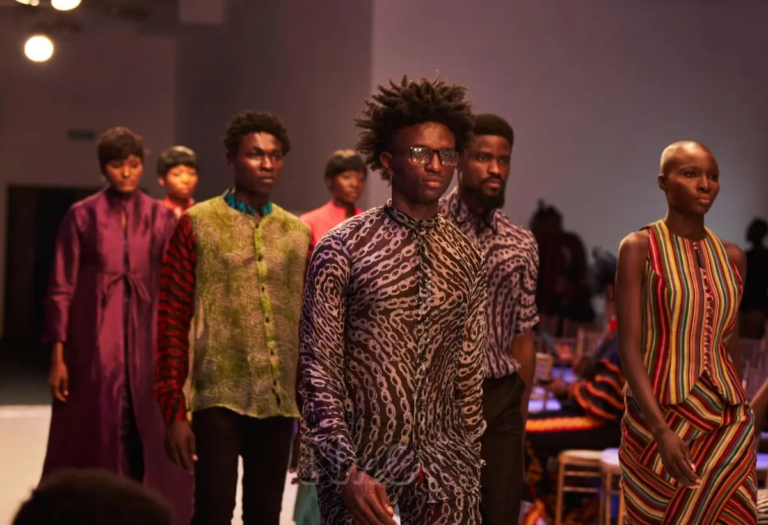
He attends conferences organised by Nigerian businesses in Abuja, fashion shows and trade fairs in Lagos and cultural events in Asaba. He has accompanied Nigerian filmmakers to film festivals in Johannesburg and Durban, understanding that trade, culture and entertainment are themselves powerful instruments of diplomacy.
His accessibility is equally remarkable. It does not seem to matter whether you are a government official, businessman, filmmaker, cultural promoter or an ordinary Nigerian with a genuine reason to reach him. His telephone is accessible. There are no unnecessary layers of assistants, no barriers to direct communication and, most importantly, no arrogance.
For a man who has operated at the highest levels of diplomacy, his humility is striking. He is perhaps one of the most humble and accessible diplomats serving in Nigeria today.
People may forget official communiqués, but they remember the diplomat who attended their event, answered their call and treated them with respect.
That is how trust is built.
I SAW A GLIMPSE OF IT IN FOOTBALL
Recently, something happened that reminded me that the relationship between Nigerians and South Africans is far from irreparable.
At a time when social media was again amplifying the idea that Nigerians and South Africans dislike one another, ordinary South African football supporters demonstrated something completely different.
Orlando Pirates supporters rallied around a young Nigerian woman from Imo State whose passion for football had inspired her to create content around the club.
The message behind the gesture was simple: come to South Africa and experience for yourself the people and the club you have supported from afar.
There were no presidents involved. No ministers. No bilateral commission. No elaborate diplomatic ceremony.
Just ordinary Africans reaching out to another African.
That is Ubuntu in its simplest form.
Perhaps this is where the rebuilding must begin: not with governments instructing people to like each other, but with both governments creating opportunities for their citizens to actually know one another.
Hatred thrives easily from a distance. It becomes much harder to sustain after people have eaten together, worked together, laughed together and discovered how much they actually have in common.
WHERE DO WE GO FROM HERE?
I believe Nigeria and South Africa need a deliberate people-to-people reset.
A permanent Nigeria–South Africa People’s Forum could bring together students, traders, academics, creatives, entrepreneurs, religious leaders, sports supporters and diaspora organisations, with meetings alternating between cities in both countries.
There should also be a rapid-response communication mechanism capable of addressing dangerous misinformation before it develops into a diplomatic problem. If false information concerning visas or attacks begins circulating in Lagos in the morning, Nigerians should not have to wait several days before receiving authoritative clarification.
We must also invest seriously in cultural diplomacy.
Imagine 100 young Nigerians and South Africans crossing between the two countries every year through film, music, technology, education, sports and entrepreneurship. Nigerian filmmakers working with South African crews, South African students spending time in Lagos, football supporters visiting one another and musicians producing work together.
After five years, we would have hundreds of people whose understanding of the other country came from experience rather than social media.
That is how perceptions begin to change.
WHY BOBBY MOROE?
Because whoever helps drive such a reset must understand both government and the street.
Moroe has operated within Abuja’s diplomatic environment and engaged the complicated human and commercial realities of Lagos. He has experienced Nigeria–South Africa relations during periods of cooperation and periods of serious tension.
He understands that there are moments when a diplomat must sit across the table from ministers, and there are moments when diplomacy is simply about picking up the telephone and speaking directly to someone who needs an answer.
His academic background and diplomatic experience are important, but perhaps his greatest advantage is something no university can award: familiarity.
He knows Nigeria, and many Nigerians know him.
That matters.
Trust cannot be manufactured by an appointment letter. It is accumulated gradually through conversations, difficult moments, disagreements and years of showing up.
WE CANNOT CONTINUE LIKE THIS
There is a generation of young Nigerians growing up with the impression that South Africans hate them. At the same time, some young South Africans are consuming damaging stereotypes about Nigerians.
If those perceptions are allowed to harden, our children will inherit a quarrel they did not start.
That would represent an extraordinary failure of African leadership.
Our countries have too much in common. Our economies need each other. Our creative industries need each other. Our young people need access to each other’s markets, ideas and opportunities. Africa itself needs Nigeria and South Africa talking to each other rather than talking past each other.
Perhaps, therefore, the question should no longer be who is right between Nigeria and South Africa.
The more useful question is: who is prepared to build the bridge?
Professor Bobby J. Moroe has spent years demonstrating that he understands what such a bridge requires.
We do not need another cycle in which an incident happens, outrage follows, statements are issued, apologies are made and everyone returns to their corner until the next crisis.
We need something deeper.
We need human relationships.
Nigeria and South Africa will disagree from time to time. That is inevitable between two important countries with their own interests and domestic pressures. But disagreement should never be allowed to become hatred.
Diplomacy must also never become so consumed by protocol that we forget the people at the centre of it all: the frightened mother trying to reach her son in Johannesburg; the businessman waiting anxiously for a visa; the South African family living peacefully in Lagos; the student studying far from home; or the young Nigerian football fan discovering that the South Africans she had been told might dislike her are actually opening their arms to welcome her.
Those people are the relationship.
For years, Bobby Moroe has understood this simple reality.
Perhaps the next chapter of Nigeria–South Africa relations should be built around an equally simple principle: people before politics, communication before confrontation and reconciliation before retaliation.
Nigeria and South Africa do not need another bridge constructed from official statements.
They need one built between people.
Professor Bobby J. Moroe is one of the diplomats with the experience, relationships and understanding to help build it.
Because, in the end, diplomacy is not about flags, buildings or titles. It is about human beings.
And between two African peoples who have spent too many years misunderstanding one another, rebuilding trust may now be the most important diplomatic assignment of all.