Trending


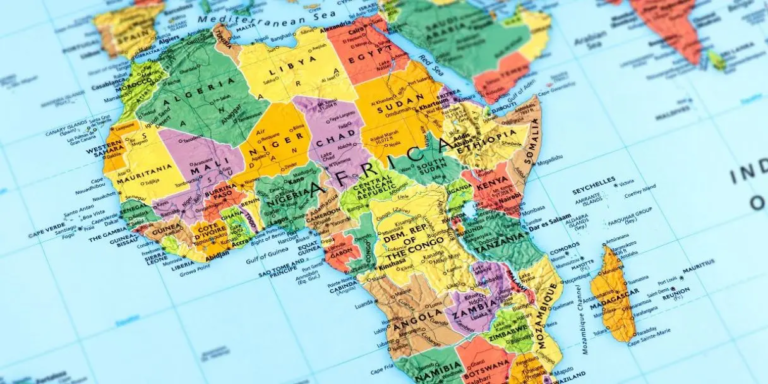
Africa is scaling efforts to target the faster-growing parts of the global services economy, from digital outsourcing and software to professional services.
The shift comes as services take a larger share of world trade and become increasingly embedded in the production of goods.
According to a new UN Trade and Development (UNCTAD) report, services accounted for 71% of intermediate inputs in global production in 2022, while their share of global exports increased from 23% in 2015 to 27% in 2025.
Today, digitally deliverable services are driving much of the growth. According to the UNCTAD report released on September 4, the Global Trade Update, global services exports grew by an average of 6.7% annually over the past decade, reaching 8.3% growth in 2025.
Digitally deliverable services grew by 7.1% annually and now account for 56% of global services exports.
For Africa, the opportunity is shifting from simply connecting people and businesses to the digital economy to selling more of what that economy produces.
The opportunity also extends beyond standalone digital services. According to UNCTAD, services accounted for 61% of intermediate inputs in developing economies in 2022, including finance, logistics, design, data and other services used to produce and export goods.
That means a larger share of the value in an African export could potentially be captured through services provided before a product reaches a foreign market.
Egypt is already building one of the continent’s largest examples.
According to Egypt’s Information Technology Industry Development Agency, the country generated US$5.2 billion in offshoring services exports in 2025. The sector includes 252 companies operating 282 global delivery centres, with more than 195,000 specialists employed by multinational companies in the industry.
The government is targeting US$6 billion in digital-services offshoring revenues in 2026, according to ITIDA, while the sector is moving into specialised services and using generative AI in service delivery.
“The government relies heavily on the technology sector to achieve a major economic breakthrough,” Mostafa Madbouly, prime minister of Egypt, noted in an August 2026 news release.
Kenya is pursuing a similar shift through trade policy.
According to Kenya’s State Department for Trade, the government is developing a Digital Services Export Strategy covering software development, business-process outsourcing, knowledge-process outsourcing, fintech, digital consultancy and creative digital content.
The department puts Kenya’s digitally delivered services exports at about US$1.98 billion, making it the sixth-largest exporter of digital services in Africa, citing World Trade Organisation and World Bank data.
Nigeria is also connecting its professional workforce directly to overseas demand.
On August 31, the government launched “Hire From Nigeria”, a campaign aimed at linking Nigerian professionals, digital specialists, creatives and other service providers with international clients.
According to Nigeria’s Federal Ministry of Information and National Orientation, the National Talent Export Programme is targeting one million export-linked jobs by 2030.
A survey conducted by the programme with the UN Development Programme identified service providers across 17 sectors. More than 90% of the businesses surveyed are headquartered in Nigeria, while established firms serve an average of 2.6 international markets, according to the ministry.
However, the ability to produce a service is only part of the equation.
UNCTAD identifies connectivity, skills, international payments, data and computing capacity among the factors determining which economies capture the growth in digitally deliverable services. It also warns that artificial intelligence could widen the gap because computing power, investment, data and specialised talent remain concentrated.
African institutions are beginning to address some of those bottlenecks.
On September 2, the Bank of Ghana and the Monetary Authority of Singapore announced the completion of a proof of concept using digital credentials for international trade and cross-border payments.
According to the Bank of Ghana, the project demonstrated how digital credentials could support trade transactions and payments between businesses in different countries.
The African Continental Free Trade Area is also developing the rules and infrastructure for digital commerce. Its digital trade protocol provides a continental framework for digital transactions, while regional initiatives are working on interoperable payment systems.
The East African Community, for example, inaugurated technical working groups in August to implement its Cross-Border Payment System Masterplan, according to the regional bloc.
The aim is to build a more integrated and affordable regional payments ecosystem, reducing one of the frictions that can make cross-border trade difficult for smaller businesses.
According to UNCTAD, least developed countries accounted for just 0.6% of global services exports in 2025. Their services exports grew by only 3% annually over the past decade, compared with 6.7% globally.
Digitally deliverable services accounted for only 16% of their services exports, compared with 61% in developed economies.
For African economies, that gap points to the next stage of the competition.
AI makes that transition more urgent.
According to UNCTAD, AI could create new opportunities for developing economies but could also automate some of the routine services that have traditionally provided an entry point into global markets.
Bonface Orucho, Bird Story Agency.