Trending
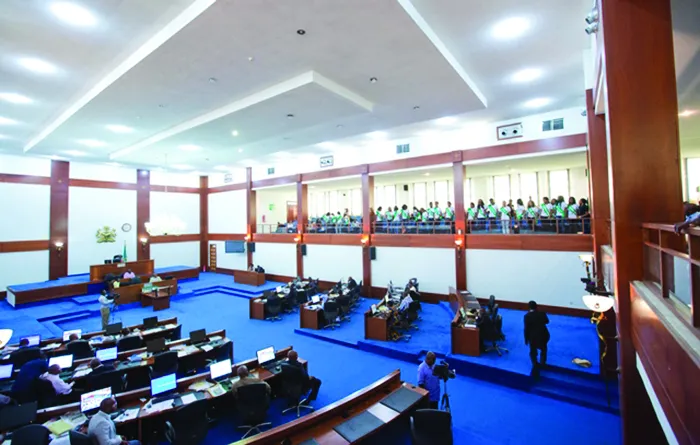
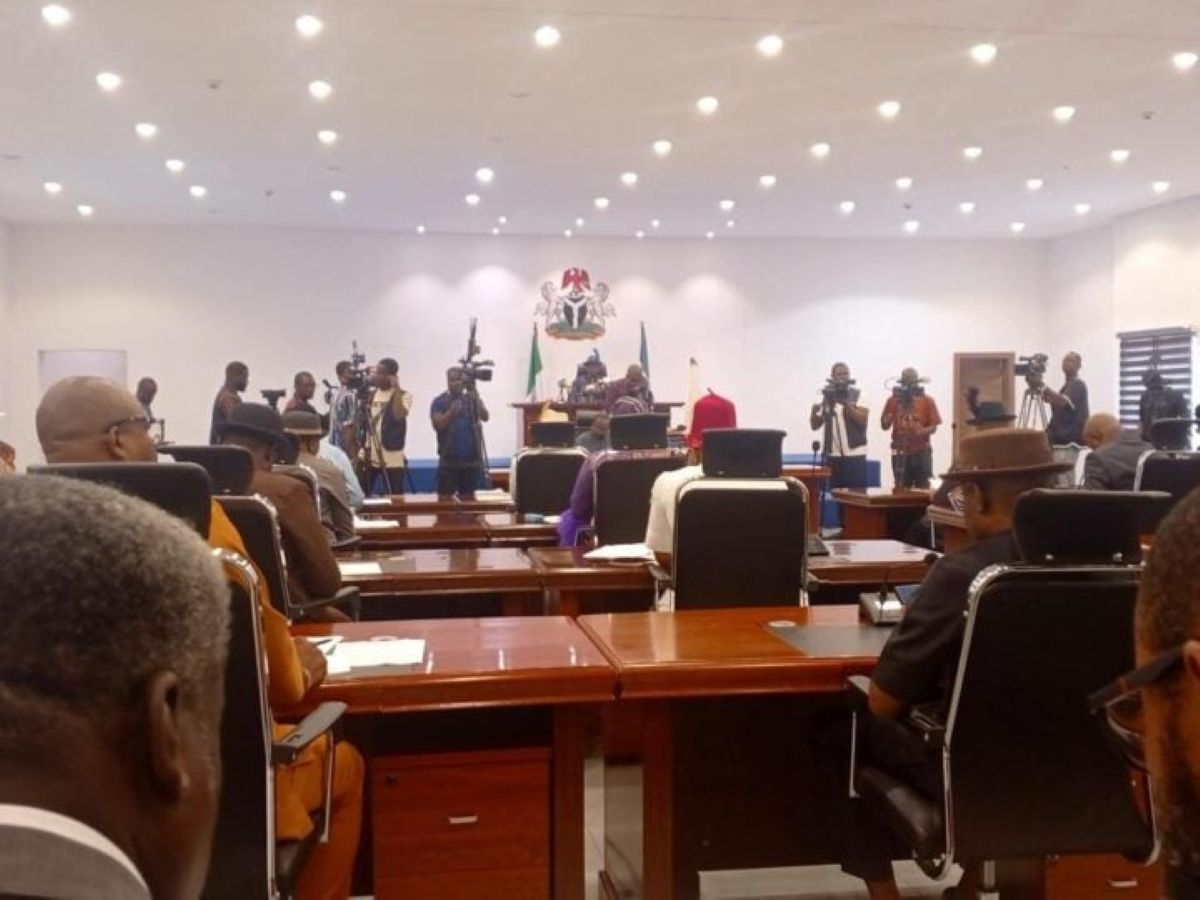
The Rivers State House of Assembly has unanimously approved a constitutional amendment seeking to establish state police services across Nigeria.
The decision followed the transmission of the proposed constitutional alteration by the National Assembly to the 36 state Houses of Assembly for consideration and approval.
The bill dominated Monday’s plenary presided over by the Speaker, Martin Amaewhule, who said the Assembly supported efforts to improve security through the establishment of state police.
Before the vote, Amaewhule referred lawmakers to Section 9 of the 1999 Constitution, as amended, which provides for the alteration of the Constitution.
He explained that under Section 9(2), a constitutional amendment must be supported by two-thirds of the members of the National Assembly and approved by resolutions of at least two-thirds of the state Houses of Assembly.
“As required by the Constitution, our responsibility will be to vote whether or not we approve of the alteration of the Constitution so proposed by the National Assembly. No debate is allowed; we will just vote whether we accept or we do not accept,” he said.
Amaewhule then presented the proposed constitutional alteration, which seeks to create a constitutional framework for the establishment of State Police Services.
The proposal provides that state police would operate subject to the Constitution and national minimum policing standards prescribed by an Act of the National Assembly.
Under the proposed framework, the Federal Police Service would remain the default police service in a state until a State Police Service was lawfully established and certified as operational.
The proposal also retains the Federal Police’s policing responsibilities in every state and the Federal Capital Territory, Abuja.
It provides safeguards covering civilian control, human rights, national minimum standards, independent police service commissions, intergovernmental cooperation, criminal information systems and firearms control.
It also allows for exceptional federal intervention in state policing where there is a breakdown, serious incapacity, a national security threat or serious abuse.
Amaewhule said detailed arrangements covering the organisation, operational control, certification, complaints mechanisms, grants and implementation of state police would be provided in subsequent legislation by the National Assembly and, where applicable, state Houses of Assembly.
He said the proposed alteration contains 26 clauses, including 25 alterations or substitutions to existing constitutional provisions.
Following the presentation, the lawmakers voted by raising their hands.
The Speaker announced that 25 members voted in favour, with no votes against and no abstentions.
“By this voting, the 10th Assembly of Rivers State is fully in support of the Constitution of the Federal Republic of Nigeria 1999 (Fifth Alteration) Bill, 2022,” Amaewhule declared.
He said the Assembly supported efforts to make the protection of lives and property a priority at all levels of government.
“Anything that needs to be done towards ensuring that our people are properly protected, so that people can move freely, stay in their houses, go about their normal businesses without fear or hindrance by anybody or group of persons, will continue to be our top priority,” he said.
The Speaker described the proposed introduction of policing at the state level as a development that would complement the Federal Police.
He also said the reform reflected longstanding calls for policing to be brought closer to communities.
Constitutional Amendment Process
The Clerk to the National Assembly, Kamoru Ogunlana, formally transmitted the bill to the state Houses of Assembly on September 16, 2026, in line with Section 9 of the Constitution.
For the amendment to proceed, it must receive the approval of at least two-thirds of the 36 state Houses of Assembly, representing 24 states.
Read More : JAMB Restores CAPS, Sets Admission Deadlines
The Constitution does not prescribe a statutory deadline for state legislatures to communicate their decisions. However, the National Assembly leadership has set a 30-day administrative timeframe to encourage the conclusion of the process.
The proposed State Police Bill has received increased attention following presidential support for decentralised policing and the establishment of a Presidential Working Group on the National Policing Bill.
The chairman of the working group, Femi Gbajabiamila, said the proposed reform was aimed at bringing policing closer to Nigerians while establishing safeguards to improve accountability and public trust.