Trending

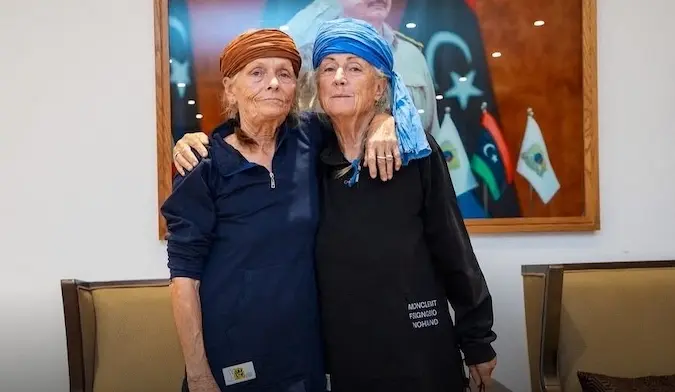
A Swiss woman and an Austrian woman kidnapped in Niger in 2025 have been released after spending more than a year in captivity, their respective governments have confirmed.
The women, identified as 69-year-old Swiss national Claudia Abbt and 76-year-old Austrian citizen Eva Gretzmacher, arrived in Benghazi, eastern Libya, following their release, according to local media reports.
Gretzmacher was abducted on January 11, 2025, while Abbt was kidnapped on April 13, 2025. Both women were living in Agadez, northern Niger, when they were taken.
No group has publicly claimed responsibility for the abductions, while details of the negotiations and circumstances surrounding their release remain undisclosed.
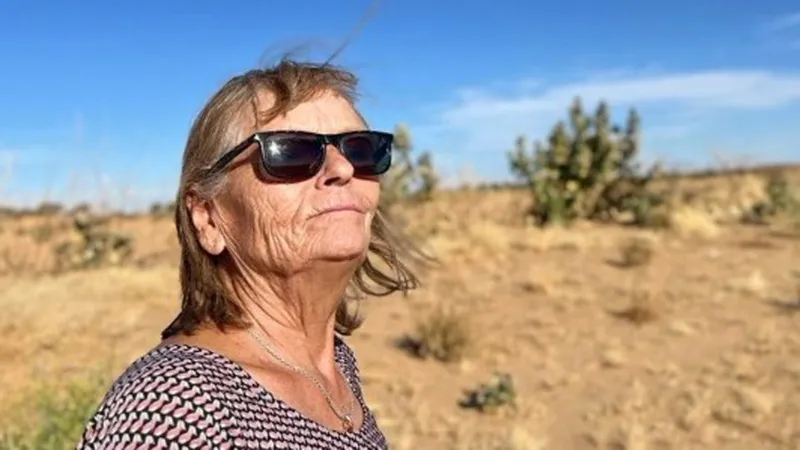
Eva Greztmacher
Credit: BBC
In a statement on Thursday, Switzerland’s Federal Department of Foreign Affairs confirmed Abbt’s release, saying she had been kidnapped in Niger on April 13, 2025.
The ministry said Swiss federal administration officials received her in Benghazi and ensured she received medical attention.
“She is doing well under the circumstances and is currently on her way back to Switzerland,” the statement said.
Meanwhile, Austrian Foreign Minister Beate Meinl-Reisinger confirmed Gretzmacher’s release, saying an Austrian crisis response team received her on Thursday following intensive diplomatic efforts.
“We are all very relieved that Eva G. is free again after more than 21 months. This period has been an unimaginable ordeal for her and her family,” Meinl-Reisinger said.
She described the development as a special moment, adding that Austria had worked discreetly with regional, European and international partners for months to secure Gretzmacher’s freedom.
“These joint efforts have paid off,” she added.
Haftar’s Role In Release
Although no group has claimed responsibility for the kidnappings, some experts and Nigerien media reports have suggested that the Islamic State in the Sahel or affiliated groups could have been responsible.
The two women appeared in a video broadcast by Al-Masar, a television station based in eastern Libya. Looking tired, they spoke in French to confirm their identities, ages, nationalities and time in captivity.
They also thanked eastern Libyan military commander Khalifa Haftar and his son, Saddam Haftar, for helping secure their freedom.
Several media outlets also circulated a photograph of the women seated inside an aircraft.
A Malian security source told Agence France-Presse that the women were transported by plane from Niger to Benghazi early on Wednesday.
The source said the women had spent some time in northern Mali but credited the Libyan side, particularly the Haftar family, with playing a role in resolving the situation.
However, the precise circumstances of their release have not been officially disclosed.
Switzerland Thanks Partners
Swiss Foreign Minister Ignazio Cassis expressed relief over Abbt’s release and thanked those who worked to secure her freedom.
“I am relieved that the kidnapped Swiss woman is free again after more than a year and a half,” Cassis said.
He commended the individuals and organisations in Switzerland and abroad that worked to bring her home.
Following Abbt’s abduction, Switzerland’s foreign ministry established a task force involving police and intelligence resources to support efforts to secure her release.
The ministry also thanked national and international partners for their cooperation but said it would not provide further details to protect privacy.
Insecurity In Niger And Libya
The kidnappings occurred amid persistent insecurity in Niger and the wider Sahel region, where armed groups linked to Islamic State and al-Qaeda have carried out attacks and kidnappings.
Niger has faced significant security challenges since a military coup in July 2023, when the military ousted the country’s elected president.
Libya, meanwhile, has remained politically divided since the 2011 uprising that toppled former leader Muammar Gaddafi.
Two rival administrations continue to compete for power: the internationally recognised government in Tripoli, led by Prime Minister Abdulhamid Dbeibah, and a rival administration in eastern Libya backed by Haftar.
The release of the two women ends a prolonged period of captivity, although questions remain about their abductors and the arrangements that secured their freedom.