Trending
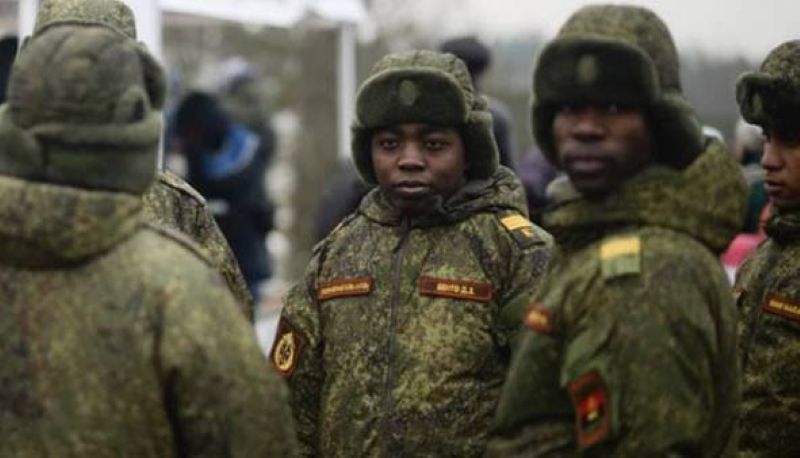
Daniel Angel Masie Nchama never imagined that a promise of overseas employment would lead him to the front lines of the war in Ukraine.
The 22-year-old former information technology student from Equatorial Guinea says he was recruited by Russian intermediaries who convinced him he would receive military training and work as a bodyguard. Instead, he found himself fighting in one of the world’s deadliest conflicts.
“I realised we were at the front when a missile struck us,” Nchama told AFP, recalling the moment he understood the reality of the mission.
Now back at his parents’ modest home in Malabo, the Equatorial Guinean capital, Nchama has described the freezing temperatures, hunger and fear he experienced after being sent to the battlefield.
He said his journey began in December 2025 after a Cameroonian man identified as “Fabrice” persuaded him to travel to Russia in search of better opportunities. On arrival, Nchama and other recruits were asked to sign documents written in Russian, a language they did not understand.
“We said we couldn’t sign documents we didn’t understand. They insisted, saying it was too late to translate them,” he said.
When he attempted to use his phone to translate the papers, Nchama said a Russian soldier placed a weapon on the table, which he interpreted as a threat. The recruits eventually signed the documents, after which their passports were confiscated.
He said the promised eight months of military training lasted only two weeks before he and other recruits were transferred to Ukraine. They later underwent 45 days of intensive preparation before being transported towards the front line.
Nchama said he was among many foreign fighters sent into combat, including Africans from Cameroon, Nigeria, Libya and other countries. Ukraine has estimated that thousands of foreigners have joined Russian forces during the war.
According to the collective All Eyes on Wagner, 1,417 Africans were recruited by Russia between January 2023 and September 2025, with more than 300 reportedly killed.
Nchama said he was first deployed with a battalion of 424 soldiers in Donetsk, where he claims all members of his unit were killed within two weeks. He was later assigned to another battalion in Volnovakha, also in the Donetsk region, where he said his unit suffered heavy losses.
“Our mission was to capture six Ukrainian villages. Of the 566 recruits, only three of us were left by the end,” he said.
Beyond the fighting, Nchama described severe conditions, including periods without food.
“We killed a deer and ate it raw, that’s how hungry we were,” he said.
He also alleged that recruits were forced to follow orders under threats of punishment.
“If they told you, ‘Do this’, and you didn’t do it, they could send someone to kill you,” he said.
In March, Nchama contacted his parents, who brought his situation to public attention. His story gained widespread attention in Equatorial Guinea, prompting the government to announce diplomatic efforts to secure his return.
After spending more time under attack at the front, Nchama said heavy snowfall temporarily reduced drone activity, giving him an opportunity to escape.
Back in Murmansk, Russia, he said military officials offered him rewards, including a house, a car and the possibility of Russian citizenship.
“They promised me a house, a car, I was going to be a Russian,” he said.
Read More : Brazil Votes in Knife-Edge Runoff
He eventually escaped by deceiving his commanders, telling them he was visiting a friend. The Equatorial Guinean ambassador later found him at an airport and helped arrange his return home.
His father, who described himself as “the happiest man in the world” after his son’s return, has warned young people against chasing uncertain promises abroad.
“These promises are death guaranteed,” he said, urging families to be cautious about recruitment offers that appear too good to be true.