Trending
The Federal Competition and Consumer Protection Commission has begun examining Uber’s exit from Nigeria, particularly whether the ride-hailing company left behind unfulfilled services and obligations to customers, the commission’s chief executive said.
FCCPC officials “are looking into the manner of their exit, particularly in respect of unfulfilled services to the customers,” CEO Tunji Bello said in a text message to Bloomberg, which reported on Sunday that the regulator was examining the manner of Uber’s departure.
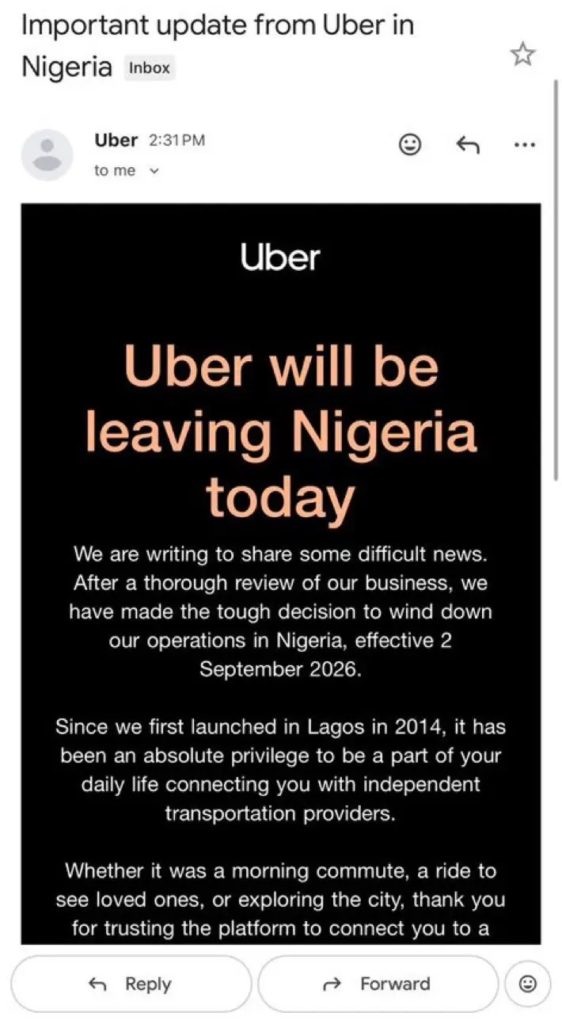
The development comes four days after Uber announced it would wind down its operations in Nigeria and Uganda, effective September 2, 2026, bringing an end to its presence in Nigeria where it launched in Lagos in 2014.
Uber did not give a specific reason for its exit in its notice to drivers, saying only that it had made the “tough decision” to wind down its operations.
“We have made the tough decision to wind down our operations in Nigeria, effective September 2, 2026. From this date, you will no longer be able to receive rider trip requests through the Uber app,” the company said.
The company said its Help Centre would remain available to assist drivers with questions about the development until September 24, 2026.
The exit followed growing competition in Nigeria’s ride-hailing market, including from Bolt and InDrive, as well as economic pressures affecting consumers and the cost of operating mobility services.
It also followed a recent disagreement between Uber and the Federal Airports Authority of Nigeria over the regulation of e-hailing operations at airports.
FAAN Managing Director Olubunmi Kuku said the authority had no role in Uber’s decision to leave Nigeria, adding that its interventions were driven by passenger safety, accountability and concerns over touting at airports.
Kuku said FAAN had been seeking liability provisions from e-hailing companies over the conduct and safety of drivers operating on their platforms.
“One of the issues we were struggling with the e-hailing companies over was largely around liability clauses. But we also wanted them to take responsibility for the drivers. However, we were told that those drivers are not Uber’s drivers; rather, they are independent drivers,” Kuku said.
“So, with regard to any safety concerns we raised, they wanted passengers to use the safety features available on their platforms. They did not want to take on that responsibility, and we had a major issue with that,” she added.