Trending

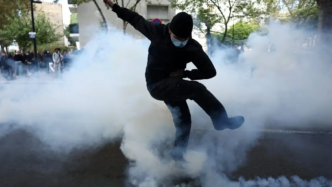
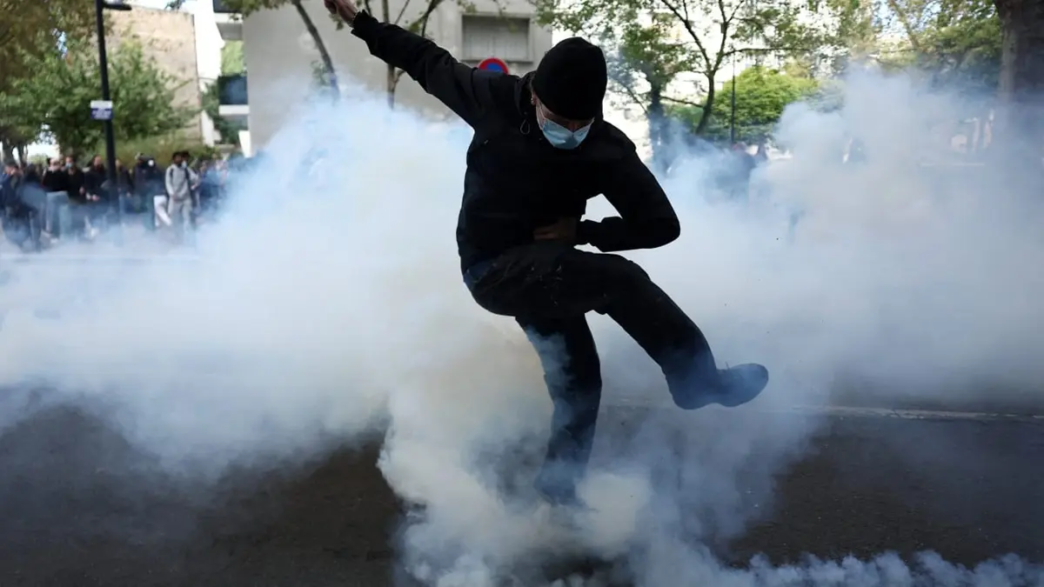
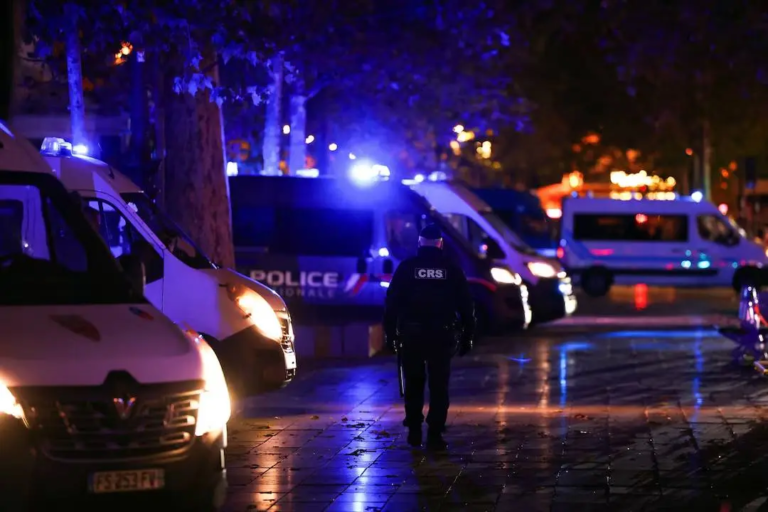
French police fired tear gas in Lyon on Saturday as security forces tightened measures across major cities ahead of new nationwide protests over the rising cost of living, seeking to prevent a repeat of the violence recorded the previous weekend.
An AFP journalist witnessed officers disperse about 150 demonstrators near the city centre after they briefly attempted to block a road. The protest was taking place in an area where demonstrations had been prohibited.
A 21-year-old student at the scene criticised the police response, saying officers moved quickly to break up marches before they could fully assemble. The student requested anonymity.
Read More : Indonesian Students Protest Toxic Haze
Authorities and businesses across the country also prepared for possible unrest. In Paris, several shops covered their windows with wooden boards, while a clothing retailer near the Bastille area cleared its shelves. A nearby restaurant was boarded up but displayed signs indicating it remained open.
The Louvre and Musée d’Orsay museums were closed for the day. Paris police reported confiscating several prohibited items by midday but described the situation in the capital as calm.
In Marseille, riot-control vehicles, armoured trucks and a water cannon were deployed in the city centre.
The Interior Ministry said 70,000 security personnel had been mobilised nationwide because of what it described as a high risk of violence.
Tensions also rose as Marine Le Pen’s National Rally party held a congress in Orléans to launch her campaign for the presidential election scheduled in six months, when President Emmanuel Macron’s successor will be chosen.
Thousands of demonstrators marched against Le Pen and Macron, chanting anti-fascist slogans and calling for the president’s resignation and Le Pen’s imprisonment.
Police estimated the crowd at 11,000, while organisers put attendance at 26,000.
The demonstrations came as France faced growing political and social tensions ahead of the election. Opinion polls cited in the report placed Le Pen in a strong position in the race.
Last weekend, groups on the fringes of nationwide protests clashed with police, damaged public buildings and looted hundreds of shops.
Authorities arrested about 2,700 people, while the retail sector estimated that damaged property and stolen goods had cost businesses hundreds of millions of euros.
Macron blamed much of the violence on what he described as ultra-left groups seeking to undermine the republic.
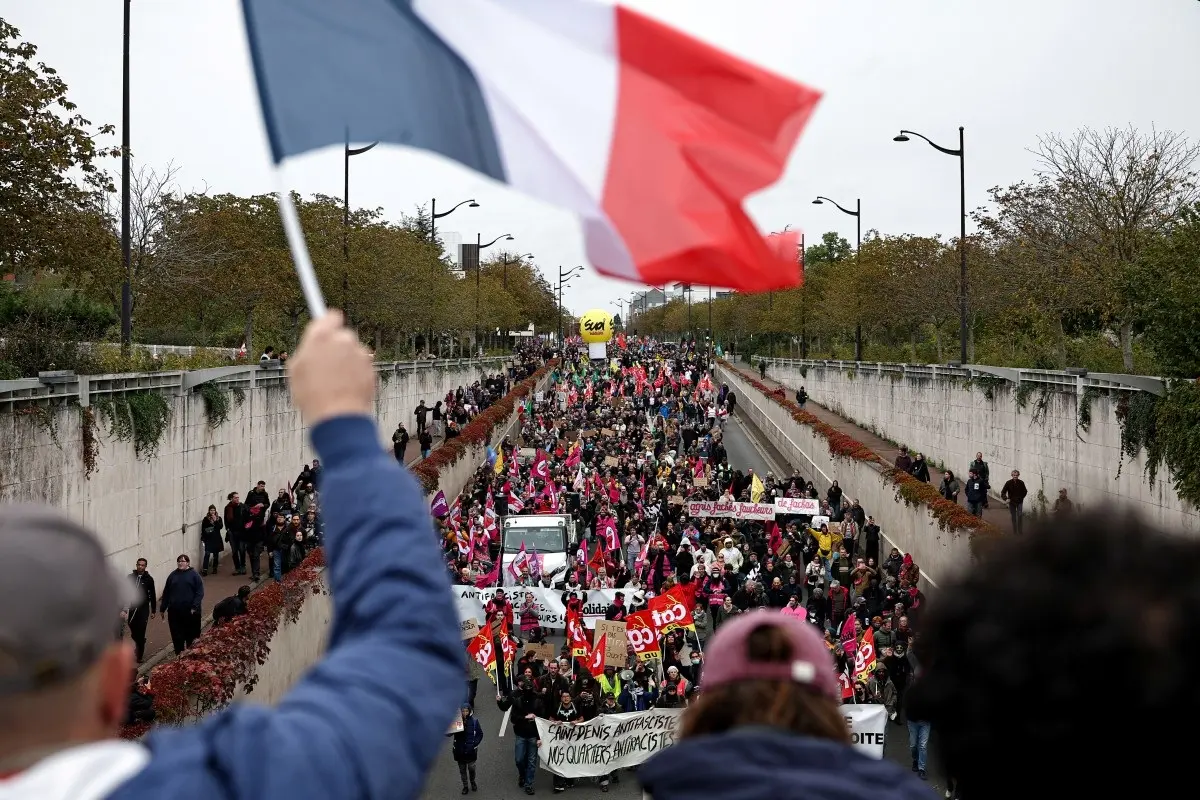
Organisers of Saturday’s protests accused the president and his government of failing to address public frustration over living costs and conditions in schools.
Inflation has risen in France and other countries following the war in the Middle East, which began in February with US and Israeli attacks on Iran, according to the report.
Protests over various grievances have also taken place in Italy, Belgium, Spain and Portugal, with rising prices and education concerns among the issues raised.
Italy has deployed 500 troops to Milan following street violence there.
Paris remained unusually quiet on Saturday, with many businesses boarding up their windows or notifying customers that they would not open.
Police also ordered a union-organised march to move from the Bastille area in eastern Paris to Porte d’Italie, farther south on the outskirts of the capital.
Unions said they would comply reluctantly.
The Yellow Vests movement, which led disruptive protests against Macron eight years ago, condemned what it called an increasingly authoritarian approach and called for another demonstration on October 31 to defend the right to protest.
A shopworker in the city of Rennes told AFP: “Bans are sometimes worse. Protesting is a right, and when you ban it you make it even more tempting.”
Macron and his government have sought to distinguish legitimate demonstrations from the looting, arson and vandalism that accompanied last Saturday’s protests.
Courts have already sentenced 217 people over the unrest, officials said, with half of those imprisoned reportedly having no previous convictions.
Read More : Iran Vows to Keep US Ships Out of Gulf
The president has said authorities would permit union-led demonstrations while taking action against other gatherings they considered illegitimate. The restrictions, including outright bans in some cities, have attracted criticism from rights groups.
Amnesty International condemned what it described as a shift towards authoritarian practices, warning that the measures threatened the right to peaceful assembly.
Human Rights Watch senior Europe researcher Eva Cosse said police had a duty to protect the public from violence while ensuring people could demonstrate safely and peacefully.